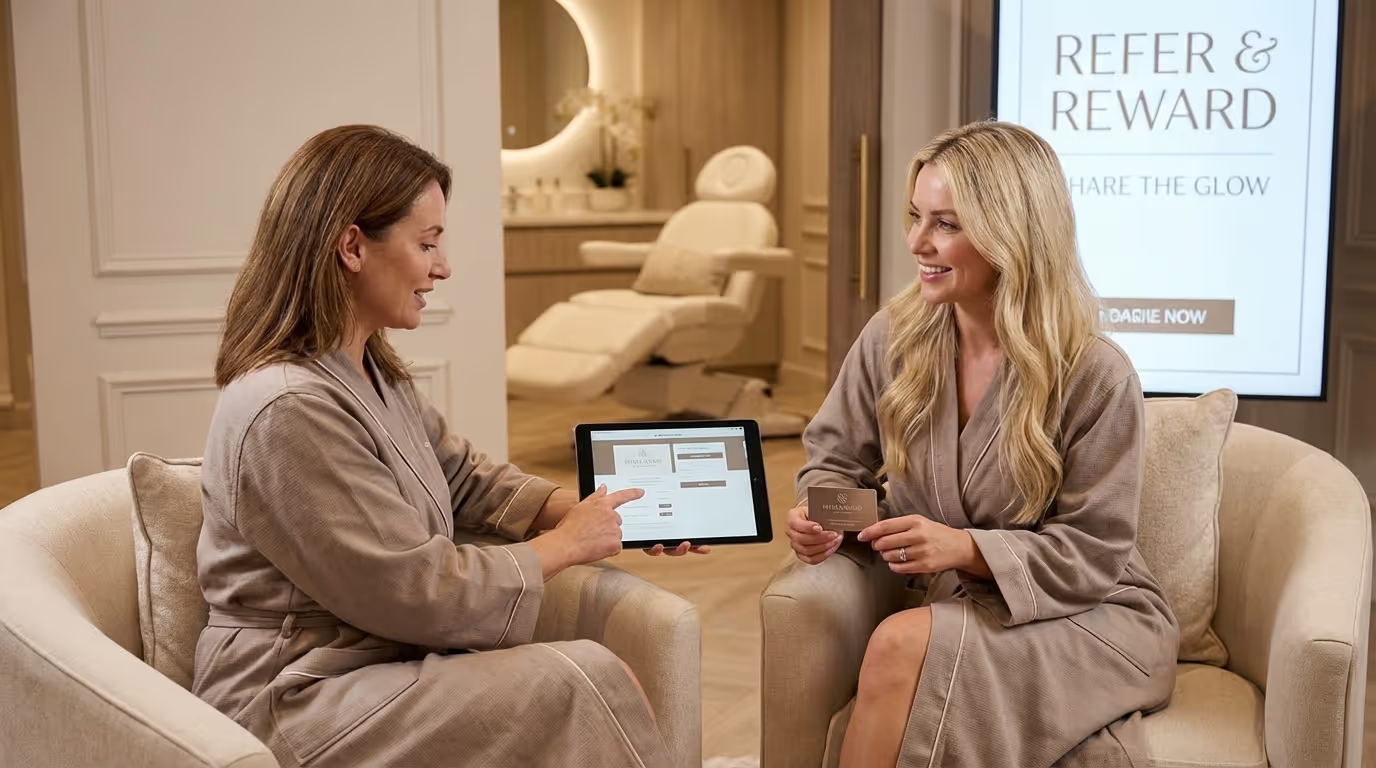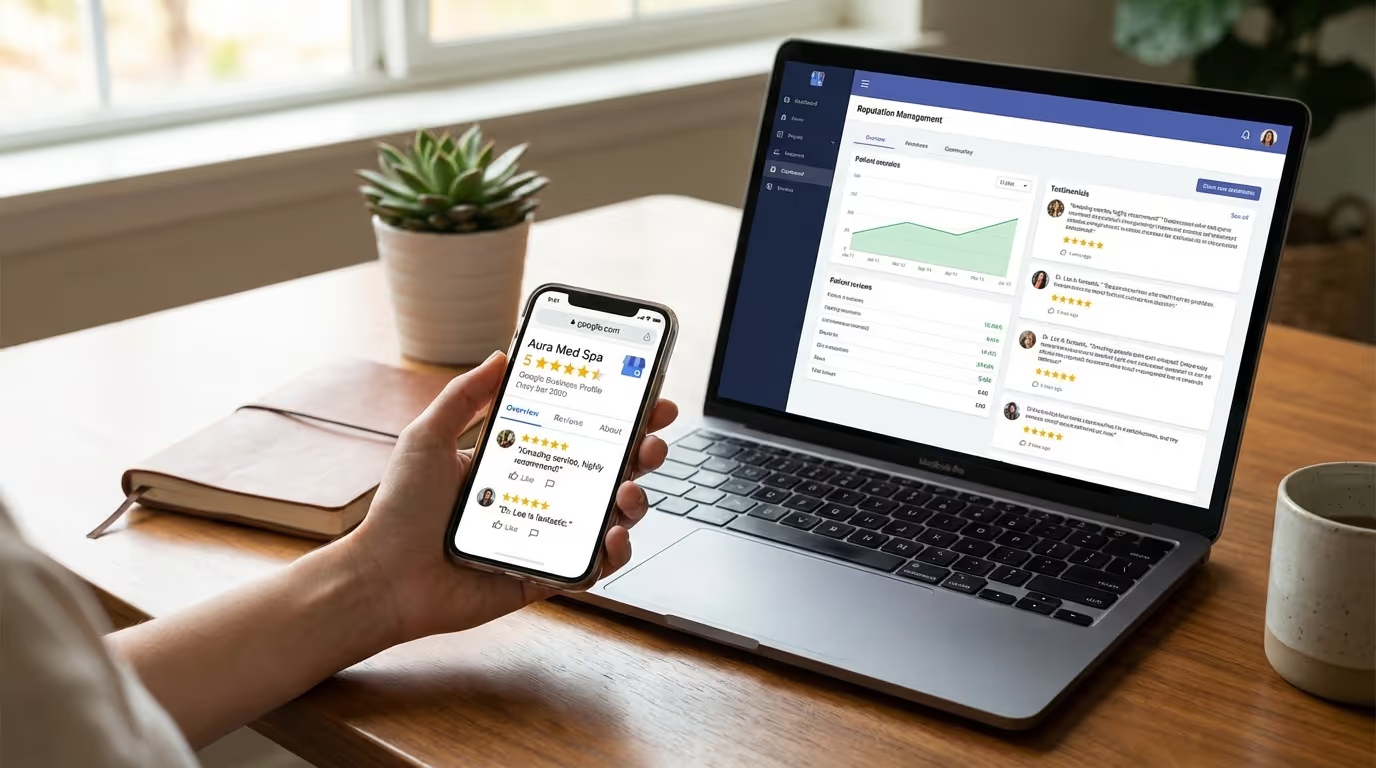

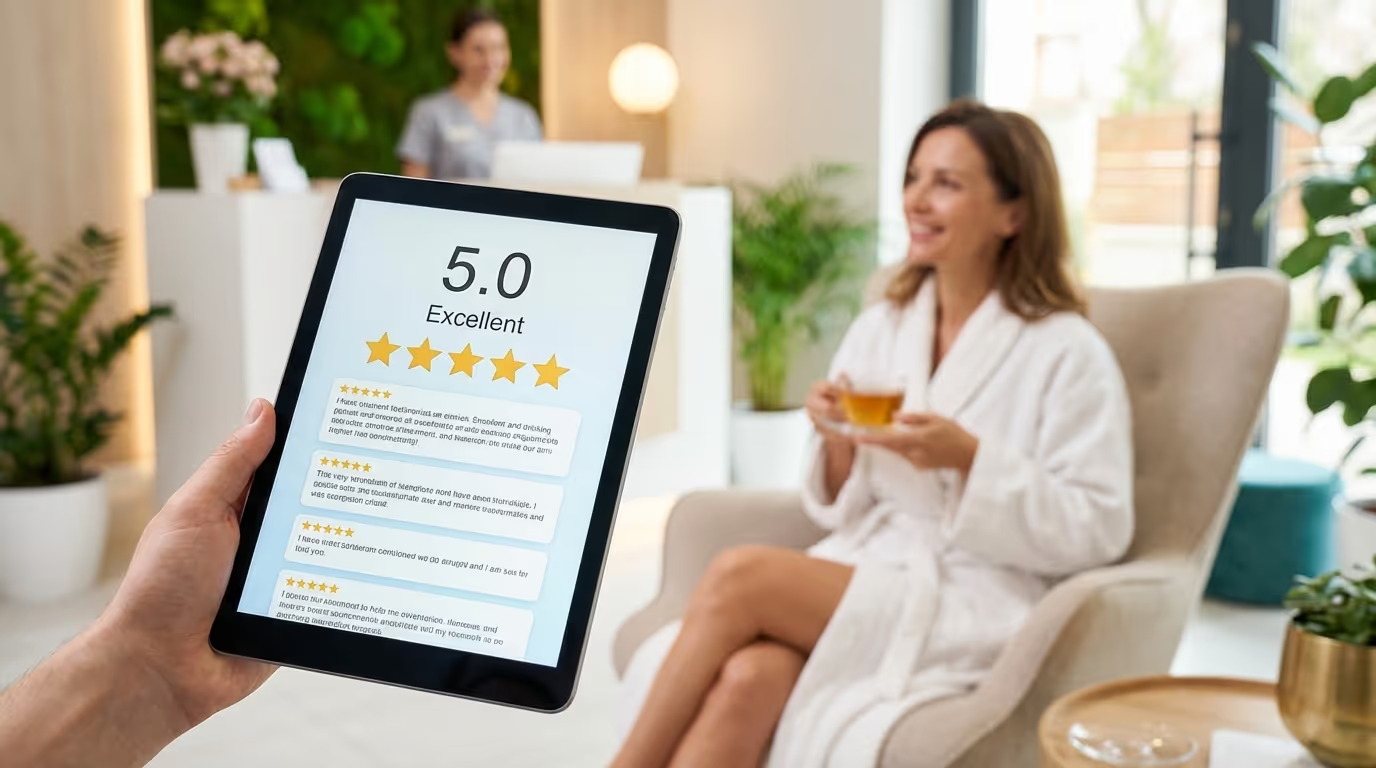
Med spa reputation management is the difference between a thriving practice and one that watches patients walk to the competitor down the street. Here is the moment that determines whether a prospective patient books with you or your competitor.
They Google "med spa near me" or "best Botox [your city]." They see your listing and two others. Same general area. Similar services. Similar websites. So what do they use to decide?
Your reviews.
They check your Google rating first. If you have 4.8 stars with 200+ reviews, you are in the running. If you have 4.2 stars with 30 reviews, they have already moved on — before they even click your website.
This is not theory. Data from BrightLocal shows that 87% of consumers read online reviews for local businesses, and 73% only pay attention to reviews written in the last month. For med spas specifically — where patients are trusting someone with their face and body — reviews carry even more weight than in other industries.
Your online reputation is not a nice-to-have. It is the first filter prospective patients use to decide whether you are worth considering. Every review you do not have is a patient your competitor gets instead.
This guide covers everything: how to systematically generate reviews, how to respond to every type of review (including the ugly ones), how to monitor your reputation across platforms, and how to build a review profile that becomes your most powerful marketing asset.
The Business Impact of Med Spa Reputation Management
Before we get tactical, understand the math behind reputation management.
Reviews directly impact local search rankings. Google's local algorithm considers review quantity, review quality (star rating), review velocity (how frequently you receive new reviews), and review diversity (reviews across multiple platforms). A practice with 200 reviews and a 4.8 rating will rank higher in local search results than a practice with 30 reviews and a 5.0 rating.
Reviews are the primary trust signal for new patients. A prospective patient considering their first Botox treatment is anxious. They are choosing to let someone inject a neurotoxin into their face. They need reassurance that they are making a safe, smart decision. Reviews from real patients provide that reassurance in a way your marketing never can.
Star rating impacts click-through rate. The difference between a 4.2 and a 4.8 on Google is not 0.6 stars — it is a 25-35% difference in click-through rate from the local pack. That translates directly to fewer website visits, fewer calls, and fewer bookings.
Review volume builds perceived authority. A practice with 500 reviews signals "established, trusted, high-volume" — even if those reviews accumulated over five years. A practice with 15 reviews signals "new, unproven, possibly struggling." Volume matters independent of rating.
Negative reviews cost real money. A single one-star review on a practice with 20 total reviews drops the average from 4.8 to 4.6. That drop can reduce booking inquiries by 10-15% until enough new positive reviews push it back up. For a practice generating $50,000/month, that is $5,000-7,500 in lost revenue from one bad review.
Where Reviews Matter Most
Not all review platforms are equal. Focus your energy where it has the most impact.
Tier 1: Critical (Active Management Required)
Google Business Profile
This is the most important review platform for med spas, period. Google reviews appear directly in search results, influence local SEO rankings, and are the first thing prospective patients see. If you focus on only one platform, make it Google.
Target: 100+ reviews with a 4.7+ average rating
Yelp
Despite declining relevance in some industries, Yelp remains influential for med spas — particularly in larger metro areas and among millennial and Gen X demographics. Yelp's filtering algorithm is aggressive (it hides reviews it considers suspicious), so volume matters even more here.
Target: 50+ visible reviews with a 4.5+ rating
Tier 2: Important (Regular Monitoring)
RealSelf
The largest platform specifically for cosmetic and aesthetic procedures. Patients researching specific treatments often end up on RealSelf. Having a presence here with positive reviews reinforces credibility for patients deeper in the research phase.
Facebook Recommendations (their version of reviews) influence patients who discover your practice through social media. Less impactful than Google for search, but important for social proof.
Healthgrades / Vitals / WebMD
These platforms matter primarily for physician-led practices. If your medical director or lead physician is the face of the practice, their reviews on these platforms contribute to overall reputation.
Tier 3: Monitoring Only
Better Business Bureau, Trustpilot, and industry-specific platforms. Monitor for negative reviews but do not invest active effort in generating reviews here.
Generating Reviews: The Systematic Approach
Hoping patients will leave reviews on their own does not work. The patients most motivated to leave reviews are unhappy patients. Happy patients are busy enjoying their results — they need a nudge.
The Golden Rule of Review Generation
Ask at the peak of satisfaction. This is the single most important principle. The best time to ask for a review is when the patient is happiest — immediately after they see their results and express satisfaction.
For different treatments, this peak occurs at different times:
- Botox: 2 weeks post-treatment (when full effect is visible and the patient comes back to see results)
- Fillers: Immediately post-treatment or at the 2-week follow-up (when swelling has resolved)
- Laser treatments: At the follow-up appointment when improved skin is visible
- Body contouring: 8-12 weeks post when final results are apparent
- Facials / HydraFacial: Immediately post-treatment (patients leave with glowing skin and feeling great)
Never ask during the treatment. The patient is vulnerable, possibly uncomfortable, and not in a position to give a genuine, enthusiastic review.
Method 1: The In-Person Ask
The most effective review generation method is a direct, in-person request from the provider or staff member the patient has a relationship with.
Script for providers:
After the patient has seen their results and expressed satisfaction:
"I'm so glad you love your results! If you have a moment, it would mean the world to us if you could share your experience on Google. It really helps other patients who are considering the same treatment feel confident about coming here."
Then hand them a card, send them a text, or show them a QR code that links directly to your Google review page.
Script for front desk (at checkout):
"How was everything today? [Wait for positive response.] That's great to hear! Would you mind leaving us a quick Google review? It only takes a minute, and it really helps other patients find us. I can text you the link right now."
Key principles:
- Only ask patients who have expressed satisfaction. Do not ask every patient indiscriminately — a lukewarm patient asked for a review may leave a lukewarm review.
- Make it easy. The fewer steps between the ask and the review, the higher the completion rate. A direct link to your Google review page is essential.
- Personalize the ask. "It would mean a lot to Dr. Chen" is more compelling than "Please review us online."
Method 2: Automated Post-Visit Requests
Set up an automated system that sends a review request via text or email after appointments. This catches patients you missed in person and maintains consistent volume.
SMS review request (sent 2-4 hours after appointment):
`` Hi [Name]! Thank you for visiting [Practice Name] today. We hope you had a great experience! If you have a minute, would you mind sharing your feedback? It helps us improve and helps other patients find us. [Direct Google Review Link] - Thank you! ``
Email review request (sent 24 hours after appointment):
Subject: "How was your visit, [Name]?"
Body: Keep it short — 3-4 sentences thanking them for their visit, asking for feedback, and providing a direct link to your Google review page. Include a one-click star rating if your platform supports it.
Timing matters:
- For same-day-results treatments (facials, some fillers): send 2-4 hours post-appointment
- For delayed-results treatments (Botox, lasers): send after the follow-up appointment or at the expected results timeline
- Do not send review requests to patients who had complications, expressed dissatisfaction, or are mid-treatment-series (wait until the series is complete)
Method 3: The Review Funnel
A review funnel is a smart intermediary step that routes patients based on their satisfaction level.
How it works:
- Patient receives a post-visit message: "How was your experience today? Rate us 1-5."
- If the patient responds 4 or 5: they are directed to your Google review page with a message like "We're thrilled you had a great experience! Would you mind sharing it on Google?"
- If the patient responds 1-3: they are directed to a private feedback form with a message like "We're sorry to hear that. Please share what happened so we can make it right."
This is not review gating. Google explicitly prohibits discouraging or intercepting negative reviews. The funnel does not prevent unhappy patients from leaving a public review — it simply gives them a private channel to share feedback first. If they still want to leave a public review, they can and should be able to.
The funnel serves two purposes: it routes happy patients to Google (increasing positive review volume) and it gives you a chance to resolve issues with unhappy patients before they go public (reducing negative review volume).
Method 4: QR Codes and Physical Touchpoints
Place QR codes that link to your Google review page in strategic locations:
- Checkout counter — a small, elegant sign: "Love your results? Leave us a review!" with a QR code
- Treatment rooms — a framed card on the counter or side table
- Bathroom — a small sign near the mirror (patients check their appearance here after facial treatments)
- Appointment reminder cards — include the QR code on physical cards patients take home
- Product bags — if you sell retail products, include a review card in the bag
Method 5: Incentivized Reviews (With Caution)
You can offer incentives for leaving reviews, but with important caveats:
- Never offer incentives specifically for positive reviews. This violates FTC guidelines and platform terms of service. You can offer an incentive for "sharing your experience" regardless of whether it is positive or negative.
- Google's policy: Google discourages incentivized reviews. They will not flag a small incentive (like entry into a monthly drawing), but offering $50 off for every review is risky.
- Yelp's policy: Yelp explicitly prohibits any solicitation of reviews, incentivized or otherwise. Their filter will flag and hide reviews that appear solicited.
- Best practice: If you incentivize, use a raffle or drawing rather than a per-review reward. "Leave a review this month and you're entered to win a complimentary treatment" is safer than "Leave a review and get $25 off."
Responding to Reviews: Templates for Every Situation
How you respond to reviews matters as much as the reviews themselves. Prospective patients read your responses to evaluate how you treat patients. A thoughtful response to a negative review can be more persuasive than the negative review itself.
Responding to Positive Reviews
Every positive review deserves a response. This shows patients you value their feedback and signals to prospective patients that you are engaged and attentive.
Guidelines:
- Respond within 24-48 hours
- Thank them by name (if they used their real name)
- Reference something specific about their visit or treatment (without disclosing treatment details they did not mention — HIPAA applies even in review responses)
- Keep it warm but professional
- Do not ask for referrals or promote services in your response
Template 1: Standard positive review response
"Thank you so much for the kind words, [Name]! We're thrilled to hear you had a wonderful experience. Our team truly values feedback like yours, and it means a lot to know we're making a difference. We look forward to seeing you again!"
Template 2: Detailed positive review response (when the patient mentioned specifics)
"Thank you for sharing your experience, [Name]! We're so happy to hear you're loving your results. [Provider name] will be delighted to read this — our team works hard to make every visit exceptional. Thank you for trusting us with your care. See you next time!"
Template 3: Positive review that mentions a specific treatment
"Thank you, [Name]! We appreciate you taking the time to share your experience. We're glad you're happy with your results — that's what it's all about. We look forward to continuing your journey with us!"
Responding to Negative Reviews
Negative reviews are inevitable. How you handle them can either minimize damage or amplify it.
Guidelines:
- Respond within 24 hours (faster is better — silence looks like indifference)
- Stay calm and professional regardless of the review's tone
- Never argue, make excuses, or blame the patient
- Acknowledge their experience and express genuine concern
- Take the conversation offline — provide a direct contact for resolution
- Never disclose treatment details, diagnoses, or any patient health information (HIPAA violation)
- Do not offer compensation in a public response (this incentivizes others to leave negative reviews for rewards)
Template 1: Negative review about service or experience
"Thank you for sharing your feedback, [Name]. We're sorry to hear your experience didn't meet our standards — that's not what we aim for. We take all feedback seriously and would like the opportunity to make things right. Please contact us directly at [phone/email] so we can discuss this personally. Your satisfaction matters to us."
Template 2: Negative review about results
"Thank you for reaching out, [Name]. We understand how important your results are to you, and we're sorry to hear you're not satisfied. We'd like to discuss your concerns and explore how we can help. Please contact our office at [phone/email] at your earliest convenience so we can schedule a follow-up. We're committed to ensuring every patient is happy with their care."
Template 3: Negative review that is hostile or unfair
"Thank you for your feedback. We strive to provide an exceptional experience for every patient, and we're sorry yours fell short. Due to patient privacy considerations, we're unable to discuss specific details publicly. We encourage you to contact us directly at [phone/email] so we can address your concerns. We take all feedback seriously and want to resolve this."
Template 4: Fake or competitor review (no record of this person as a patient)
"Thank you for your review. We take all feedback seriously. However, we're unable to locate a patient record matching your name. If you have visited our practice, please contact us at [phone/email] so we can address your concerns. If this review was posted in error, we'd appreciate it being updated."
Then flag the review with the platform as potentially fraudulent.
Responding to Neutral Reviews (3 Stars)
Three-star reviews are opportunities disguised as mediocrity. The patient was not angry enough to leave one star but not impressed enough to leave five. There is room to win them back.
"Thank you for your feedback, [Name]. We appreciate you sharing your experience. We'd love to learn more about how we can improve — please don't hesitate to reach out to us at [phone/email]. Your input helps us get better, and we hope to exceed your expectations next time."
Handling Negative Reviews Strategically
Beyond the public response, negative reviews require a strategic approach.
Step 1: Investigate Internally
Before responding publicly, find out what happened. Pull the patient's file, talk to the provider and staff involved, and understand the situation from your side. This informs your response and your internal process improvement.
Step 2: Respond Publicly (Using Templates Above)
Post your professional, empathetic response within 24 hours. The public response is for the audience reading the review, not just the reviewer.
Step 3: Reach Out Privately
Contact the patient directly via phone (preferred) or email. Express genuine concern, listen to their experience, and offer a resolution.
Possible resolutions:
- A complimentary follow-up appointment to address their concerns
- A complimentary corrective treatment if the issue is clinical
- A partial or full refund if the experience was genuinely poor
- An apology and explanation if there was a misunderstanding
Step 4: Request an Update
After you have resolved the patient's concern, it is appropriate to gently ask if they would consider updating their review to reflect the resolution. Do not demand it or make it a condition of the resolution.
"We're glad we were able to resolve this for you. If you feel our response addressed your concerns, we'd appreciate it if you'd consider updating your review. Either way, we value your feedback and we're glad we could help."
Many patients who receive genuine, attentive service after a negative experience will update their review voluntarily — often to a 4 or 5-star rating with a note about how well the practice handled the issue. These updated reviews are incredibly powerful social proof.
Step 5: Implement Process Improvements
Every negative review is a data point. If multiple patients mention long wait times, fix your scheduling. If patients mention feeling rushed, extend appointment slots. If patients mention poor communication, train your team.
The practices with the best reputations are not the ones that never get negative reviews. They are the ones that use negative feedback to genuinely improve.
Review Monitoring: Staying on Top of Your Reputation
You cannot manage what you do not monitor. Set up a system to track reviews across all platforms in real time.
Monitoring Tools
Google Business Profile notifications: Enable notifications in your GBP dashboard to receive alerts for new reviews. Free and essential.
Google Alerts: Set up an alert for your practice name to catch mentions on blogs, forums, and news sites. Free.
Dedicated reputation management platforms:
- Birdeye — Aggregates reviews from 150+ sites, automated review requests, sentiment analysis
- Podium — Review generation, messaging, and monitoring in one platform
- Reputation.com — Enterprise-level monitoring with detailed analytics
- GatherUp — Affordable option focused on review generation and monitoring
If you use GoHighLevel: GHL has built-in review request automation and monitoring. Configure it to send automated review requests post-appointment and alert you to new reviews.
Weekly Review Audit
Every Monday morning, spend 10 minutes:
- Check all new reviews across platforms
- Respond to any reviews that need responses
- Flag any negative reviews for investigation
- Note your current star ratings and total review counts
- Identify patients to follow up with regarding review requests
Monthly Review Metrics
Track these numbers monthly:
- Total review count (by platform)
- Average star rating (by platform)
- Review velocity (new reviews per month)
- Response rate (percentage of reviews with a response)
- Response time (average hours between review posting and your response)
- Sentiment trends (are reviews getting better or worse over time?)
- Common themes (what do patients praise most? What do they complain about?)
Advanced Reputation Strategies
Build a Review Moat
The best defense against negative reviews is an overwhelming volume of positive ones. A single one-star review on a practice with 500 reviews barely moves the average. That same review on a practice with 20 reviews is devastating.
Set a review velocity target: 15-25 new Google reviews per month. At that pace, you accumulate 180-300 reviews per year, making your listing virtually bulletproof against occasional negative feedback.
Leverage Reviews in Marketing
Your reviews are not just a passive reputation indicator — they are active marketing assets.
- Website testimonials page. Pull your best reviews and display them prominently on your site. Include the reviewer's first name, star rating, and the platform the review came from.
- Social media content. Turn standout reviews into Instagram and Facebook posts. A well-designed graphic with a patient's quote and your branding is powerful social proof.
- Paid advertising. Include review counts and ratings in your Google Ads extensions and Facebook ad copy. "Rated 4.9 stars by 300+ patients" is a compelling trust signal.
- In-practice displays. A digital display in your waiting area showing a scrolling feed of recent reviews reinforces the patient's decision to choose you.
- Email signatures. Include your Google rating and review count in your team's email signatures.
Manage Review Platform Profiles
Your profiles on review platforms are marketing assets. Optimize them:
Google Business Profile:
- Complete every field (hours, services, description, attributes)
- Upload 5-10 new photos monthly
- Post weekly updates (Google Posts)
- Respond to every review within 24 hours
- Use the Q&A feature to preemptively answer common questions
Yelp:
- Claim and complete your business profile
- Upload professional photos
- Respond to every review
- Do not ask patients to review you on Yelp (their filter will punish you for it — Yelp reviews need to appear organic)
RealSelf:
- Claim your provider profile
- Complete all credentials and specialties
- Upload before and after photos
- Answer questions in the Q&A section (this builds authority and drives traffic to your profile)
Handle Review Extortion
It happens. A patient threatens to leave a one-star review unless you provide a free treatment, refund, or additional services. This is extortion, and you should not negotiate with it.
Steps:
- Document the threat (save texts, emails, or have a witness present during phone calls)
- Respond calmly: "We value all patient feedback and encourage honest reviews. We're happy to discuss any concerns you have about your treatment, but we cannot offer services in exchange for reviews."
- If the patient follows through with a negative review, respond professionally using the templates above
- Flag the review with the platform if it violates their terms (reviews used as leverage are often in violation)
- Consult with a healthcare attorney if the behavior escalates
HIPAA and Reviews: What You Can and Cannot Say
HIPAA applies to review responses. Even if a patient publicly discloses their treatment details in a review, you are not permitted to confirm, deny, or elaborate on those details in your response.
You cannot say:
- "We're glad your Botox treatment went well" (even if they mentioned Botox in their review)
- "Your appointment on March 15th was..." (confirming dates of service)
- "Dr. Smith who treated you is..." (confirming provider-patient relationship)
- Any clinical details about their condition, treatment, or outcome
You can say:
- General statements about your practice's standards and values
- Invitations to contact you privately to discuss concerns
- Thank-yous for positive feedback without confirming treatment specifics
- Clarifications about your policies or general information
When in doubt, keep your response general and take the conversation offline.
Building a Med Spa Reputation Management Culture
The most effective reputation management is not a marketing strategy — it is a practice culture that prioritizes patient experience at every touchpoint.
Train every team member. Every person in your practice influences the patient experience and, therefore, your reviews. Front desk staff who are warm and efficient, providers who are attentive and communicative, and checkout staff who make the departure smooth — every interaction contributes.
Empower your team to fix problems in real time. A staff member who can offer a complimentary add-on to a patient who has been waiting too long, or who can reschedule without hassle when a patient is running late, prevents negative experiences from becoming negative reviews.
Celebrate review milestones. When you hit 100 reviews, 200 reviews, 500 reviews — celebrate with your team. When a team member is mentioned by name in a review, recognize them. Make reputation management a team effort, not a marketing department task.
Close the loop. When a patient's feedback (positive or negative) leads to a change in your practice, tell them. "Based on feedback from patients like you, we've extended our evening hours." This shows patients that their voice matters and encourages future feedback.
The 30-Day Med Spa Reputation Management Launch Plan
Week 1: Foundation
- Claim and optimize your Google Business Profile, Yelp, RealSelf, and Facebook profiles
- Set up Google Alerts for your practice name
- Create your review request templates (SMS and email)
- Print QR code signs for your practice
- Train your team on the in-person ask
Week 2: Automation
- Set up automated post-visit review requests in your CRM
- Configure the review funnel (satisfaction check before review redirect)
- Set up a review monitoring dashboard or alerts
Week 3: Active Generation
- Begin asking patients in person for reviews
- Activate automated review requests
- Respond to all existing reviews that have no response
Week 4: Measure and Optimize
- Track your first month's review velocity
- Measure review request conversion rate (requests sent vs. reviews received)
- Identify which method (in-person, SMS, email) generates the most reviews
- Adjust timing and messaging based on results
Your Reputation Is Your Most Valuable Marketing Asset
In a market where patients have dozens of options, your online reputation is the first and often decisive factor in their decision. A practice with a strong review profile — high volume, high rating, recent reviews, and thoughtful responses — has a structural advantage that competitors cannot easily replicate.
Every review is a patient telling the next patient that you are worth trusting. Every response is you showing prospective patients how you treat people. Every five-star rating is one more reason for someone to choose you over the practice down the street.
You do not build a great reputation by accident. You build it by delivering exceptional experiences, asking for feedback at the right moments, responding to every review with care, and using negative feedback to genuinely improve.
Start this week. Your next 100 patients are reading your reviews right now.
Want to know how your online reputation stacks up against competitors in your market? Get Your Free Marketing Audit — we will analyze your review profiles, response patterns, and competitive positioning, and show you exactly where to focus for maximum impact.