
Your best patients already talk about you. They tell their friends about their Botox results over brunch. They mention their laser treatment in group chats. They recommend you when a coworker asks, "Where do you go?"
The question is: are you capturing that word-of-mouth in a system, or are you just hoping it happens?
Most med spas get referrals passively. A happy patient mentions the practice, a friend books an appointment, and nobody tracks the connection. The referring patient gets no recognition. There is no incentive to refer more. And the practice has no idea how many new patients came from word-of-mouth versus Google Ads.
A med spa referral system turns passive word-of-mouth into a structured, trackable, scalable patient acquisition channel. Done right, referred patients have a 25% higher lifetime value, a 37% higher retention rate, and cost 70 to 80% less to acquire than patients from paid advertising.
This guide gives you the frameworks, incentive structures, templates, tracking systems, and implementation roadmap to build a med spa referral system that turns your happiest patients into your most effective marketing channel.
Why Referrals Are the Highest-Quality Patient Source
Before we get into the how, let us establish with data why referrals are not just a nice-to-have — they are the most valuable patient source you have.
Referred Patients vs. Other Acquisition Channels
| Metric | Referred Patients | Google Ads Patients | Meta Ads Patients | Organic Search Patients |
|---|---|---|---|---|
| Lead-to-consultation rate | 40-60% | 25-40% | 15-25% | 30-45% |
| Consultation-to-treatment rate | 70-80% | 50-65% | 45-60% | 55-70% |
| Overall lead-to-patient rate | 28-48% | 12-26% | 7-15% | 16-32% |
| Average first treatment value | $450-$600 | $350-$500 | $300-$450 | $400-$550 |
| 12-month LTV | $3,000-$5,000 | $2,000-$4,000 | $1,500-$3,000 | $2,500-$4,000 |
| Retention rate (12-month) | 75-85% | 50-65% | 40-55% | 55-70% |
| Referral rate (will they refer others?) | 4x more likely | Baseline | 0.5x baseline | 1.5x baseline |
| Acquisition cost | $25-$75 | $100-$300 | $80-$250 | $15-$40 (after SEO investment) |
The numbers tell an overwhelming story: referred patients convert better, spend more, stay longer, and refer more people themselves. They arrive pre-sold because someone they trust already vouched for you. The trust barrier that costs you $150-$300 to overcome with ads is already broken.
The Referral Compounding Effect
Referral programs do not just generate patients — they generate patients who generate more patients. This creates a compounding growth loop:
Year 1: 100 referred patients → 25 refer someone → 25 new patients Year 2: 125 active referred patients → 35 refer someone → 35 new patients Year 3: 160 active referred patients → 48 refer someone → 48 new patients
Without spending an additional dollar on advertising, your referral program generates increasing patient volume each year. Compare that to Google Ads, where every new patient requires a new dollar of ad spend.
The Economics Compared to Paid Channels
| Scenario | Paid Acquisition | Referral Acquisition | Difference |
|---|---|---|---|
| New patients per month | 25 | 15 | -10 |
| Cost per patient | $200 | $75 | -$125 per patient |
| Monthly acquisition cost | $5,000 | $1,125 | -$3,875 |
| 12-month LTV per patient | $3,000 | $4,000 | +$1,000 per patient |
| 12-month revenue generated | $75,000 | $60,000 | -$15,000 |
| 12-month profit (after acquisition) | $70,000 | $58,875 | — |
| 24-month revenue (retention adjusted) | $120,000 | $112,000 | Referrals closing gap |
| Patients who refer others | 5 | 12 | +7 additional referrals |
While paid acquisition generates more volume initially, referral acquisition delivers higher-quality patients at lower cost with better long-term economics. The smartest practices run both — using paid channels for volume and referral programs for quality.
For context on how referral economics compare to your total marketing ROI, referrals typically deliver the highest return of any single channel.
The 4 Referral Program Models for Med Spas
There are four primary models. Each has trade-offs. Choose the one that fits your practice culture and patient demographics.
Model 1: Dual Incentive (Give-Get)
Both the referring patient and the new patient receive a reward. This is the most effective model for most med spas.
Structure:
| Role | Reward | Cost to Practice |
|---|---|---|
| Referrer | $50-$100 credit toward any treatment | $50-$100 |
| New patient | $25-$50 off first treatment | $25-$50 |
| Total per referral | — | $75-$150 |
Why It Works: The referrer has a clear financial reason to refer. The new patient has a reason to act. Both parties benefit, which makes the referral feel like a favor rather than a sales pitch.
Implementation Steps:
- Set incentive amounts based on your average treatment value (referrer credit should be 10-15% of average treatment)
- Define "completed referral" — typically when the new patient completes their first treatment
- Create unique referral codes or links for each patient
- Automate credit fulfillment in your CRM
- Build notification automations (referrer gets SMS when credit is applied)
- Create physical referral cards for distribution at checkout
- Add referral program section to your website
Best for: Most med spas. Simple, effective, and easy to communicate.
Model 2: Credit Accumulation
Referrers earn credits that accumulate toward free treatments. No discount for the new patient.
Structure:
| Referrals | Total Credit | Equivalent Reward |
|---|---|---|
| 1 referral | $50 | Credit toward any service |
| 3 referrals | $150 | Complimentary Botox session |
| 5 referrals | $250 | Premium treatment of choice |
| 10 referrals | $500 | Annual VIP status + premium treatment |
Why It Works: This model rewards your most enthusiastic referrers generously. A patient who refers 5 friends earns $250 in credit — enough for a substantial free treatment. The accumulation mechanic creates a goal-oriented dynamic.
Implementation Steps:
- Set credit values that work with your margin structure
- Make credits visible — display balance in every email and at every checkout
- Credits should never expire (creates goodwill and ongoing referral motivation)
- Send milestone notifications ("One more referral and you earn a complimentary HydraFacial!")
- Recognize top referrers publicly (with permission) on social media
Best for: Practices with highly social patient bases who naturally talk about their treatments.
Model 3: Tiered Rewards
Rewards increase as patients refer more people. Gamification meets referral marketing.
Structure:
| Tier | Referrals Required | Reward | Perceived Value |
|---|---|---|---|
| Bronze | 1 referral | $25 credit | Entry-level motivation |
| Silver | 3 referrals | $50 credit + VIP booking status | Meaningful reward |
| Gold | 5 referrals | $100 credit or free mid-tier treatment | Strong incentive |
| Platinum | 10 referrals | Premium treatment + annual VIP status | Maximum reward |
Why It Works: Tiered rewards motivate continued referral behavior. Once a patient has referred two people, the jump to a better reward at three feels achievable. The escalating value keeps them engaged.
Implementation Steps:
- Design tier thresholds that feel achievable (tier 1 at 1 referral, not 5)
- Notify patients of their tier status after every referral
- Create visual tier badges or certificates
- Integrate with your loyalty program for compounding benefits
- Celebrate tier upgrades with personal messages from providers
Best for: Practices with loyalty programs or membership programs that want referrals integrated into their broader retention strategy.
Model 4: Exclusive Experience
Instead of financial incentives, referrers get access to exclusive experiences, priority booking, or VIP treatment.
Structure:
| Referrals | Exclusive Benefit | Why It Works |
|---|---|---|
| 1 referral | Priority booking access | Convenience reward |
| 3 referrals | Invitation to VIP quarterly events | Exclusivity |
| 5 referrals | Complimentary consultation with top provider | Access to expertise |
| 10 referrals | Annual VIP status with full perks | Ultimate recognition |
Why It Works: For premium practices where discounts feel off-brand, exclusive experiences reward referrers without cheapening the brand. Patients feel recognized and special rather than transactional.
Best for: High-end med spas positioned at the premium end of the market where price-based incentives feel inconsistent with brand positioning.
Referral Program Templates
Template 1: Referral Card (Physical)
For handing out at checkout or placing in treatment rooms.
Front:
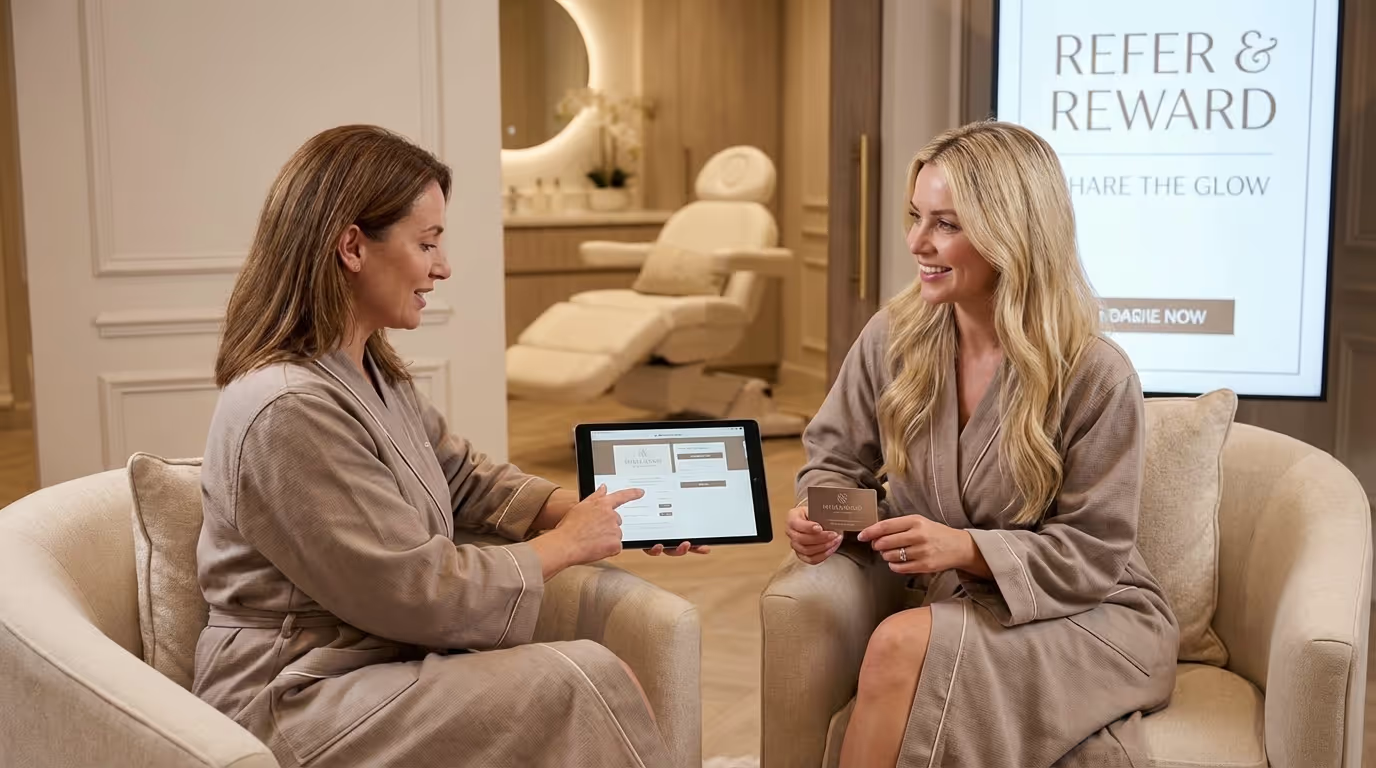
Share the Glow Give your friend $50 off their first treatment. You get $75 in credit when they book. [Practice Name] | [Phone] | [Website]
Back:
How it works: 1. Share this card with a friend 2. They book their first appointment and mention your name 3. They get $50 off their treatment 4. You get $75 credit applied to your account Your name: ________________ Friend's name: ________________ Valid for new patients only. Credits applied after friend's first completed treatment.
Implementation Steps:
- Design cards that match your brand identity
- Print on premium cardstock (not flimsy paper — it represents your brand)
- Place cards at every checkout station, in treatment rooms, and in gift bags
- Order enough for 6 months (typically 500-1,000)
- Train front desk to hand a card to every patient at checkout with a verbal mention
Template 2: Referral Email (Sent to Existing Patients)
Subject line: Know someone who would love [Practice Name]?
Body:
Hi [First Name], We love having you as a patient, and we think your friends would love us too. For every friend you refer to [Practice Name], you will receive $75 in credit toward your next treatment. Plus, your friend gets $50 off their first visit. How to refer: Simply share this link with anyone you think would benefit from our services: [Referral Link] When your friend books and completes their first treatment, your $75 credit is automatically applied to your account. No limit on referrals — the more friends you send our way, the more credit you earn. Thank you for spreading the word. It means more than you know. [Provider Name] [Practice Name]
Benchmarks: Referral program emails achieve 25-35% open rates and 4-7% click rates when sent to active patients.
Template 3: Post-Treatment Referral Ask (SMS)
Sent 7 to 14 days after a treatment, when results are visible and satisfaction is high.
Hi [First Name], so glad to hear you are loving your results! Know anyone who might be interested? Share this link and they will get $50 off their first visit — and you will earn $75 in credit: [Referral Link]
Benchmarks: Post-treatment SMS referral requests generate 3-5x more referrals than generic email asks because they hit at peak patient satisfaction.
Template 4: Referral Launch Announcement (Email)
For launching a new referral program to your existing patient base.
Subject line: Introducing our referral program — earn credits for every friend you refer
Body:
Hi [First Name], We are launching something we are really excited about — the [Practice Name] Referral Program. Here is how it works: You refer a friend → They get $50 off their first treatment They complete their first visit → You get $75 in credit There is no limit. Refer 1 friend or 10 — each referral earns you credit toward your next treatment. Why are we doing this? Our best patients have always come from referrals. When someone walks in because a friend told them to, they already trust us. They have the best experience, the best results, and they stick with us the longest. We want to reward you for making those introductions. Get started now: Share your personal referral link: [Referral Link] Thank you for being part of the [Practice Name] family.
Template 5: Referral Reminder (Quarterly Email)
Sent quarterly to keep the program top of mind.
Subject line: Your referral credit balance: $[Amount]
Body:
Hi [First Name], Quick update on your [Practice Name] referral status: Referrals this year: [Number] Credit earned: $[Amount] Credit used: $[Amount] Available balance: $[Amount] Remember — every friend you refer earns you $75 in credit when they complete their first treatment. No limit, no expiration. Share your referral link: [Referral Link]
Template 6: Referral Thank-You (Automated SMS)
Sent immediately when a referred patient completes their first treatment.
Great news, [First Name]! Your friend [Friend First Name] just had their first treatment at [Practice Name]. $75 has been added to your referral credit. Your balance is now $[Total]. Book your next treatment: [Booking Link] Thank you!
Why immediate notification matters: Instant gratification reinforces the referral behavior. The faster you acknowledge and reward, the more likely they are to refer again.
Building the Tracking and Automation System
A referral program without tracking is a referral program that dies within 3 months. You need a system to track who referred whom, when credits were earned, and when they were redeemed.
Option 1: CRM-Based Tracking (Recommended)
If you are using GoHighLevel or a similar CRM:
Implementation Steps:
- Create a custom field: "Referred by" on the contact record
- Create tags:
referral:source(for new patient) andreferral:referrer(for referring patient) - Create a custom field: "Referral credit balance" on the referrer's contact record
- Create a custom field: "Total referrals" as a counter on the referrer's record
- Build automation workflow:
- Trigger: New patient tagged with
referral:sourcecompletes first treatment - Action 1: Add $75 to referrer's credit balance
- Action 2: Increment referrer's total referral count
- Action 3: Send referrer notification SMS (Template 6)
- Action 4: If referral count reaches tier threshold, send tier upgrade email
- Action 5: Update internal reporting pipeline
Option 2: Referral Link Tracking
Generate unique referral links for each patient that automatically attribute new bookings.
Implementation Steps:
- Use your CRM's referral or affiliate tracking features
- Generate unique URLs for each patient (e.g., practicewebsite.com/refer/jane-d)
- When someone books through that URL, the referral is tracked automatically
- Set up a dedicated referral landing page that captures the referral connection
- Test the full flow before launching: link → landing page → booking → attribution → credit
Option 3: Manual Tracking (Not Recommended Long-Term)
If you do not have CRM automation yet:
Implementation Steps:
- Ask every new patient, "How did you hear about us?" at intake
- If referral, record the referring patient's name
- Track in a shared spreadsheet updated weekly
- Apply credits manually after the referred patient's first treatment
- Plan to automate within 90 days — manual tracking breaks down with volume
Tracking System Comparison:
| Feature | CRM-Based | Link Tracking | Manual |
|---|---|---|---|
| Accuracy | 95%+ | 90%+ | 60-75% |
| Staff time required | Minimal (after setup) | Minimal (after setup) | 2-4 hours/week |
| Scalability | Unlimited | Unlimited | Breaks at 50+ referrals/month |
| Patient experience | Seamless | Good | Clunky |
| Setup time | 4-8 hours | 3-6 hours | 1 hour |
| Recommended | Yes | Yes (supplement to CRM) | Temporary only |
When and How to Ask for Referrals
Timing is everything. Ask at the wrong moment and you get ignored. Ask at the right moment and you get enthusiastic action.
The Best Times to Ask
| Timing | Why It Works | Method | Expected Response Rate |
|---|---|---|---|
| Right after treatment (visible results) | Peak satisfaction | Provider verbal mention | 15-25% express interest |
| 7-14 days post-treatment | Results settled, patient excited | Automated SMS (Template 3) | 5-8% share referral link |
| At follow-up appointment | Happy with results, rebooking | Provider or front desk mention | 10-15% take a referral card |
| After a 5-star review | Already expressing enthusiasm | Automated email triggered by review | 8-12% share referral link |
| During email marketing | Consistent visibility | Footer CTA in every email | 1-2% per send (cumulative) |
| At loyalty program milestones | Feeling valued and connected | Automated email with referral mention | 6-10% share |
How to Ask (Without Being Awkward)
Scripts That Work:
| Situation | Script |
|---|---|
| Provider post-treatment | "You look amazing. If you know anyone who has been thinking about [treatment], I would love to help them. We have a referral program — you both get credit." |
| Front desk at checkout | "By the way, we have a referral program — if you refer a friend, you both get credit toward your next treatment. Want me to add a referral card to your bag?" |
| Follow-up call | "So glad you are happy with your results! If any of your friends are curious, we have a referral program. I will text you your personal link." |
Scripts That Do Not Work:
| Approach | Why It Fails |
|---|---|
| "Can you refer 5 friends?" | Feels like a sales quota |
| "We need more patients, can you help?" | Desperate, not confidence-building |
| "We are running a referral contest" | Incentivizes quantity over quality |
| Generic email blast with no personalization | Gets ignored |
The key is making the referral feel like you are helping the patient help their friends — not asking them to do sales for you.
Promoting Your Referral Program (Ongoing Visibility)
The number one reason referral programs fail is not the incentive structure — it is that patients forget the program exists. You need to promote it at every touchpoint, consistently, forever.
Referral Program Visibility Checklist
| Touchpoint | Method | Frequency |
|---|---|---|
| Website | Dedicated page + header/footer link | Always visible |
| Booking confirmation | Mention in confirmation email/SMS | Every booking |
| Check-in | Front desk verbal mention | Every visit |
| Treatment room | Physical signage or digital screen | Every visit |
| Checkout | Referral card + verbal mention | Every visit |
| Post-treatment email | Referral CTA in sequence | After every treatment |
| Monthly newsletter | Referral section/banner | Monthly |
| Social media | Program highlights, success stories | 2-3x per month |
| SMS campaigns | Periodic referral reminders | Monthly |
| Google Business Profile posts | Referral program announcements | Monthly |
| Patient portal/app | Referral link prominently displayed | Always visible |
| Appointment reminders | Referral mention in footer | Every reminder |
| Thank-you cards | Referral card included | After first visit |
| Welcome sequence | Introduce referral program in email 3-4 | New patients |
Implementation Steps:
- Audit all current patient touchpoints against this list
- Identify gaps where the referral program is not mentioned
- Add referral messaging to every gap over the next 30 days
- Train every staff member on how to mention the program naturally
- Measure awareness quarterly (ask patients: "Are you aware of our referral program?")
- Target: 80%+ of active patients should be aware of the program within 6 months
Common Referral Program Mistakes
Mistake 1: Making It Too Complicated
If a patient cannot explain your referral program in one sentence, it is too complicated.
| Too Complicated | Just Right |
|---|---|
| "Refer a friend, earn 100 points, points worth 1 cent each redeemable on treatments over $200 on Tuesdays" | "Refer a friend, you both get credit" |
| "Download our app, create an account, generate a link, have your friend use the link to book" | "Share this link with a friend" |
Mistake 2: Forgetting to Promote After Launch
Launching a referral program and then never mentioning it again is the most common failure mode. The launch email generates initial excitement. Consistent promotion at every touchpoint generates sustained referral volume.
Mistake 3: Slow Credit Fulfillment
If a patient refers someone and has to wait 60 days for their credit while calling your front desk to follow up, they will never refer again.
Fix: Automate credit fulfillment. The moment a referred patient completes their first treatment, the referrer should be notified and credited — the same day, ideally within minutes.
Mistake 4: No Tracking or Attribution
If you cannot tell which patients came from referrals and which referrers are most active, you cannot optimize the program.
Essential Tracking:
| Data Point | Why It Matters | How to Track |
|---|---|---|
| Total referrals per month | Program health | CRM automation |
| Top referrers (by volume) | VIP recognition | CRM reporting |
| Referral conversion rate | Program effectiveness | Referral leads / completed referrals |
| Revenue from referred patients | ROI calculation | CRM source tagging |
| Cost per referred patient | Efficiency metric | Incentive cost / completed referrals |
| Referred patient LTV | Long-term value | CRM patient value tracking |
Mistake 5: Incentivizing Quantity Over Quality
Referral contests ("refer the most people this month and win!") incentivize spam referrals that generate low-quality leads and annoy people. Consistent, moderate incentives for every referral — with recognition (not prizes) for top referrers — produces better results.
Mistake 6: Not Thanking Referrers
Beyond the financial incentive, a personal thank-you from the provider or practice owner goes a long way. A handwritten note or personal SMS saying "Thank you for referring [friend's name] — it means the world to us" costs nothing and dramatically increases the likelihood of future referrals.
Mistake 7: Treating Referred Patients Like Ad Leads
Referred patients arrive with higher trust and higher expectations. Your intake process should acknowledge the referral: "Welcome! [Referrer name] told us great things about you. We are excited to take care of you." This validates their decision and honors the referrer's recommendation.
Measuring Referral Program Success
Key Performance Indicators
| Metric | Target | Excellent | How to Measure |
|---|---|---|---|
| Referral volume (monthly) | 10-20 | 30+ | CRM referral tag count |
| % of active patients who refer | 10-15% annually | 20%+ | Referrer count / active patients |
| Referrals per referrer | 1.5-2.0 annually | 3.0+ | Total referrals / unique referrers |
| Referral-to-consultation rate | 50%+ | 65%+ | Referral leads / consultations booked |
| Consultation-to-treatment rate | 65%+ | 80%+ | Consultations / treatments completed |
| Overall referral-to-patient rate | 35%+ | 50%+ | Referral leads / active patients created |
| Cost per referred patient | $75-$125 | Under $75 | Incentive cost / patients acquired |
| Referred patient first treatment value | $400+ | $500+ | Average first visit revenue |
| Referred patient 12-month LTV | $3,000+ | $4,500+ | CRM lifetime value tracking |
| Program awareness | 70%+ | 90%+ | Quarterly patient survey |
Monthly Reporting Template
Track monthly and compare to your paid acquisition channels:
| Metric | Referrals | Google Ads | Meta Ads | Organic |
|---|---|---|---|---|
| New leads | — | — | — | — |
| Cost per lead | $— | $— | $— | $— |
| Lead-to-patient rate | —% | —% | —% | —% |
| Cost per patient | $— | $— | $— | $— |
| Avg first treatment value | $— | $— | $— | $— |
| 6-month LTV | $— | $— | $— | $— |
| 12-month LTV | $— | $— | $— | $— |
| Rebook rate | —% | —% | —% | —% |
When you see this data side by side, the case for investing in referrals becomes obvious. Referrals will almost always show the lowest cost per patient, highest LTV, and highest retention rate.
Integrating Referrals With Your Marketing Ecosystem
Your referral program should not operate in isolation. It should connect with and amplify every other marketing system in your practice.
Referrals + Loyalty Program
If you run a loyalty program, referrals should earn bonus loyalty points on top of the referral credit. This creates a dual incentive: "Refer a friend and earn $75 in credit PLUS 500 bonus loyalty points." The loyalty integration also creates switching costs that reduce churn.
Referrals + Membership Program
Membership members are your most engaged patients — they should be your highest-volume referrers. Offer members an enhanced referral incentive ("Members earn $100 per referral instead of $75") as an additional membership benefit.
Referrals + Reactivation Campaigns
Include referral program information in your reactivation campaigns. A lapsed patient who sees that they could earn free treatments by referring friends might be motivated to re-engage.
Referrals + Social Media
Feature successful referrals (with permission) on social media. "A huge thank-you to [patient name] for referring three of her friends this month! Earning her way to a complimentary treatment." This normalizes referring and inspires others.
Referrals + Google Reviews
Patients who leave 5-star Google reviews are your most satisfied patients. Automate a referral program mention in your post-review follow-up: "Thank you for your amazing review! If you know anyone who would love the same experience, share your referral link: [Link]"
Referrals + Promotions
During major promotional campaigns, offer double referral credits as a bonus accelerator. "This month only: refer a friend and earn $150 in credit (double the usual amount)." This creates urgency and boosts referral volume during key periods.
The Implementation Roadmap
Week 1: Design
| Task | Time | Output |
|---|---|---|
| Choose referral model (dual incentive recommended) | 1 hour | Model selected |
| Set incentive amounts based on your margin analysis | 1 hour | Incentive structure defined |
| Design physical referral cards | 2 hours | Card design approved |
| Write email and SMS templates (use templates above) | 3 hours | 6 templates ready |
| Define tracking requirements | 1 hour | Tracking spec document |
Week 2: Build
| Task | Time | Output |
|---|---|---|
| Set up CRM tracking (custom fields, tags, automations) | 4 hours | CRM configured |
| Create referral links or tracking codes | 2 hours | Link system ready |
| Add referral section to website | 2 hours | Web page live |
| Print referral cards | Order placed | Cards in production |
| Brief front desk and providers on asking for referrals | 1 hour | Team trained |
Week 3: Launch
| Task | Time | Output |
|---|---|---|
| Send launch announcement email (Template 4) | 30 min | Email sent |
| Start asking for referrals in-person at appointments | Ongoing | Daily practice |
| Post about program on social media | 30 min | 2-3 social posts |
| Place referral cards at checkout and in treatment rooms | 15 min | Cards distributed |
| Add referral footer to all automated emails | 30 min | Email templates updated |
Week 4: Measure and Optimize
| Task | Time | Output |
|---|---|---|
| Track referrals received | 30 min | First week data |
| Track referral conversions | 30 min | Conversion data |
| Collect staff feedback on patient responses | 30 min | Feedback summary |
| Identify any friction points in the process | 1 hour | Issues documented |
| Thank top referrers personally | 30 min | Relationships strengthened |
Month 2-3: Scale
| Task | Frequency | Output |
|---|---|---|
| Monthly referral program email to full list | Monthly | Ongoing awareness |
| Quarterly referral balance update emails | Quarterly | Credit reminders |
| Staff refresher training | Monthly | Consistent asking |
| A/B test incentive amounts or messaging | Monthly | Optimization data |
| Add referral mention to new touchpoints | Ongoing | Expanded visibility |
Advanced Referral Strategies
The "VIP Referrer" Program
Identify your top 5% of referrers and create a special tier for them:
| Benefit | Details |
|---|---|
| Enhanced credit | $150 per referral (vs. standard $75) |
| VIP events | Quarterly invitation-only events |
| First access | New treatment previews before anyone else |
| Recognition | Featured on social media (with consent) |
| Provider access | Direct text/call access to their provider |
These super-referrers are worth investing in because a single one can generate 10-20 new patients per year.
Seasonal Referral Accelerators
Boost referral volume during specific periods:
| Period | Accelerator | Example |
|---|---|---|
| January (New Year) | Double credits | "Double referral credits all January" |
| March (spring) | Triple for bridal referrals | "Refer a bride and earn triple credits" |
| July-August (slow season) | Bonus add-on | "Refer this summer and earn credit + a free add-on" |
| November (pre-holiday) | Gift card bonus | "Refer a friend and both get a $50 gift card on top" |
The "Referral Experience" for New Referred Patients
Create a slightly elevated experience for referred patients to validate the referrer's recommendation:
Implementation Steps:
- Flag referred patients in your booking software so staff knows before they arrive
- Greet them by acknowledging the referral: "Welcome! [Name] speaks so highly of you."
- Offer a small welcome gift (branded skincare sample, not a discount)
- Send a thank-you to the referrer after the referred patient's first visit
- Follow up with the referrer: "Your friend had a great experience — thank you for the introduction"
The Bottom Line
A med spa referral program is not a marketing tactic — it is a patient acquisition channel that compounds over time, costs less than advertising, and delivers higher-quality patients with better retention and higher lifetime value.
The only thing standing between you and a stream of referred patients is a system. Build the system, promote it consistently, and reward the patients who send their friends your way. The math is overwhelmingly in your favor: lower acquisition costs, higher lifetime values, and a compounding growth engine that strengthens every year.
Every month you operate without a structured med spa referral program is referral revenue you are leaving on the table — patients who would have come in, who would have stayed, who would have referred more people themselves.
Want us to help you build a referral system that integrates with your CRM, your email marketing, your loyalty program, and your overall patient acquisition strategy? We can show you exactly where your biggest opportunities are.