
A patient forms an opinion about your practice within seven seconds of walking through your door. Before they meet their provider, before they sit down for a consultation, before they read a single word of your treatment menu — they have already decided whether your practice feels premium or feels like every other clinic they have been to.
Your medspa interior design is doing that work. And in most med spas, the wrong med spa interior design ideas are doing that work badly.
The average med spa looks like a dentist office with a few candles. White walls, fluorescent lighting, vinyl chairs, a TV playing cable news in the waiting room, and treatment rooms that feel more like exam rooms than anything a patient would associate with a luxury experience. Then the owner wonders why patients push back on pricing.
Your physical space is the most powerful branding tool you have. It is the one touchpoint that engages every sense simultaneously — what patients see, hear, smell, and feel the moment they enter. Get it right, and your space does the selling for you. Patients feel the premium before you say a word about pricing.
This guide covers med spa interior design ideas from a business perspective: what medical spa design ideas actually impact patient perception, retention, and willingness to pay premium prices. We will walk through every zone in your practice, provide implementation steps, cost benchmarks, and flag the common mistakes that silently undermine your brand.
The Business Case for Investing in Interior Design
Before we get into specific design ideas, here is the data-backed business argument — because too many practice owners treat interior design as an expense rather than an investment.
| Business Impact | How Design Drives It | Estimated Revenue Impact |
|---|---|---|
| Premium pricing justification | Luxury environment sets pricing expectations | 15-25% higher per-unit pricing tolerance |
| Treatment acceptance rate | Relaxed patients say yes more often | 10-20% increase in consultation conversion |
| Rebooking rates | Patients return to places they enjoy | 15-30% improvement in retention |
| Word-of-mouth and social sharing | Beautiful spaces generate organic content | $5,000-$20,000/year in equivalent ad spend |
| Staff satisfaction and retention | Better environment reduces burnout | 20-40% reduction in turnover costs |
| Google review quality | Environment is the #2 factor in 5-star reviews | Higher average rating → more patient acquisition |
| Photography quality | Better space = better photos for marketing | Professional imagery without studio rental |
The ROI math: Practices that invest $50,000-$150,000 in interior design typically see that investment returned within 12-18 months through higher treatment acceptance rates, premium pricing, and increased patient retention. Compare that to $50,000 in advertising that generates leads for a few months but builds no lasting asset.
A $14/unit Botox patient in a luxury environment generates 17-25% more revenue than a $12/unit patient in a clinical space — and the luxury patient rebooks at 2x the rate. Over 3 years, that design investment pays for itself many times over.
Reception Area: Med Spa Design Inspiration for First Impressions
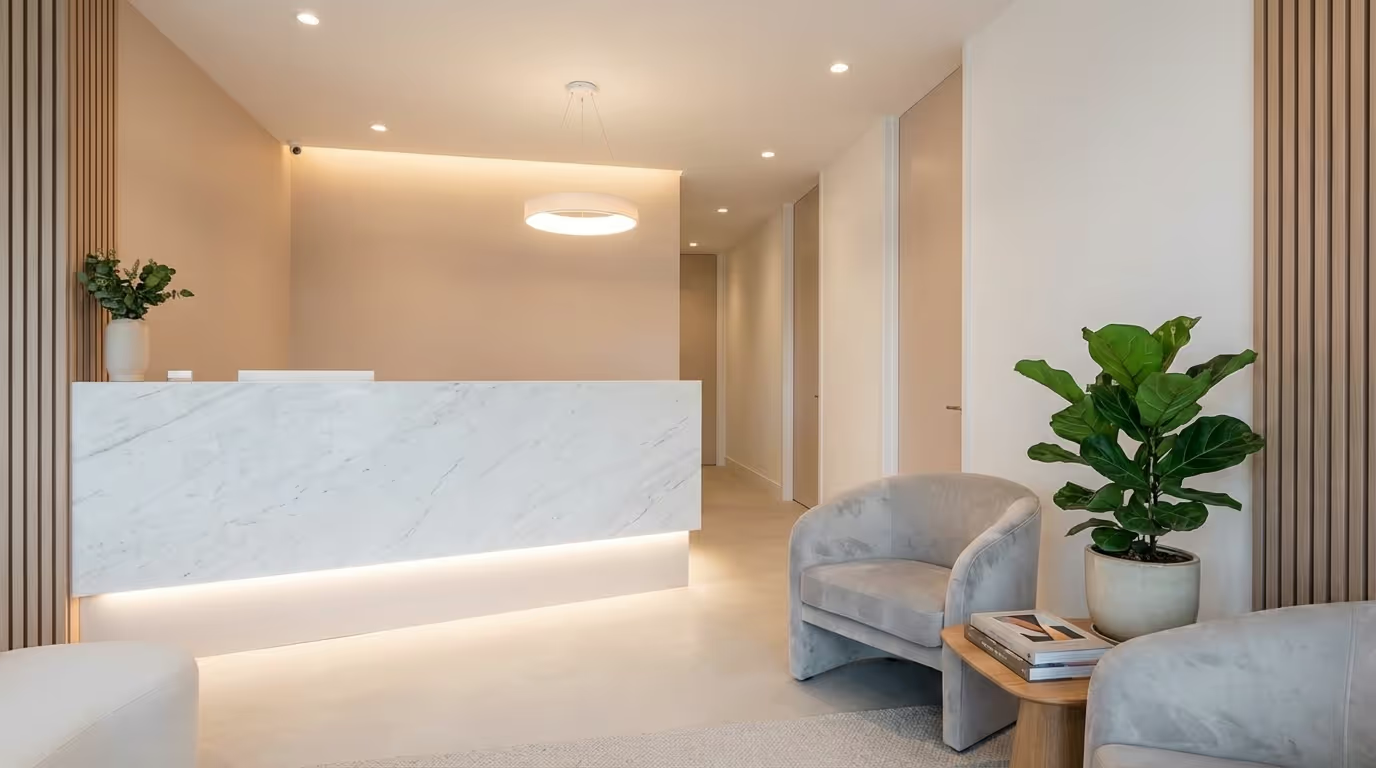
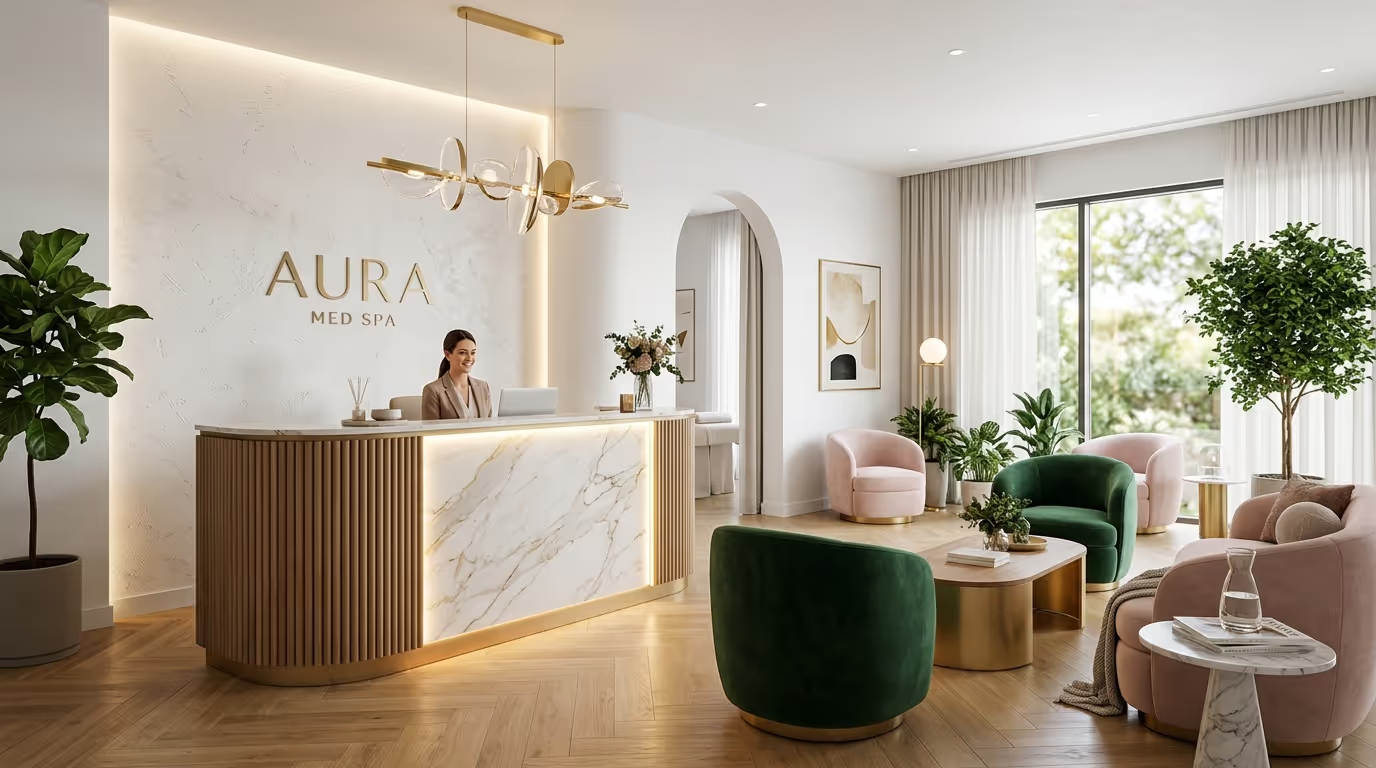
The reception area is where perception is formed. You have seconds to communicate: "This is a premium experience. You made the right choice coming here."
Layout and Flow
Implementation steps for reception redesign:
- Eliminate the clinical check-in counter. Replace the traditional front desk with a low, open reception desk that feels like a concierge stand at a boutique hotel. Or use a seated check-in where a team member greets patients with a tablet.
| Reception Style | Feel | Cost | Best For |
|---|---|---|---|
| Traditional counter with glass | Clinical, transactional | $2,000-$5,000 | Avoid — sends the wrong signal |
| Low open desk | Hotel-like, welcoming | $3,000-$8,000 | Most med spas |
| Seated check-in (no desk) | Ultra-premium, personal | $1,000-$3,000 (tablets + seating) | Luxury positioning |
| Reception lounge with roaming staff | Spa-like, relaxed | $5,000-$12,000 (furniture + tech) | High-end practices |
- Create a transition zone. If your space allows, design a short hallway, feature wall, or vestibule between the entrance and reception. This separates the outside world from your environment and signals "you are entering somewhere special."
- Design for privacy. Provide seating configurations that create visual and acoustic privacy — high-back chairs, partitioned seating areas, or a separate consultation lounge. No patient wants to discuss their treatment goals in earshot of six other people.
Seating
Replace medical waiting room chairs with comfortable lounge seating. The goal is to mimic a high-end hotel lobby, not a hospital.
| Element | Do | Do Not | Budget |
|---|---|---|---|
| Upholstery | Velvet, linen-look performance fabric, quality leather | Vinyl, mesh, plastic | $800-$3,000/piece |
| Style | Mix of lounge chairs and small sofas | Rows of identical chairs | $3,000-$15,000 total |
| Color | Neutral bases with brand-color accent pillows | All-white or primary colors | — |
| Comfort | Supportive with soft cushioning | Hard, shallow, or rickety | — |
| Arrangement | Conversational groupings with side tables | Stadium-style rows | — |
Display and Retail Integration
If you sell skincare products — and you should (retail can represent 10-20% of revenue) — integrate displays into your reception design:
| Display Approach | Feel | Conversion Impact |
|---|---|---|
| Wire racks / pegboard | Drugstore — kills premium perception | Low |
| Backlit floating shelves | Boutique — elevates product value | High |
| Glass display cases | Museum-like — creates desire | Medium-high |
| Skincare bar with testers | Interactive — drives trial and purchase | Highest |
Implementation steps:
- Curate your display to 15-20 hero products (not every SKU)
- Include testers — tactile experience increases purchase rates 40-60%
- Display pricing elegantly (not handwritten tags)
- Train staff to recommend products during checkout
- Refresh displays monthly to maintain visual interest
Amenities That Signal Premium
| Amenity | Cost | Patient Impact | Implementation |
|---|---|---|---|
| Infused water / tea / coffee | $50-$100/month | Sets luxury tone immediately | Branded glassware, not paper cups |
| Curated reading material | $50-$200/year | Art and wellness books, not tabloids | Coffee table books on aesthetics |
| Signature scent | $30-$100/month | Subtle — clean linen, eucalyptus, bergamot | Diffuser, not spray; nothing cloying |
| Curated playlist | $10-$15/month (Spotify Business) | Ambient, spa-like music | Never a TV with news or ads |
| Wi-Fi signage | One-time $50-$100 | Patients appreciate the gesture | Elegant display, not a sticky note |
| Phone charging station | $100-$300 one-time | Practical courtesy | Integrated into side tables |
Consultation Rooms: Where Trust Is Built
Consultations are where patients decide to invest in treatments. The room should facilitate open, comfortable conversation — not feel like a medical examination. Design decisions here directly impact your consultation conversion rate.
Design Principles
| Principle | Implementation | Why It Matters |
|---|---|---|
| Eye-level seating | Comfortable chairs at same height, no exam table | Eliminates power imbalance |
| Adjustable lighting | Warm ambient + brighter task light for assessment | Clinical precision when needed, comfort otherwise |
| Well-lit mirror | Adjustable warm/cool settings | Patients can point to areas of concern |
| Technology integration | Large screen or tablet for before/afters | Elevates consultation to visual experience |
| Full privacy | Solid doors, soundproofing | Patients sharing insecurities need complete privacy |
| Brand presence | Subtle brand elements, artwork, treatment menu | Reinforces premium positioning |
Implementation steps:
- Replace exam stools with quality chairs ($500-$1,500 each)
- Install dimmer switches on all overhead lighting ($50-$200 per room)
- Add an LED vanity mirror with warm/cool toggle ($200-$500)
- Mount a 32"+ display for treatment presentations ($300-$800)
- Ensure doors are solid (not hollow-core) and add weatherstripping for sound dampening ($100-$300)
Treatment Rooms: Medical Spa Design Ideas for the Core Experience
Treatment rooms are where patients spend 30-90 minutes. Every detail matters because this is where the actual service delivery happens — and where patients decide whether to rebook.
Lighting: The Single Most Impactful Design Element
Common mistake: Fluorescent lighting. This is non-negotiable — eliminate it. Fluorescent lights are harsh, unflattering, and clinical. They make everyone look worse, which is the opposite of what an aesthetics practice should do.
The 4-Layer Lighting System:
| Layer | Type | Color Temperature | Purpose | Cost Per Room |
|---|---|---|---|---|
| Ambient | Recessed dimmable LED | 2700-3000K (warm) | General illumination, patient comfort | $500-$1,500 |
| Task | Adjustable treatment light | 4000-5000K (cool white) | Clinical precision during procedure | $500-$2,000 |
| Accent | LED strips behind mirrors/under beds | 2700-3500K | Depth, visual interest, sophistication | $200-$600 |
| Mood | Chromotherapy (color-changing) | Variable | Spa-like ambiance, patient relaxation | $300-$1,000 |
Implementation steps:
- Remove all fluorescent fixtures ($0 — just disconnect)
- Install recessed LED downlights with dimmer controls
- Add adjustable task lighting on articulating arms (medical-grade)
- Run LED strip lighting behind key architectural features
- Install dimmer panels at room entry for quick ambient adjustment
- Consider chromotherapy in 1-2 rooms as a differentiator
The ability to shift from "clinical precision" during treatment to "relaxation" during recovery is a game-changer for patient experience.
Treatment Beds and Chairs
| Feature | Standard | Premium | Investment |
|---|---|---|---|
| Bed quality | Medical-grade, adjustable | Spa-style medical bed (Living Earth Crafts, Gharieni) | $3,000-$12,000 |
| Heating | None | Built-in heated surface | +$500-$2,000 |
| Linens | Standard medical sheets | Crisp white, high-thread-count with soft blanket option | $200-$500/room |
| Positioning | Standard flat bed | Knee bolster, neck pillow, arm rests | $100-$300/room |
| Replacement | When broken | Fresh linens between every patient, bed covers quarterly | Ongoing |
A heated treatment bed is a small investment that patients talk about constantly. It transforms the injectable and laser experience from "tolerable" to "comfortable." Patients mention it in reviews and recommend your practice specifically because of the comfort details.
Walls, Surfaces, and Decor
| Element | Approach | Budget Per Room |
|---|---|---|
| Accent wall | Textured wallpaper, wood paneling, stone tile, or bold brand color | $500-$3,000 |
| Countertops | Quartz or solid-surface (not laminate) in matte finish | $1,000-$3,000 |
| Artwork | 1-2 tasteful pieces per room — abstract, nature, or photographic | $200-$1,000 |
| Equipment concealment | Built-in cabinetry to hide supplies and sharps containers | $2,000-$5,000 |
| Display screen | Wall-mounted for relaxation content during procedures | $300-$800 |
| Sound | In-room speakers for ambient music | $100-$500 |
What to avoid in treatment rooms: Anatomy posters, pharmaceutical brand displays, cluttered supply carts visible to patients, harsh overhead lighting, and any wall decoration that reminds patients they are in a medical setting.
Room Temperature
Maintain 70-72 degrees Fahrenheit with the ability to adjust per room. Patients having treatments on exposed skin get cold quickly. Always offer a warm blanket — this simple touch is mentioned in more positive reviews than almost any clinical outcome.
Hallways and Transitions
Hallways are often an afterthought, but patients walk through them on every visit.
| Element | Standard | Premium | Cost |
|---|---|---|---|
| Width | Code minimum (36") | 48-60" (comfortable passing) | Layout dependent |
| Lighting | Fluorescent | Recessed cove lighting or wall sconces | $500-$2,000 |
| Walls | Plain painted drywall | Gallery walls, textured panels, or display niches | $1,000-$5,000 |
| Flooring | Continue from reception | Consistent with overall design language | Part of overall floor |
| Wayfinding | "Room 1, Room 2" | Branded room names (Glow, Radiance, Serenity) | $200-$500 signage |
Restrooms: The Overlooked Branding Opportunity
Restrooms tell patients more about your practice than almost any other room. A beautiful reception area with a dingy restroom destroys credibility instantly.
Implementation steps for restroom upgrade:
| Element | Standard to Avoid | Premium Target | Cost |
|---|---|---|---|
| Faucet | Cheap chrome, manual | Touchless, brushed nickel or matte black | $200-$600 |
| Vanity | Laminate countertop | Stone or quartz with undermount sink | $1,000-$3,000 |
| Lighting | Overhead fluorescent | Flattering LED vanity mirror with built-in lights | $300-$800 |
| Amenities | Paper towels, basic soap | Hand lotion, tissues, mouthwash, breath mints, hairspray | $30-$50/month |
| Towels | Paper towel dispenser | Fresh hand towels (replaced throughout day) | $50-$100/month |
| Cleanliness | Cleaned daily | Checked and stocked hourly | Staff SOP |
Total restroom upgrade: $2,000-$5,000 one-time plus $80-$150/month ongoing. The ROI is entirely in perception — a spotless, well-appointed restroom reinforces every other premium signal in your practice.
Color Psychology for Med Spas
Color choices affect mood, perception, and behavior. Here is how to use color strategically, backed by environmental psychology research:
Color Guide by Zone
| Color Category | Best For | Psychological Effect | Application |
|---|---|---|---|
| Warm whites (yellow/pink undertones) | Walls throughout | Clean without sterile | Base wall color |
| Muted blues (dusty, sage blue) | Treatment rooms, consultation | Calm, trust, professionalism | Accent walls, textiles |
| Sage/olive green | Treatment rooms | Nature, renewal, health | Accent walls, plants |
| Earth tones (terracotta, warm clay) | Reception, retail area | Warmth, organic luxury | Accent furniture, textiles |
| Metallics (gold, brass, copper) | Hardware, fixtures, accents | Luxury signal | Brushed/matte finish throughout |
| Your brand color | Strategic accents | Brand recognition and identity | Single wall, furniture piece, or accessories |
Colors to Avoid
| Color | Why | Where It Exists in Bad Med Spas |
|---|---|---|
| Bright red | Raises blood pressure and anxiety | Accent walls, signage |
| Stark cool white | Clinical and cold | Every wall, ceiling |
| Dark gray/black dominant | Oppressive in enclosed rooms | Treatment rooms |
| Neon/bright colors | Cheapens the space instantly | Accent walls, signage |
| Hospital green/blue | Clinical association | Walls, scrubs |
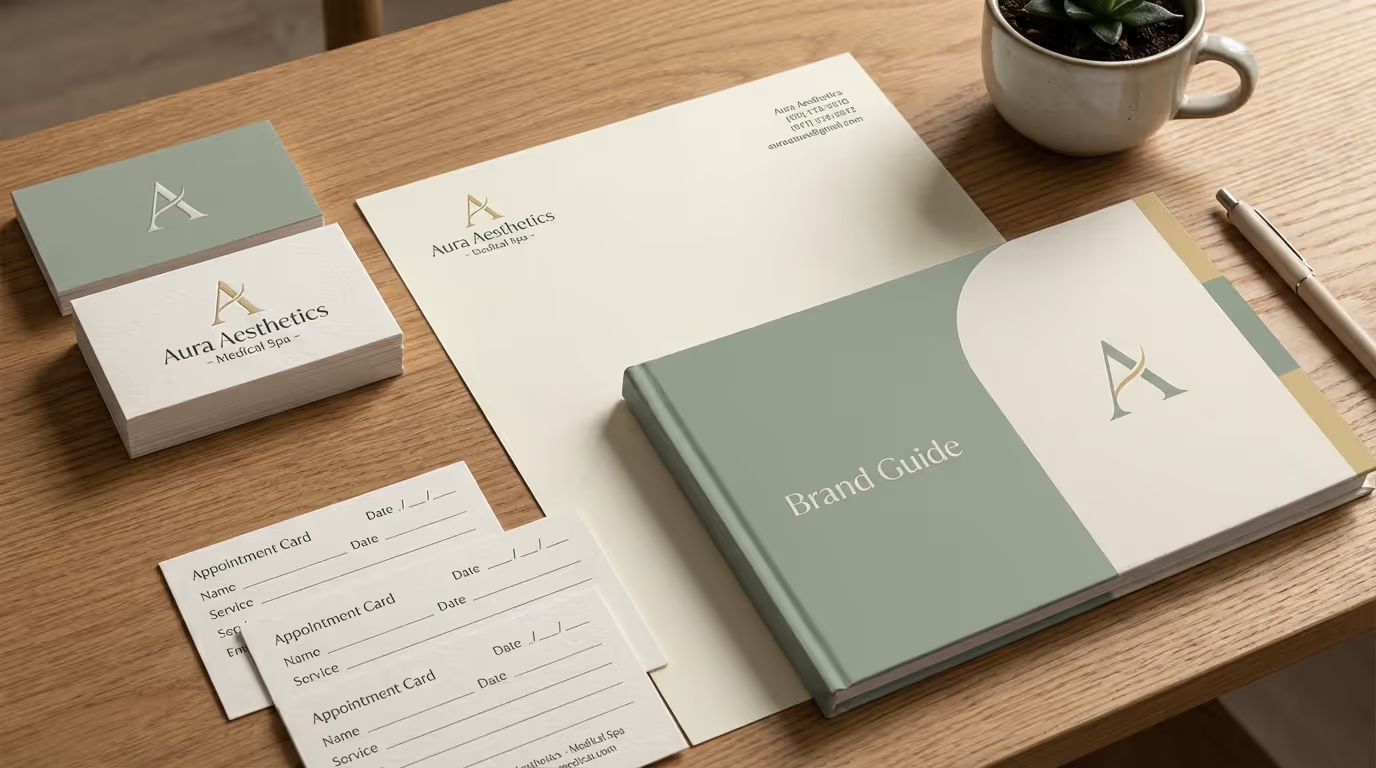
For how color fits into your overall brand identity, see our branding guide.
Material Selection Guide
The materials you choose communicate quality and taste at a subconscious level.
Flooring
| Material | Look | Durability | Hygiene | Cost/sq ft | Best For |
|---|---|---|---|---|---|
| Large-format porcelain tile (24x24+) | Natural stone look, luxurious | Excellent | Excellent | $5-$15 | Treatment rooms, restrooms |
| Luxury vinyl plank (LVP) | Wood tones, warm | Very good | Very good | $3-$8 | Reception, hallways, consultation |
| Natural hardwood | Warm, premium | Good (scratches easily) | Moderate | $8-$20 | Reception only (not clinical areas) |
| Carpet | Soft, quiet | Poor | Poor | $3-$10 | Avoid entirely — hygiene concerns |
| Standard ceramic tile | Dated, institutional | Good | Good | $2-$6 | Avoid — looks clinical |
| Linoleum | Clinical | Good | Moderate | $2-$5 | Avoid — hospital association |
Recommendation: LVP in high-traffic areas (cost-effective, warm, easy maintenance) and large-format porcelain in treatment rooms and restrooms (premium look, superior hygiene).
Countertops
| Material | Look | Durability | Hygiene | Cost | Best For |
|---|---|---|---|---|---|
| Quartz | Premium, wide variety | Excellent | Excellent (non-porous) | $50-$120/sq ft | Treatment rooms, retail |
| Natural marble | Luxury statement | Moderate (stains, etches) | Moderate (porous) | $75-$250/sq ft | Reception desk only |
| Solid surface (Corian) | Clean, seamless | Good | Very good | $40-$100/sq ft | Treatment rooms |
| Laminate | Budget | Low | Low | $15-$40/sq ft | Avoid — looks and feels cheap |
Textiles
| Use | Material | Properties | Budget |
|---|---|---|---|
| Upholstery | Performance fabric (Crypton, Sunbrella) | Stain-resistant, easy clean, looks premium | $50-$150/yard |
| Drapery | Floor-to-ceiling panels in treatment/consultation rooms | Softness, acoustic dampening, warmth | $200-$800/window |
| Towels/linens | High-quality white cotton | Fresh, luxurious feel | $200-$500 initial per room |
| Throw blankets | Soft, washable, hypoallergenic | Patient comfort in treatment rooms | $50-$150 each |
Budgeting for Medspa Interior Design
Budget Tiers
| Tier | Investment | Scope | Best For | Timeline |
|---|---|---|---|---|
| Essential refresh | $15,000-$30,000 | New paint, lighting, furniture, accessories | Practices needing a quick upgrade | 2-4 weeks |
| Comprehensive redesign | $50,000-$100,000 | Flooring, full lighting, furniture, accent walls, fixtures | Practices needing significant transformation | 4-8 weeks |
| Full build-out | $100,000-$250,000+ | Ground-up or gut renovation, custom millwork, premium materials | New construction or total renovation | 8-16 weeks |
Priority Investment Order
If budget is limited, invest in this order for maximum patient impact per dollar:
| Priority | Investment | Cost | Impact Score (1-10) |
|---|---|---|---|
| 1 | Lighting upgrade | $2,000-$8,000 | 10 — transforms any space instantly |
| 2 | Reception furniture | $3,000-$10,000 | 9 — first impression zone |
| 3 | Treatment bed + linens | $2,000-$8,000 | 9 — where patients spend the most time |
| 4 | Accent walls (2-3 rooms) | $1,000-$5,000 | 8 — visual interest and photography backdrop |
| 5 | Restroom fixtures + amenities | $2,000-$5,000 | 8 — reinforces or destroys premium perception |
| 6 | Signature scent + sound | $200-$500 | 7 — multi-sensory experience |
| 7 | Retail display upgrade | $1,000-$4,000 | 7 — drives retail revenue |
| 8 | Flooring replacement | $10,000-$40,000 | 7 — lasting but highest cost |
The 7-change quick upgrade (priorities 1-3 plus scent and sound) can be accomplished for under $15,000 and will noticeably shift how patients experience your practice.
Working with Professionals
For anything beyond a basic refresh, hire a professional interior designer — specifically one with medical or spa space experience.
| What a Designer Provides | Value |
|---|---|
| Healthcare compliance knowledge | ADA, fire code, infection control requirements |
| Vendor relationships and pricing | 20-30% savings on materials and furniture |
| Cohesive design vision | Every element works together instead of feeling piecemeal |
| Mistake prevention | Avoid $10,000+ errors in material selection or layout |
| Project management | Coordinated timeline, contractor oversight |
Budget 10-15% of total project cost for design fees. For a $100,000 project, $10,000-$15,000 in design fees typically saves $20,000+ in avoided mistakes and vendor discounts.
Designing for Instagram and Social Media
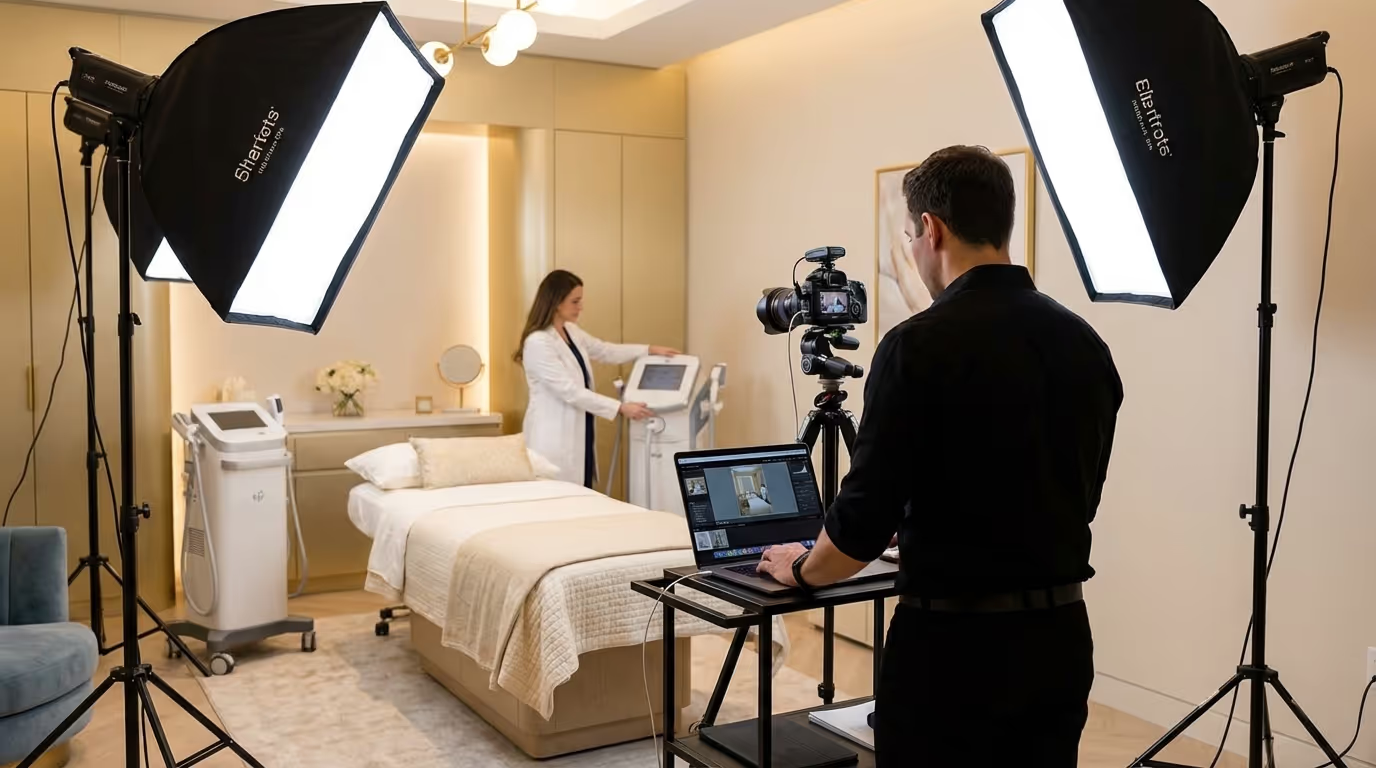
This is not superficial advice — it is strategic. A photography-friendly med spa that photographs well generates free organic marketing every single day.
Create Instagrammable Moments
| Feature | Cost | Marketing Value | Placement |
|---|---|---|---|
| Feature wall with logo | $1,000-$5,000 | Patient selfie backdrop → organic brand exposure | Reception or hallway |
| Neon sign with brand phrase | $500-$2,000 | Highly shareable content backdrop | Reception or VIP area |
| Living plant wall | $2,000-$8,000 | Premium, nature-forward aesthetic | Reception or hallway |
| Styled product display | $500-$2,000 | Product photography backdrop | Retail area |
| Ring light mirror | $200-$500 | Perfect selfie lighting for patients | Outside treatment rooms |
Implementation steps:
- Identify 2-3 spots in your practice that are camera-ready
- Ensure flattering, warm lighting at every photo spot
- Include your practice name or logo subtly in the background
- Add a small sign encouraging patients to share: "Tag us @YourPractice"
- Create a branded hashtag and display it at photo spots
- Reshare every patient post to your Stories (with permission)
Consistent Aesthetic for Video Content
When a patient or influencer films a Reel or TikTok walking through your practice, every room they pass should feel cohesive. A disjointed interior reads as chaotic — a consistent interior reads as intentional and premium.
| Consistency Element | How to Achieve It |
|---|---|
| Color palette | Same 5-6 colors repeated throughout |
| Material language | Same flooring, hardware finish, textile style in every room |
| Lighting quality | Warm, flattering, consistent color temperature |
| Artwork style | Same genre (abstract, photography, or nature) throughout |
| Branded elements | Logo, colors, fonts appear subtly and consistently |
Med Spa Interior Design Ideas Mistakes That Cost Patients and Revenue
Mistake 1: Designing Like a Doctor's Office
Impact: Patients associate clinical environments with discomfort and anxiety. Anxiety reduces treatment acceptance by 15-25%.
Fix: Remove every element that screams "medical" — fluorescent lighting, vinyl chairs, anatomy posters, pharmaceutical displays, reception windows with sliding glass. Replace with elements that communicate "luxury wellness experience."
Mistake 2: All White Everything
Impact: Cool white spaces feel sterile and cold. They photograph poorly for social media and trigger clinical associations.
Fix: Use warm whites (Benjamin Moore "Swiss Coffee" or "White Dove"), layer in natural materials, add texture through wood, stone, and textiles.
Mistake 3: Ignoring the Acoustic Environment
Impact: A TV blaring news or a dead-silent room both create discomfort. Treatment room conversations bleed into hallways.
Fix: Install a curated ambient playlist ($10-$15/month), add soft materials that absorb sound (drapes, upholstered furniture, acoustic panels behind artwork), and ensure treatment room doors seal properly.
Mistake 4: Mismatched Design Elements
Impact: A luxury treatment room connected to a hallway with peeling paint undermines every other investment. The weakest link defines perception.
Fix: Maintain consistent quality throughout every patient-accessible space. If you cannot afford to upgrade everything, focus on the patient journey path: entrance → reception → hallway → treatment room → checkout.
Mistake 5: Overlooking Scent
Impact: Smell is the sense most closely tied to memory and emotion. A bad smell (clinical antiseptic, food from a break room, nothing at all) creates a negative association.
Fix: Install a commercial scent diffuser with a subtle, consistent signature scent. Clean, fresh, and slightly botanical works universally. Change scent seasonally for a subtle "something is different" refresh that patients notice subconsciously.
Mistake 6: Choosing Trendy Over Timeless
Impact: That millennial pink accent wall will look dated in 18 months. Renovation costs $5,000-$20,000 per room.
Fix: Use timeless materials and colors as your base (natural stone, wood, warm neutrals). Express trends through accessories, textiles, and accent pieces that cost $200-$500 to update rather than $5,000 to redo.
Design by Practice Stage
New Build-Out (Opening a New Location)
| Priority | Details |
|---|---|
| Hire a designer early | Before lease signing — design requirements affect space selection |
| Plan for growth | Design 1-2 "future" treatment rooms that start as storage/office |
| Infrastructure first | Electrical, plumbing, HVAC for medical equipment — cheaper during build-out |
| Photography-ready | Design with content creation in mind from day one |
| Budget allocation | 60% hard costs (construction, fixtures) / 25% furniture + decor / 15% designer fees |
See our how to open a medical spa guide and business plan template for integration with your launch budget.
Existing Practice Refresh
| Priority | Details |
|---|---|
| Start with lighting | Highest impact, lowest cost upgrade |
| Focus on patient journey | Improve reception → hallway → treatment room |
| Phase the renovation | Spread cost over 2-3 months, doing one zone at a time |
| Minimal disruption | Schedule work during off-hours, maintain operations |
| Budget allocation | 40% furniture / 30% fixtures + lighting / 20% surfaces / 10% accessories |
Multi-Location Consistency
When scaling to multiple locations, create a design standard document:
| Element | Standardize | Allow Variation |
|---|---|---|
| Brand colors and logo placement | Yes — identical across all locations | No |
| Lighting system | Yes — same fixtures and color temperature | No |
| Furniture style | Yes — same or similar pieces | Slight variation for space |
| Flooring type | Yes — same material, same color | No |
| Accent walls | Standard approach | Variation by room size |
| Artwork | Same style genre | Different specific pieces |
| Scent | Same signature scent | No |
Frequently Asked Questions
How much should a med spa spend on interior design? For a new build-out, budget $100-$250+ per square foot for a premium space (excluding construction costs). For an existing practice refresh, $15,000-$100,000 depending on scope. As a rule, your interior design investment should be 8-15% of your total startup costs or equal to roughly 2 months of projected revenue for a refresh.
What is the most important design element in a med spa? Lighting. Replacing fluorescent lighting with warm, dimmable LED alternatives is the single highest-impact, lowest-cost design change you can make. It transforms the feel of every room and directly affects how patients perceive your practice. Budget $2,000-$8,000 for a complete lighting upgrade.
Should I hire an interior designer for my med spa? Yes, for any project over $30,000. A designer with medical or spa space experience understands healthcare compliance requirements while creating luxury environments. Their vendor relationships typically save 20-30% on materials, and they prevent costly mistakes. Budget 10-15% of project cost for design fees.
How do I make my med spa Instagram-friendly? Create 2-3 designated photo spots with flattering lighting, your brand visible in the background, and a clean aesthetic. A feature wall with your logo, a neon sign, or a living plant wall gives patients a reason to photograph and share. Display your branded hashtag near photo spots.
What flooring is best for a med spa? Large-format porcelain tile (natural stone look) for treatment rooms and wet areas. Luxury vinyl plank (wood look) for reception, hallways, and consultation rooms. Both are durable, hygienic, and photograph well. Avoid carpet (hygiene issues) and linoleum (clinical association).
How often should I update my med spa's interior? Major refresh every 5-7 years to stay current. Minor updates (accessories, textiles, artwork) every 12-18 months. Paint touch-ups annually. Treatment room equipment and linens should be maintained and replaced on a regular schedule per your management SOPs.
Your Design Action Plan
If you are looking at your space right now and seeing fluorescent lights, vinyl chairs, and bare walls, do not be overwhelmed. Start with the highest-impact changes:
- Replace overhead fluorescent lighting with warm LED alternatives
- Add one accent wall in your reception area
- Upgrade your seating to comfortable lounge chairs
- Install a signature scent diffuser
- Add a curated playlist on a discreet speaker system
- Upgrade restroom fixtures and add amenities
- Invest in quality linens and a heated treatment bed
These seven med spa design inspiration changes can be accomplished for under $15,000 and will noticeably shift how patients experience your practice — and how willing they are to pay premium prices, rebook, and refer friends.
For a comprehensive assessment of how your practice's physical presence and digital presence work together to attract premium patients, our free marketing audit is the place to start. We evaluate your website, your online reputation, your marketing channels, and how your brand positioning aligns with the experience patients find when they walk through your door.