

Most med spa marketing fails. Not because the practice is bad, not because the treatments don't work, and definitely not because there aren't enough patients looking for Botox, fillers, or body contouring in your market. It fails because the strategy is built wrong from the start.
Here is the pattern we see over and over: a med spa owner signs with a generalist agency, spends $3,000 to $8,000 per month on "digital marketing," gets a handful of vanity metrics in a monthly report, and has no idea whether any of it is actually filling chairs. Six months later, the contract ends, the owner is burned out on agencies, and the calendar still has gaps.
The problem is not the tactics. Google Ads work. SEO works. Social media works. The problem is the absence of a med spa marketing strategy that connects every channel into a system designed to do one thing: turn strangers into patients and patients into advocates.
This guide is that system. No fluff, no generic advice, no "post more on Instagram" recommendations. This is the framework we use to build marketing engines for medical aesthetics practices, and every piece of it is built on real campaign data from practices generating $100K to $500K per month in revenue.
If you want the condensed checklist version of this, bookmark our med spa marketing checklist and come back here for the deep strategy.
The Med Spa Marketing Framework: Four Stages That Drive Revenue
Before you spend another dollar on ads or another hour on social media, you need to understand the four stages every patient moves through. Miss one stage and the whole system leaks money.
Stage 1: Acquisition — Getting the right people to find you. Stage 2: Conversion — Turning attention into booked appointments. Stage 3: Retention — Bringing patients back without starting from scratch every time. Stage 4: Referral — Turning satisfied patients into your most effective marketing channel.
Every med spa marketing strategy you deploy should map to one of these four stages. If it doesn't, you're spending money on activity, not results.
The practices that scale past $300K per month aren't the ones running the most ads. They're the ones with the tightest system across all four stages. A 2% improvement in conversion rate and a 15% improvement in retention can double the ROI of your ad spend without adding a single dollar to your budget.
Here is how the math works for a practice spending $8,000/month on marketing:
| Scenario | Conversion Rate | Retention Rate | New Patients/Mo | Revenue/Mo |
|---|---|---|---|---|
| Current state | 4% | 30% | 32 | $96,000 |
| +2% conversion only | 6% | 30% | 48 | $144,000 |
| +15% retention only | 4% | 45% | 32 | $124,800 |
| Both improvements | 6% | 45% | 48 | $172,800 |
That is $76,800 more in monthly revenue from the same $8,000 ad spend. The difference is strategy, not budget.
Let's break down each stage with the exact tactics, implementation steps, benchmarks, and mistakes to avoid.
Stage 1: Acquisition Strategies
Acquisition is where most practices focus 90% of their budget, which is a mistake we will address later. But it is the starting point, and doing it right matters enormously. The goal is not maximum volume. It is maximum qualified volume at the lowest sustainable cost.
Google Ads: The Fastest Path to Booked Appointments
Google Ads remains the highest-intent acquisition channel for med spas. When someone searches "Botox near me" or "CoolSculpting [your city]," they are actively looking to book. That search intent is worth real money — average CPCs for med spa keywords range from $8 to $35 depending on your market and treatment.
The med spa marketing strategies that produce the best Google Ads results follow a specific structure.
Implementation Steps for Google Ads
- Audit your current account structure. If every treatment is lumped into one campaign, rebuild from scratch. Each treatment category needs its own campaign with dedicated ad groups.
- Build treatment-specific campaigns. Separate Botox, fillers, laser hair removal, body contouring, and weight loss into individual campaigns. Each treatment has different search volumes, CPCs, and patient values.
- Set up geo-targeting with radius exclusions. Most med spa patients travel 15 to 20 minutes. Target your radius, exclude areas where you can't realistically serve, and layer in zip-code bid adjustments based on household income data.
- Create dedicated landing pages. Sending paid traffic to your homepage is the single most common waste of ad budget we see. Treatment-specific landing pages with a single CTA convert at 8% to 12%, compared to 2% to 3% for homepage traffic.
- Install call tracking on every campaign. Over 60% of med spa bookings still come through phone calls. If you are not tracking calls as conversions, your data is lying to you. Use CallRail, CallTrackingMetrics, or similar.
- Build negative keyword lists from day one. Exclude "training," "certification," "salary," "DIY," "schools," and other non-patient search terms. Review search term reports weekly for the first 90 days.
- Enable conversion tracking for actual bookings. Track form submissions, phone calls over 60 seconds, and online bookings as conversions. Ignore click-through rates — they are vanity metrics.
Google Ads Benchmarks for Med Spas
| Metric | Poor | Average | Good | Excellent |
|---|---|---|---|---|
| Cost per click | $35+ | $15-25 | $8-15 | Under $8 |
| Click-through rate | Under 3% | 3-5% | 5-8% | 8%+ |
| Conversion rate | Under 3% | 3-5% | 5-8% | 8-12% |
| Cost per lead | $150+ | $75-100 | $40-75 | Under $40 |
| Cost per booked appointment | $300+ | $150-200 | $80-150 | Under $80 |
| ROAS | Under 3x | 3-5x | 5-8x | 8x+ |
If your numbers are significantly worse than the "Average" column, the campaign structure or landing page is the issue — not the channel. For a detailed cost breakdown by market, see our Google Ads cost guide.
Common Google Ads Mistakes
- Sending all traffic to the homepage. This single mistake wastes 40-60% of ad spend. Every ad group needs a matching landing page.
- Using broad match keywords exclusively. Broad match burns budget on irrelevant searches. Start with exact and phrase match, then expand selectively.
- Not bidding on your own brand name. Competitors will bid on your name if you don't. Brand campaigns cost pennies per click and prevent competitor poaching.
- Ignoring mobile bid adjustments. 70%+ of med spa searches happen on mobile. If your mobile landing pages don't convert, lower mobile bids until they do.
- Setting it and forgetting it. Google Ads requires weekly optimization for the first 90 days, then bi-weekly ongoing. Agencies that "set up and monitor" are billing you for neglect.
Meta Ads: Building Demand Before They Search
Meta Ads (Facebook and Instagram) serve a different purpose than Google. Patients are not searching for you — you are interrupting their scroll with something that creates interest. This is demand generation, not demand capture.
The best-performing med spa Facebook ad strategies in 2026 share these characteristics.
Implementation Steps for Meta Ads
- Upload your patient email list to Meta. Create a Custom Audience from your existing patient database (emails only, not PHI). Then build a 1% Lookalike Audience. This audience will outperform any interest-based targeting by 40-60%.
- Create a campaign structure with three layers. Prospecting (cold audiences), Retargeting (website visitors), and Retention (past patients). Allocate 60% to prospecting, 25% to retargeting, 15% to retention.
- Develop before-and-after creative. Use real patient results with proper consent documentation and appropriate disclaimers. Side-by-side formats outperform other creative types by 2-3x.
- Produce short-form video. 15 to 30 second videos showing treatment processes, provider expertise, or patient testimonials consistently win. Video outperforms static by 2x to 3x in click-through rate.
- Test lead form ads vs. landing page ads. Lead forms have lower friction and higher volume but lower lead quality. Landing pages produce fewer but more qualified leads. Run both for 30 days and compare cost per booked appointment, not cost per lead.
- Set up the Meta Pixel on every page of your website. Without the pixel, you cannot retarget website visitors or build lookalike audiences from converters.
- Implement a retargeting strategy. Show specific treatment ads to people who visited those treatment pages. Someone who viewed your Botox page should see Botox-specific retargeting creative.
Meta Ads Benchmarks for Med Spas
| Metric | Poor | Average | Good | Excellent |
|---|---|---|---|---|
| CPM (cost per 1,000 impressions) | $30+ | $15-25 | $10-15 | Under $10 |
| Cost per lead (lead form) | $50+ | $25-40 | $15-25 | Under $15 |
| Cost per lead (landing page) | $80+ | $40-60 | $25-40 | Under $25 |
| Lead-to-booking rate | Under 10% | 10-15% | 15-25% | 25%+ |
| ROAS | Under 2x | 2-4x | 4-6x | 6x+ |
Expect Meta to deliver leads with a longer time-to-booking compared to Google. Meta leads often need 2 to 4 touchpoints before they book, which is why email and SMS nurture sequences are non-negotiable.
Common Meta Ads Mistakes
- Using interest-based targeting only. Lookalike audiences from your patient list will outperform "interested in Botox" targeting every time.
- Ignoring creative fatigue. The same ad creative stops performing after 2-4 weeks. Rotate creative monthly at minimum.
- No retargeting. Only 2-3% of first-time visitors convert. Retargeting brings back the other 97% at a fraction of the cost.
- Promoting discounts to cold audiences. Leading with price attracts price shoppers. Lead with results and social proof for cold audiences; save offers for warm retargeting.
SEO: The Long Game That Pays Compound Returns
SEO for medical spas is not optional — it is the only acquisition channel where your cost per lead goes down over time. Paid ads stop the second you stop paying. SEO compounds.
The med spa marketing strategy for SEO should focus on three pillars.
Pillar 1: Local SEO
Your Google Business Profile is the single most important asset for local visibility. The local 3-pack drives more clicks than the top organic result for "near me" searches.
Implementation steps:
- Claim and fully optimize your Google Business Profile with every field completed.
- Choose "Medical Spa" as your primary category with relevant secondary categories.
- Upload 100+ photos (facility, team, results, treatments) — practices with 100+ photos get 520% more calls.
- Post weekly Google Posts with treatment highlights, promotions, and educational content.
- Build citations on 40+ directories with identical NAP (Name, Address, Phone) data.
- Generate a consistent stream of Google reviews — target 10-20 new reviews per month.
- Respond to every review within 24 hours, positive or negative.
For the complete playbook, see our med spa local SEO guide.
Pillar 2: Treatment Page SEO
Every treatment you offer needs its own page, optimized for the treatment keyword plus your city.
Implementation steps:
- Create individual pages for every treatment (not bundled "Injectables" pages).
- Write 1,000-1,500 words per treatment page with procedure details, candidacy, recovery, FAQs, and pricing.
- Optimize H1 tags for "[Treatment] in [City]" format.
- Add FAQPage schema markup to treatment page FAQs for rich results.
- Include before-and-after photos with descriptive alt text.
- Add provider credentials specific to that treatment.
- Implement internal links to related treatments and blog content.
Pillar 3: Content Marketing
Blog content targeting informational keywords builds topical authority and captures patients earlier in their decision process.
Implementation steps:
- Build a content strategy around treatment-based topic clusters.
- Research keywords using Ahrefs, SEMrush, or Google Keyword Planner for question-based queries.
- Publish 4 to 8 quality blog posts per month targeting long-tail keywords.
- Structure content clusters with a pillar page for each treatment category surrounded by supporting articles.
- Attribute all content to named providers with credentials for E-E-A-T signals.
- Add internal links from every blog post to relevant treatment pages and other blog content.
SEO benchmarks: Organic search should account for 30% to 40% of your total new patient inquiries within 12 months of a sustained effort. Practices publishing 4-8 quality posts per month see measurable organic traffic growth within 90 days.
Common SEO Mistakes
- Expecting results in 30 days. SEO is a 6-12 month investment. Practices that quit at month 3 waste everything they invested.
- Writing thin content. 300-word treatment pages will not rank against competitors with 1,500-word pages. Depth wins.
- Ignoring technical SEO. Page speed, mobile usability, and schema markup matter as much as content. Run PageSpeed Insights on every page.
- Duplicate content across location pages. Swapping city names on identical templates is a penalty risk. Each location page needs unique content.
- No internal linking strategy. Every page should link to 5-10 related pages. Internal links distribute authority and guide patients through your site.
For a complete SEO implementation roadmap, use our med spa SEO checklist.
Social Media: Brand Building, Not Direct Response
Social media is not an acquisition channel in the traditional sense. It is a trust-building and brand awareness channel that makes every other channel work better.
Here is the reality: social media for med spas drives very few direct bookings. What it does is make patients who found you through Google, ads, or referrals feel confident in choosing you. They visit your Instagram before they book. They check your before-and-afters, your facility, your team.
Implementation Steps for Social Media
- Choose one primary platform. Instagram for most med spas, TikTok if targeting patients under 35. Master one before spreading to two.
- Post 3 to 5 times per week across your chosen platform.
- Follow the content mix: Before/after results (40%), educational content (30%), team and culture (20%), offers and promotions (10%).
- Prioritize Reels and short-form video. Static image posts are largely dead for reach. A 15-30 second treatment video reaches 5-10x more people than a static photo.
- Respond to every comment and DM within 2 hours during business hours. Social media is a conversation, not a broadcast.
- Create a social media calendar with content planned 2-4 weeks ahead.
- Use social proof — patient testimonials, real results, provider credentials — not stock photography.
For content ideas that actually drive engagement and build trust, we maintain a running list of 50+ post concepts.
Common Social Media Mistakes
- Treating it as a direct response channel. Social media builds trust. Paid ads drive bookings. Do not evaluate social media by cost per lead.
- Posting stock photography. Patients can spot stock photos instantly. They communicate "we don't have real results to show."
- Inconsistency. Posting five times one week and nothing for three weeks destroys algorithm visibility. Consistency beats virality.
- Ignoring DMs and comments. A patient who DMs you is a warm lead. Respond fast or lose them.
- Over-promoting. If more than 20% of your posts are promotional, you will lose followers. Educate and inspire first; sell second.
Stage 2: Conversion Strategies
Acquisition without conversion is just expensive awareness. This is where most marketing for medical spa practices hemorrhages money — traffic comes in, but not enough of it turns into booked appointments.
The conversion gap is the most expensive leak in med spa marketing. If you are driving 2,000 visitors per month and converting at 2% instead of 6%, you are losing 80 leads every month from the same traffic. At an average patient value of $2,500, that is $200,000 in lifetime value walking out the door.
Website Optimization
Your med spa website is not a brochure. It is a conversion tool. Every page should have one job: move the visitor closer to booking.
Implementation Steps for Website Conversion
- Run a page speed audit. Use Google PageSpeed Insights and target a mobile score of 80+. Every additional second of load time costs you 7% in conversions.
- Implement mobile-first design. 70% to 75% of med spa website traffic comes from mobile devices. Test every page on actual phones — not just browser resize.
- Add clear CTAs on every page. "Book Now," "Call Us," "Request a Consultation" should be visible without scrolling on every single page. Use a persistent mobile header with a booking button.
- Place social proof above the fold. Star ratings, review counts, and a real patient testimonial build trust in the first 3 seconds.
- Add pricing information to treatment pages. The number one thing patients search for is pricing. Show ranges at minimum. "Botox: Starting at $12/unit" is better than nothing.
- Install a live chat or chatbot. Website visitors who engage with chat are 3x more likely to convert than those who don't.
- Remove friction from forms. Three fields maximum for initial contact: name, phone, preferred treatment. Every additional field drops completion rates by 10%.
For detailed conversion benchmarks and design patterns, read our website optimization guide.
Website Conversion Benchmarks
| Metric | Industry Average | Top 10% | Elite (Top 1%) |
|---|---|---|---|
| Visitor-to-lead conversion rate | 2.1% | 6.5% | 11.2% |
| Mobile conversion rate | 1.4% | 4.8% | 8.7% |
| Treatment page bounce rate | 62% | 38% | 24% |
| Average session duration | 1:42 | 3:15 | 5:30+ |
| Form completion rate | 12% | 28% | 42% |
If your numbers fall below the industry average, your website is actively costing you patients. The gap between average and top 10% is almost entirely explained by design and UX — not by ad spend or brand awareness.
Common Website Mistakes
- No visible phone number. 34% of med spa bookings come by phone. If your number is buried in the footer, you are losing a third of potential bookings.
- Contact form instead of booking widget. A contact form says "submit your info and wait." A booking widget says "pick a time." The conversion difference is 3-5x.
- Homepage carousels. Less than 8% of visitors interact with slides beyond the first. Replace with a single static hero and one clear CTA.
- Stock photography. A website full of stock models tells visitors "we don't have real results." Invest in one professional photo shoot — it is the highest-ROI spend on your website. Our med spa photography guide covers exactly what to shoot.
- Missing pricing. The fear that showing prices scares patients away is a myth. It pre-qualifies visitors and increases booking quality.
See the best med spa websites in 2026 for design inspiration backed by conversion data.
Landing Pages and Booking Funnels
Paid traffic should never go to your main website. It should go to dedicated landing pages built for a single treatment with a single action.
Implementation Steps for Landing Pages
- Create one landing page per treatment per ad campaign. Botox ads go to Botox landing pages. CoolSculpting ads go to CoolSculpting landing pages.
- Match the headline to the ad copy exactly. This is called message match. If the ad says "Botox Starting at $10/Unit," the landing page headline should reference that same offer.
- Include the treatment name, pricing range, and procedure duration within the first scroll.
- Add 3-5 before-and-after photos with real results.
- Display provider credentials and certifications relevant to that treatment.
- Use a short-form booking widget or click-to-call button — not a 10-field contact form.
- Remove navigation menus. No distractions. One page, one action.
Landing pages built this way convert at 8% to 15%. Generic website pages convert at 2% to 4%. That is a 3x to 4x difference on the same ad spend. If you are spending $5,000 per month on ads and sending traffic to your homepage, you are effectively burning $2,500 to $3,500 every month.
Speed to Lead: The Most Critical Conversion Metric
This is the conversion metric that separates growing practices from stagnant ones. The data is clear: leads contacted within 5 minutes are 9x more likely to convert than leads contacted after 30 minutes.
Implementation Steps for Speed to Lead
- Set up automated SMS within 60 seconds of every form submission. A simple "Hi [Name], thanks for reaching out to [Practice]. When would you like to come in for your consultation?" dramatically increases booking rates.
- Set up automated email confirmation with practice information, directions, and a direct booking link.
- Implement a missed-call text-back. When a call goes unanswered, an automatic text fires within 30 seconds.
- Train front desk staff to return all missed calls within 15 minutes during business hours.
- Use a CRM with pipeline tracking to ensure no lead falls through the cracks. Every lead should have a next action assigned within minutes.
The practices using automated lead response systems see show rates 35-50% higher than those relying on manual follow-up.
Common Conversion Mistakes
- Slow follow-up. Waiting hours or days to respond to a web lead is the same as throwing that lead in the trash.
- No after-hours response. 40% of med spa leads come in after 6pm. If you have no automated response for after-hours inquiries, you are losing nearly half your leads.
- Asking too many questions before booking. The consultation is where you qualify. The initial contact is where you book. Don't make patients fill out health histories before scheduling.
- No follow-up sequence. A single text or email is not enough. Build a 5-7 touch nurture sequence over 14 days for leads who don't book immediately.
Stage 3: Retention Strategies
Acquiring a new patient costs 5x to 7x more than retaining an existing one. Yet most med spas spend 80% to 90% of their marketing budget on acquisition and almost nothing on retention. This is the biggest strategic mistake in marketing for medical spa practices.
Here is the math that should change your budget allocation forever:
| Metric | Acquisition-Focused Practice | Retention-Focused Practice |
|---|---|---|
| Monthly marketing spend | $8,000 | $8,000 |
| Allocation to acquisition | $7,200 (90%) | $5,600 (70%) |
| Allocation to retention | $800 (10%) | $2,400 (30%) |
| New patients/month | 36 | 28 |
| Rebooking rate | 25% | 55% |
| Active patients after 12 months | 108 | 185 |
| Revenue at year end | $1.6M | $2.8M |
The retention-focused practice generates fewer new patients but keeps them. Over 12 months, the compounding effect produces $1.2M more in revenue from the same budget.
Email and SMS Automation
Post-appointment communication is not a "nice to have." It is a revenue system. The med spa marketing strategies that drive the highest lifetime patient value all include automated sequences.
Implementation Steps for Email and SMS
- Build a post-treatment follow-up sequence. 24-48 hours: check on their experience, provide aftercare instructions, set expectations. 7 days: satisfaction check and review request. 14 days: educational content about complementary treatments.
- Create rebooking reminders timed to treatment cycles. Botox patients at 10-12 weeks, filler patients at 8-12 months, laser patients on their recommended schedule. Automate these based on last appointment date.
- Set up birthday and anniversary offers. A $50 credit on their birthday drives a 25% to 35% redemption rate and an average ticket of $350+.
- Build re-engagement campaigns for inactive patients. Patients inactive 90+ days receive a "We miss you" sequence with a time-limited offer. This brings back 10% to 15% of lapsed patients.
- Create a cross-selling sequence. After a Botox appointment, introduce fillers. After laser hair removal, introduce skin rejuvenation. Match the sequence to natural treatment progression.
- Segment your database. Send targeted emails based on treatment history, spend level, and engagement. A Botox-only patient gets different content than a full-menu patient.
The practices using automated email and SMS campaigns see 20% to 30% of their monthly revenue come from retention-driven bookings. That is revenue with near-zero acquisition cost.
Common Retention Mistakes
- One-size-fits-all messaging. A patient who gets Botox every 12 weeks doesn't need the same messages as someone who came once for a facial and never returned.
- Over-discounting. Constant discounts train patients to wait for sales. Use value-adds (free add-on service, upgraded product) instead of percentage-off discounts.
- No treatment cycle tracking. If you don't know when each patient is due for their next treatment, you can't send timely reminders.
- Ghosting patients after treatment. The 48 hours after a treatment are when patients are most engaged and most likely to refer, rebook, and leave reviews.
Membership Programs
Membership programs are transforming the med spa industry. A well-structured membership program achieves three things simultaneously:
- Predictable recurring revenue. Monthly memberships at $99 to $299 per month create a revenue floor that smooths out seasonal fluctuations.
- Increased patient lifetime value. Members spend 2x to 3x more annually than non-members because they visit more frequently and add on services.
- Reduced price sensitivity. Members see their treatments as part of a program, not a one-off purchase. They stop shopping competitors on price.
Implementation Steps for Membership Programs
- Design 2-3 membership tiers based on treatment frequency and value. Example: Bronze ($99/mo — monthly facial + 10% off injectables), Silver ($179/mo — monthly treatment + 15% off all services), Gold ($299/mo — premium monthly treatment + 20% off + priority booking).
- Structure memberships around value, not discounts. Monthly Botox maintenance, quarterly skin treatments, and exclusive member pricing create perceived value that justifies the commitment.
- Promote membership at checkout. After every treatment, the checkout conversation should include: "Did you know members save $X per year on the treatments you already get?"
- Track membership metrics monthly: enrollment rate, retention rate, average member spend vs. non-member spend, and churn rate.
- Create a member-exclusive email nurture sequence with early access to promotions, exclusive treatments, and VIP events.
Membership Benchmarks
| Metric | Benchmark |
|---|---|
| Membership enrollment rate | 10-20% of active patients |
| Monthly churn rate | Under 5% |
| Member vs. non-member annual spend | 2-3x higher for members |
| Average membership revenue per location | $15,000-$40,000/month |
Loyalty and Rewards Programs
Loyalty programs work when they are simple and the rewards are meaningful.
Implementation Steps
- Choose a points-based system. One point per dollar spent.
- Set clear redemption thresholds. $500 (small reward — free add-on), $1,000 (medium reward — free treatment), $2,000 (premium reward — exclusive experience).
- Display point balances on receipts and in patient communications.
- Create bonus point promotions during slow months (double points on Tuesdays, 3x points on new treatments).
- Track everything in your CRM. If you cannot see each patient's total spend, visit frequency, and most-purchased treatments, you cannot run meaningful retention campaigns.
Stage 4: Referral Strategies
The best marketing channel for any med spa is word of mouth. The difference between practices that get a trickle of referrals and practices where 30% of new patients come from referrals is whether or not they have a system.
Referral patients convert at 2x the rate of cold leads and have 25% higher lifetime value. They arrive pre-sold because someone they trust already did the selling for you.
Review Generation
Online reviews are the digital version of word of mouth, and they directly impact your local search rankings. The target: 100+ Google reviews with a 4.8+ average rating within your first year.
Implementation Steps for Review Generation
- Send an automated review request via SMS 2 to 4 hours after every appointment. Timing matters — ask when the experience is fresh.
- Make it one tap. Generate a direct review link from your GBP dashboard. Include it in every request message. Do not send patients to your generic Google listing.
- Train staff on the verbal ask. "We'd love your honest feedback on Google" at checkout, combined with the automated text, doubles review velocity.
- Respond to every review within 24 hours. Positive reviews: thank them specifically. Negative reviews: acknowledge, don't get defensive, take it offline. Never reference treatment details (HIPAA).
- Never incentivize reviews with discounts. Violates Google's terms and undermines trust. The automated ask at the right moment is enough.
- Monitor and respond on secondary platforms. Yelp, RealSelf, and Healthgrades also feed into your authority signals.
Practices using automated review generation systems add 8 to 15 new Google reviews per month. For a deeper dive on review strategy, see our complete review guide.
Referral Programs
Formalize referrals. "Tell your friends" is not a referral program. A real referral program has structure.
Implementation Steps
- Set a clear incentive. $50 to $100 credit for both the referrer and the new patient. Two-sided incentives outperform one-sided ones by 3x.
- Create a trackable system. Unique referral links or codes, tracked in your CRM, with automatic credit applied. Do not rely on "who referred you?" on intake forms — they get skipped.
- Promote the referral program at three touchpoints: checkout, post-treatment email, and booking confirmation page.
- Send a reminder at the 30-day mark to patients who have redeemed their own credit but haven't referred yet.
- Celebrate top referrers. A personal thank-you from the provider and VIP perks for patients who refer 3+ friends.
Budget Allocation by Practice Size
Marketing for medical spa practices is not one-size-fits-all. Your budget allocation should shift based on your stage of growth. For a deeper dive, see our med spa marketing budget guide.
Startup or New Practice (Revenue Under $50K/Month)
Recommended spend: $3,000 to $5,000 per month
| Channel | Allocation | Monthly Spend | Primary Goal |
|---|---|---|---|
| Google Ads | 50% | $1,500-$2,500 | Immediate patient flow |
| Website/conversion optimization | 20% | $600-$1,000 | Fix the funnel |
| SEO and content | 15% | $450-$750 | Build organic foundation |
| Retention and automation | 15% | $450-$750 | Keep every patient you get |
At this stage, you need patients now. Paid media delivers the fastest results. But invest in your website and booking funnel from day one — every dollar you spend on ads is wasted if your conversion infrastructure is broken.
For new practices, the first 90 days are about proving the model. Focus on your 2-3 highest-margin treatments, not your full menu.
Growth Stage (Revenue $50K to $200K/Month)
Recommended spend: $5,000 to $10,000 per month
| Channel | Allocation | Monthly Spend | Primary Goal |
|---|---|---|---|
| Google Ads | 30% | $1,500-$3,000 | Scale proven campaigns |
| Meta Ads | 15% | $750-$1,500 | Demand generation |
| SEO and content | 25% | $1,250-$2,500 | Organic compounding |
| Retention/email/SMS | 20% | $1,000-$2,000 | Maximize patient LTV |
| Social media | 10% | $500-$1,000 | Brand reinforcement |
This is where a comprehensive med spa marketing strategy starts paying dividends. You have enough patient data to build lookalike audiences, enough reviews to rank locally, and enough revenue to invest in long-term channels.
Scale Stage (Revenue $200K+ Per Month)
Recommended spend: $10,000 to $20,000 per month
| Channel | Allocation | Monthly Spend | Primary Goal |
|---|---|---|---|
| Google Ads | 25% | $2,500-$5,000 | Optimized, high-ROI campaigns |
| Meta Ads | 15% | $1,500-$3,000 | Awareness and retargeting |
| SEO and content | 25% | $2,500-$5,000 | Dominate organic in your market |
| Retention and loyalty | 20% | $2,000-$4,000 | Compound patient value |
| Brand and social | 15% | $1,500-$3,000 | Market positioning |
At scale, your marketing mix should shift toward owned channels (SEO, email, memberships) and away from reliance on paid media. The goal is reducing your blended cost per acquisition while increasing patient lifetime value.
For a detailed budget calculator, see our med spa marketing ROI guide.
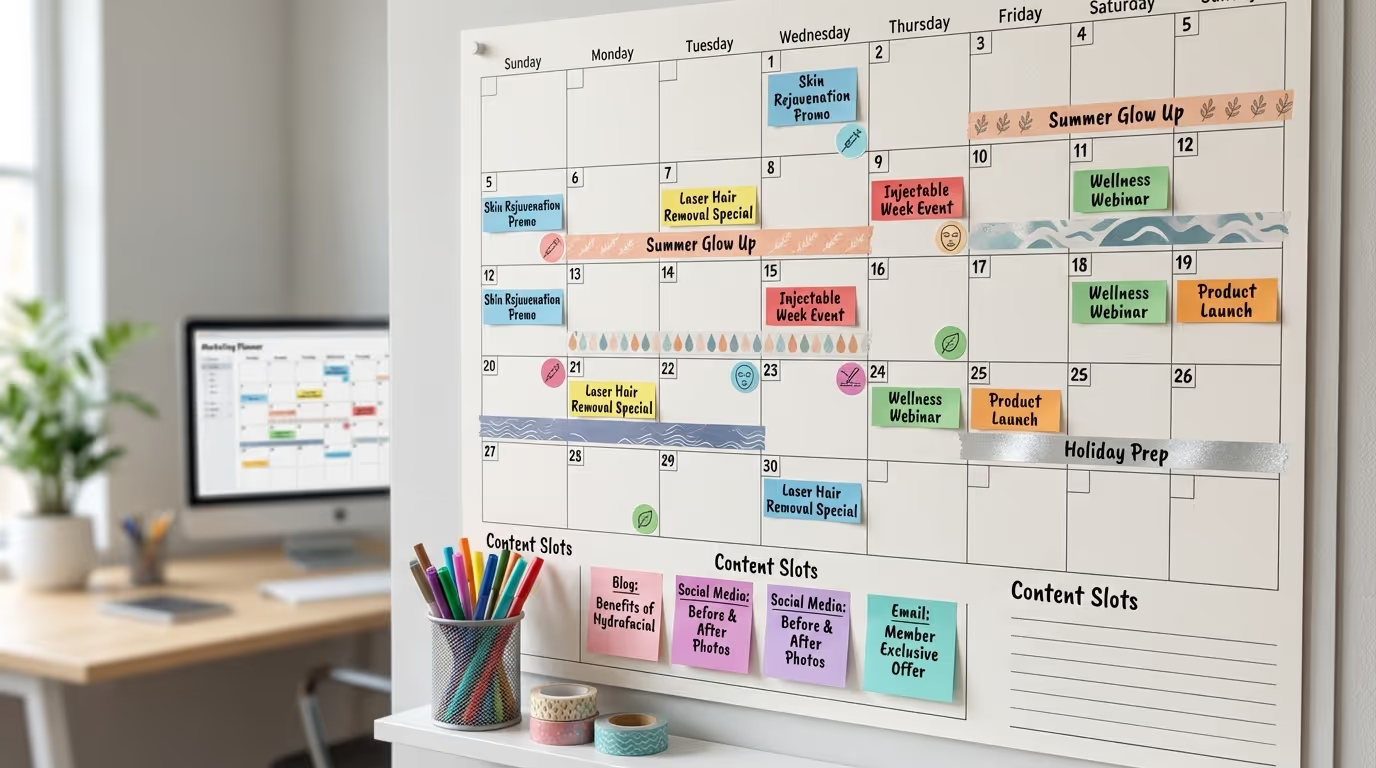
Building Your Med Spa Marketing Calendar
A strategy without a timeline is just a wish list. Your marketing calendar should plan activity 90 days ahead, with seasonal adjustments.
Seasonal Treatment Demand Patterns
| Month | High-Demand Treatments | Marketing Focus |
|---|---|---|
| January-February | Body contouring, weight loss | New Year transformation campaigns |
| March-April | Botox, fillers, skin rejuvenation | Spring refresh, wedding season prep |
| May-June | Laser hair removal, CoolSculpting | Summer body campaigns |
| July-August | Facials, light treatments | Maintenance and loyalty programs |
| September-October | Chemical peels, photofacials | Fall skin repair, holiday prep |
| November-December | Gift cards, packages, injectables | Holiday gifting, party season |
Implementation Steps
- Plan promotional campaigns 6-8 weeks before peak demand. SEO content needs 60-90 days to rank. Ads need 2-3 weeks to optimize.
- Create seasonal promotion strategies that drive urgency without over-discounting. Limited-quantity packages outperform percentage-off discounts.
- Align blog content with seasonal demand. Publish "Best Treatments Before Summer" in March, not June.
- Schedule social media content 2-4 weeks ahead using your social media calendar.
- Review and adjust quarterly. What worked last quarter? What didn't? Reallocate budget to the highest-performing channels.
Measuring Success: The KPIs That Matter
Stop looking at impressions, clicks, and followers. These are activity metrics, not business metrics. The med spa marketing strategies that drive real growth are measured by outcomes. If you need help setting up tracking, our med spa KPIs guide walks through every metric in detail.
Primary KPIs
| Metric | Benchmark | Why It Matters |
|---|---|---|
| Cost Per Lead (CPL) | $25-$75 | What you pay to get a name and number |
| Cost Per Booked Appointment | $60-$150 | What you pay for someone to show up |
| Show Rate | 75%-85% | Percentage of booked appointments that attend |
| New Patient Acquisition Cost | $80-$200 | Total marketing cost per new patient |
| Patient Lifetime Value (LTV) | $1,200-$3,500 | Revenue generated per patient over their lifecycle |
| LTV:CAC Ratio | 5:1 or higher | Every $1 in acquisition should return $5+ |
| Revenue Per Marketing Dollar | $5-$10 | Total revenue attributable to marketing investment |
Secondary KPIs
| Metric | Benchmark | Why It Matters |
|---|---|---|
| Organic Traffic Growth | 10%-15% MoM | SEO is working (or it is not) |
| Google Review Count | 8-15 new/month | Local search visibility and trust |
| Email Open Rate | 35%-45% | Retention messaging is resonating |
| SMS Response Rate | 25%-40% | Patient engagement with text campaigns |
| Rebooking Rate | 40%-60% | Patients are returning without re-acquisition |
| Membership Enrollment Rate | 10%-20% of patients | Recurring revenue is growing |
If you are not tracking these numbers monthly, you do not have a marketing strategy. You have a marketing expense.
Common Measurement Mistakes
- Tracking leads without tracking revenue. A channel that generates cheap leads that never convert is not a winning channel. Follow the money, not the form submissions.
- Attributing all revenue to the last touch. A patient who found you via SEO, then clicked a retargeting ad, then booked after an email should have credit distributed across all three channels.
- Reporting monthly without acting monthly. Data without action is just entertainment. Every monthly report should produce 2-3 specific optimizations.
- Comparing your numbers to other industries. Med spa benchmarks are specific to med spas. A 3% website conversion rate is average in this industry but would be terrible for e-commerce.
Advanced Med Spa Marketing Strategies
Once you have the four-stage foundation in place, these advanced strategies separate practices at $200K/month from those at $500K+.
Treatment-Specific Funnel Architecture
Stop marketing your practice generically. The highest-performing med spas build individual marketing funnels for each major treatment category.
Each treatment funnel includes:
- Treatment-specific ad campaigns (Google + Meta)
- Dedicated landing page with treatment-matched content
- Treatment-specific email nurture sequence (5-7 touches over 14 days)
- Retargeting creative showing that specific treatment's results
- Post-treatment cross-sell sequence to related treatments
A Botox patient has different objections, timelines, and motivations than a body contouring patient. Your marketing should reflect that.
Patient Reactivation Campaigns
Your existing database is a gold mine. Patient reactivation campaigns targeting patients who haven't visited in 90-180 days consistently produce the highest ROI of any med spa marketing tactic.
Implementation steps:
- Segment your database by last visit date.
- Create a 3-touch reactivation sequence: email (day 1), SMS (day 3), email (day 7).
- Offer a time-limited incentive to return (complimentary consultation, bonus treatment add-on).
- Personalize the message based on their last treatment.
- Track reactivation rates and revenue generated.
Benchmark: Well-executed reactivation campaigns bring back 10-15% of lapsed patients, with an average revenue of $400-$800 per reactivated patient.
Strategic Partnerships and Community Presence
The med spas growing fastest in 2026 are not relying solely on digital channels. They are building community presence through strategic partnerships.
High-value partnership opportunities:
- Luxury fitness studios (CrossFit, Pilates, barre) — shared clientele
- High-end hair salons and dermatologists — referral networks
- Wedding planners and event coordinators — pre-event packages
- Local influencers and content creators — UGC campaigns
- Corporate wellness programs — B2B treatment packages
Each partnership should have a tracking mechanism (unique referral code, dedicated landing page) so you can measure which relationships produce patients.
What Comes Next
You now have the framework. Acquisition, conversion, retention, referral — four stages, each with specific strategies, implementation steps, benchmarks, and budget guidance tailored to the med spa industry.
But a framework is only as good as its execution. The difference between reading this guide and actually growing your practice comes down to three things:
- Audit your current state. Where are the leaks? Are you spending on acquisition with no conversion infrastructure? Are you ignoring retention entirely? Are you even tracking the right KPIs? Our marketing checklist gives you 75+ specific items to assess.
- Prioritize ruthlessly. You cannot fix everything at once. Pick the stage with the biggest gap and focus there for 90 days. If your marketing plan tries to do everything simultaneously, it will accomplish nothing.
- Get a specialist. Generalist agencies will apply generic playbooks to your med spa and wonder why the results are mediocre. This industry has specific dynamics — treatment cycles, compliance requirements, seasonal patterns, competitive pressures — that require specific expertise. Read our honest review of the best med spa marketing companies to understand what to look for.
We built Aesthetix Media to do one thing: grow med spas. Not restaurants, not law firms, not e-commerce brands. Med spas. Every strategy in this guide is something we execute daily for practices across the US and Canada.
If you are spending $3,000 or more per month on marketing and not seeing clear, measurable results tied to booked appointments and revenue, something is broken. Let's find it.
Book a Strategy Call — 30 minutes, no pitch, just an honest assessment of where your marketing is leaking money and what to fix first.