
There are over 8,000 med spas in the United States. That number grew 15% last year alone. In most metro areas, a patient can choose from five to fifteen practices within a 20-minute drive.
So why do some med spas charge $14 per unit of Botox while the practice next door charges $10 — and the $14 practice has a longer waitlist?
The answer is branding.
Not a logo. Not a color palette. Med spa branding — the total perception of your practice in the minds of your prospective patients. It is how they feel when they visit your website. What they tell their friends about you. Why they drive past three other med spas to get to yours.
Most med spa owners think med spa branding is a luxury — something you invest in after you are profitable. That is backward. A strong med spa brand strategy is what makes you profitable. It is the difference between competing on price and competing on value. Between being a commodity and being a destination.
This medical spa branding guide covers every component: market positioning, medspa brand identity development, visual identity, messaging frameworks, patient experience design, internal brand alignment, and how to measure whether your med spa brand strategy is working. Whether you are starting a med spa from scratch or rebranding an established practice, this is your complete playbook.
Why Med Spa Branding Matters More in Medical Aesthetics
Aesthetic treatments are elective, high-consideration, and deeply personal. Nobody needs Botox the way they need a cavity filled. Patients choose aesthetic treatments because they want to look and feel better — and they are choosing to trust someone with their face and body.
That trust equation is where branding lives.
When a patient is deciding between your practice and a competitor, they are not comparing clinical credentials side by side (they assume everyone is qualified). They are comparing how each practice makes them feel. The one that feels more professional, more premium, more aligned with who they want to be — that is the one that gets the booking.
The Business Impact of Strong Branding: By the Numbers
| Brand Impact Area | Weak Brand | Strong Brand | Difference |
|---|---|---|---|
| Price per unit (Botox) | $10-$12 | $13-$16 | 20-40% premium |
| Patient acquisition cost | $200-$350 | $80-$150 | 50-60% lower |
| Word-of-mouth referral rate | 10-15% | 30-50% | 2-3x higher |
| Patient retention (annual) | 40-55% | 65-80% | 50%+ improvement |
| Consultation-to-treatment conversion | 40-55% | 65-80% | Significant lift |
| Practice valuation multiple | 2-3x EBITDA | 4-6x EBITDA | 2x higher exit value |
Here is what those numbers mean in real terms:
Justifies premium pricing. A well-branded practice charges 20-40% more for identical treatments because patients perceive the experience as worth more. On Botox alone — where the average patient gets 30-50 units per session, 3 times per year — a $3 per unit premium on 200 regular patients generates $54,000-$90,000 in additional annual revenue. Same injector, same product, more revenue.
Reduces marketing costs. A strong brand generates word-of-mouth referrals. Patients tell their friends about you because your brand is memorable and because being your patient feels like belonging to something. Referral patients cost $0 in ad spend and convert at 37% higher rates than ad-acquired patients.
Attracts the right patients. Branding filters your audience. A premium brand attracts premium patients who value quality over discounts. A discount brand attracts price shoppers who leave the moment someone offers a better deal. The patients you attract determine the business you build.
Creates competitive insulation. When a new competitor opens down the street, patients with brand loyalty do not switch. They have an emotional connection to your practice that transcends price and convenience. This is why the practices with the strongest brands in every market maintain their patient base even as new competitors enter.
Builds enterprise value. If you ever plan to sell your med spa, franchise, or grow to multiple locations, your brand is one of your most valuable assets. Acquirers pay significant premiums for practices with recognized, trusted brands.
Step 1: Define Your Market Position
Positioning is the foundation of your brand. It answers the question: "In a market full of med spas, why should a patient choose you?"
If your answer is "because we have great service and experienced providers," that is not positioning — that is a baseline expectation. Positioning requires making a choice about who you are and, equally important, who you are not.
The Positioning Framework
1. Who is your ideal patient?
Not "everyone." Not "women 25-65." Get specific:
| Dimension | Questions to Answer |
|---|---|
| Demographics | Age range? Income level? Occupation? |
| Psychographics | What do they value? What are they afraid of? What do they aspire to? |
| Aesthetic goals | Natural enhancement? Dramatic transformation? Preventative maintenance? |
| Lifestyle | Busy professional? Stay-at-home parent? Active retiree? |
| Current behavior | First-time aesthetic patient? Experienced with injectables? Coming from a competitor? |
A practice targeting 30-something professionals who want natural, preventative treatments positions differently than one targeting 50+ women seeking comprehensive anti-aging. Both are valid — but trying to be both dilutes your brand.
2. What is your primary treatment focus?
You may offer 50 treatments, but what are you known for? The practices with the strongest brands own a category. Identify your signature:
| Category Ownership | Positioning Statement |
|---|---|
| Injectable specialists | "The most experienced injection team in [city]" |
| Body contouring experts | "The non-surgical body transformation leaders" |
| Natural beauty practice | "Results so natural, nobody needs to know" |
| Comprehensive anti-aging | "Your complete age-management partner" |
| Technology-forward | "First in [city] with [cutting-edge technology]" |
3. What is your pricing position?
| Position | Monthly Patient Spend | Brand Signals |
|---|---|---|
| Accessible luxury | $200-$500 | Clean, modern, welcoming, value-focused |
| Established premium | $500-$1,500 | Sophisticated, polished, expert, results-driven |
| Ultra-luxury | $1,500-$5,000+ | Exclusive, concierge, bespoke, intimate |
Each position requires different branding. Do not try to be premium and run Groupon deals simultaneously — it confuses your audience and destroys trust. Your pricing position should align with your pricing strategy.
4. What is your competitive differentiator?
What do you do that no one else in your market does? Research your local competitors. Identify what they all claim (experienced, caring, results) and what none of them own. That gap is your opportunity.
| Differentiator Type | Example |
|---|---|
| Exclusive technology | "Only practice in the state with [device]" |
| Provider credentials | "Only board-certified dermatologist-led injectable program in [city]" |
| Proprietary protocol | "Our 3-step Natural Glow Protocol, developed from treating 5,000+ patients" |
| Experience design | "The only med spa in [city] with private treatment suites and complimentary spa amenities" |
| Data-driven approach | "Every treatment plan built on AI skin analysis and clinical data" |
Positioning Statement Template
Combine your answers into one statement:
"We are a [pricing position] med spa in [location] that specializes in [primary focus] for [ideal patient]. Unlike [competitor approach], we [differentiator]."
Example: "We are a premium med spa in Austin that specializes in natural-looking injectables for professional women in their 30s and 40s. Unlike high-volume clinics that rush through appointments, we limit our daily schedule to give every patient a personalized consultation and unhurried treatment experience."
This statement guides every branding decision that follows. It is your north star — reference it before making any marketing, hiring, or design decision.
Step 2: Build Your Brand Strategy
Brand strategy turns your positioning into a set of principles that govern how your brand looks, sounds, and feels at every touchpoint.
Brand Personality
If your med spa were a person, how would they show up at a dinner party? Define three to five personality traits:
| Trait | What It Means in Practice | Content Example |
|---|---|---|
| Confident | Speaks with authority, makes clear recommendations | "We recommend X because..." not "You might consider..." |
| Warm | Approachable, puts people at ease, empathetic | Personal stories, team spotlights, patient journeys |
| Sophisticated | Refined taste, attention to detail, curated | Premium photography, clean design, elevated language |
| Innovative | Ahead of the curve, embracing new technology | "First in the region to offer..." treatment spotlights |
| Authentic | Real, transparent, no pretense | Honest pricing, realistic expectations, real results |
Your personality traits should match your ideal patient's aspirational self-image. If your patient aspires to be polished and put-together, your brand should embody that.
Brand Values
What does your practice stand for beyond profit? Values are not marketing copy — they are operational commitments that guide decision-making.
Implementation steps:
- Identify 3-5 core values that genuinely drive how you operate
- For each value, define what it means operationally (not just aspirationally)
- Create decision-making tests: "When faced with X situation, our value of Y tells us to do Z"
- Share values with your entire team and reference them in team meetings
- Display values where your team sees them daily (break room, not the waiting room)
Examples with operational definitions:
| Value | Operational Definition | Decision Test |
|---|---|---|
| Clinical excellence | We invest in the best technology and training, even when cheaper alternatives exist | "Would a lesser option compromise patient outcomes? If yes, we choose the better one." |
| Patient autonomy | We educate and recommend, but we never pressure | "If a patient says 'not today,' our response is 'absolutely — we're here when you're ready.'" |
| Natural results | We enhance, not alter. Every treatment should look like you, only better | "If a request would look obviously 'done,' we counsel the patient toward a more natural approach." |
| Transparency | We show pricing, explain processes, and set honest expectations | "If a patient asks a question, we give the full answer — even if it means recommending fewer treatments." |
Brand Story
Every strong brand has a story. Yours should answer: Why does this practice exist? What problem did the founder see that they wanted to solve?
Bad brand story: "Dr. Smith has 20 years of experience and is passionate about helping patients look their best."
Good brand story: "After watching patients bounce between clinics that treated them like numbers, overpromised results, and pushed unnecessary treatments, Dr. Smith opened Radiant Aesthetics with a different philosophy: fewer patients per day, longer consultations, and a commitment to results so natural that nobody needs to know."
Your brand story humanizes your practice. It gives patients a reason to root for you. Use it on your About page, in your social media content, and in your team's daily conversations with patients.
Brand Promise
Your brand promise is the one thing patients can count on every time they interact with your practice.
| Type | Example | Why It Works |
|---|---|---|
| Generic (weak) | "We provide excellent patient care" | Promises nothing specific, says nothing different |
| Experience-based (strong) | "You will never feel rushed. Every appointment includes a thorough consultation, even follow-ups." | Specific, measurable, addresses a common pain point |
| Results-based (strong) | "If you're not thrilled with your results, we'll make it right — guaranteed." | Bold, differentiating, reduces risk for the patient |
| Access-based (strong) | "Your provider's cell number. Direct access. No phone trees, ever." | Tangible, exclusive, clearly different from competitors |
Your brand promise should address the primary pain point of your ideal patient. If your patients are frustrated by impersonal, assembly-line aesthetics, promise personalized care. If they are anxious about unnatural results, promise subtlety and artistry.
Step 3: Create Your Visual Identity
Your visual identity is the tangible expression of your brand strategy. It is what people see and immediately associate with your practice — across your website, social media, office space, and every marketing material.
Logo Design
Your logo needs to work at every size — from a 32-pixel favicon to a 6-foot wall sign.
Implementation steps:
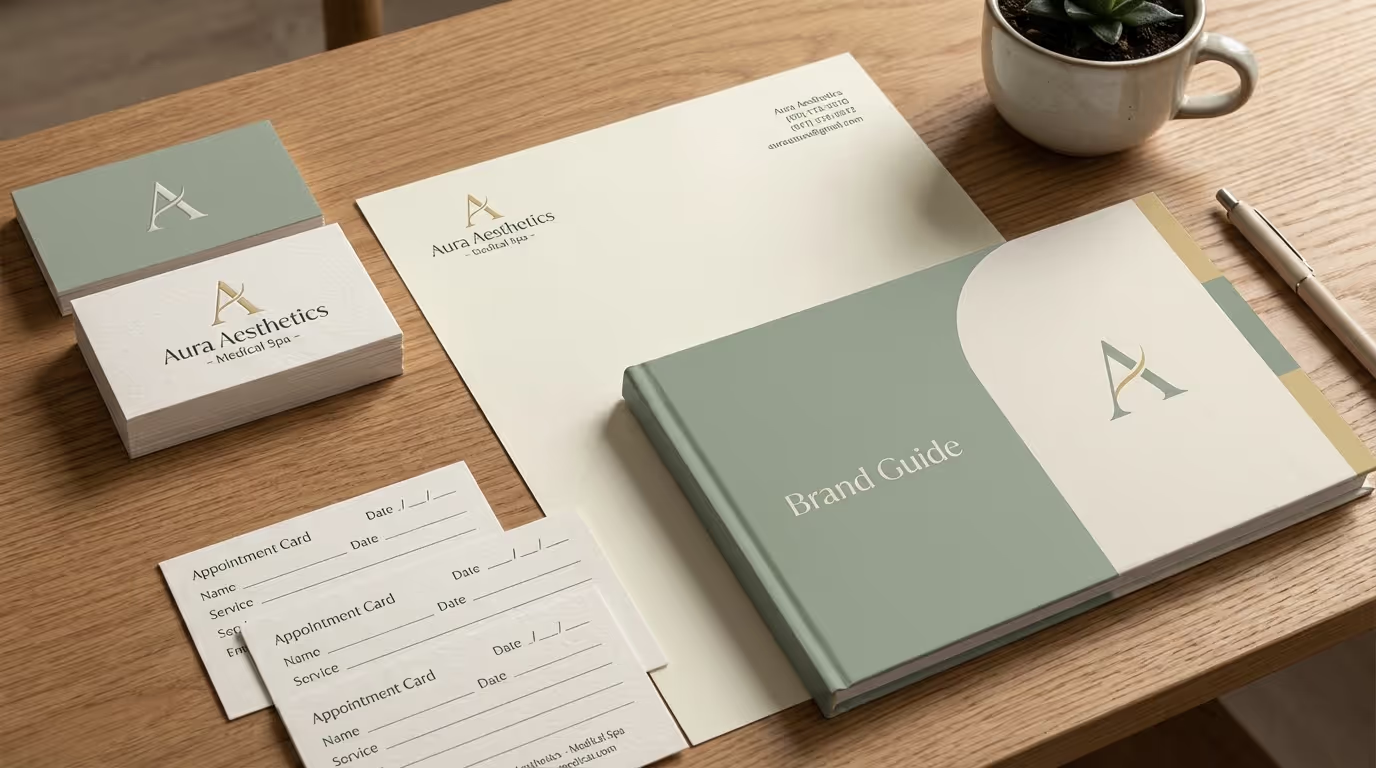
- Hire a professional designer or branding agency (budget $2,000-$5,000 for quality work)
- Brief them on your positioning, personality, and visual direction
- Request logo variations: full color, single color, white on dark, dark on light, icon-only, horizontal, stacked
- Test at multiple sizes: favicon (32px), social media profile (110px), business card, wall sign
- Get final files in SVG, PNG (transparent), and JPG formats
Logo principles for med spas:
| Principle | Why It Matters | Common Mistake |
|---|---|---|
| Simplicity | Memorable at any size | Overly ornate designs that blur at small sizes |
| Versatility | Works on all backgrounds and applications | Logo only works in full color |
| Typography-forward | Logotypes are often stronger than icon logos for service businesses | Generic medical icons (syringes, faces, molecular structures) |
| Timeless | Should look current in 10 years | Following trendy design fads that date quickly |
| Professional investment | Logo appears on everything — it sets the perception | $200 Fiverr logos that look like $200 |
For detailed guidance on med spa logo design, including trend analysis and best practices, see our dedicated guide.
Color Palette
Colors trigger emotional associations. Choose deliberately based on your positioning:
| Color Family | Emotional Association | Best For |
|---|---|---|
| Deep blues and navys | Trust, professionalism, calm | Medical-forward practices emphasizing clinical expertise |
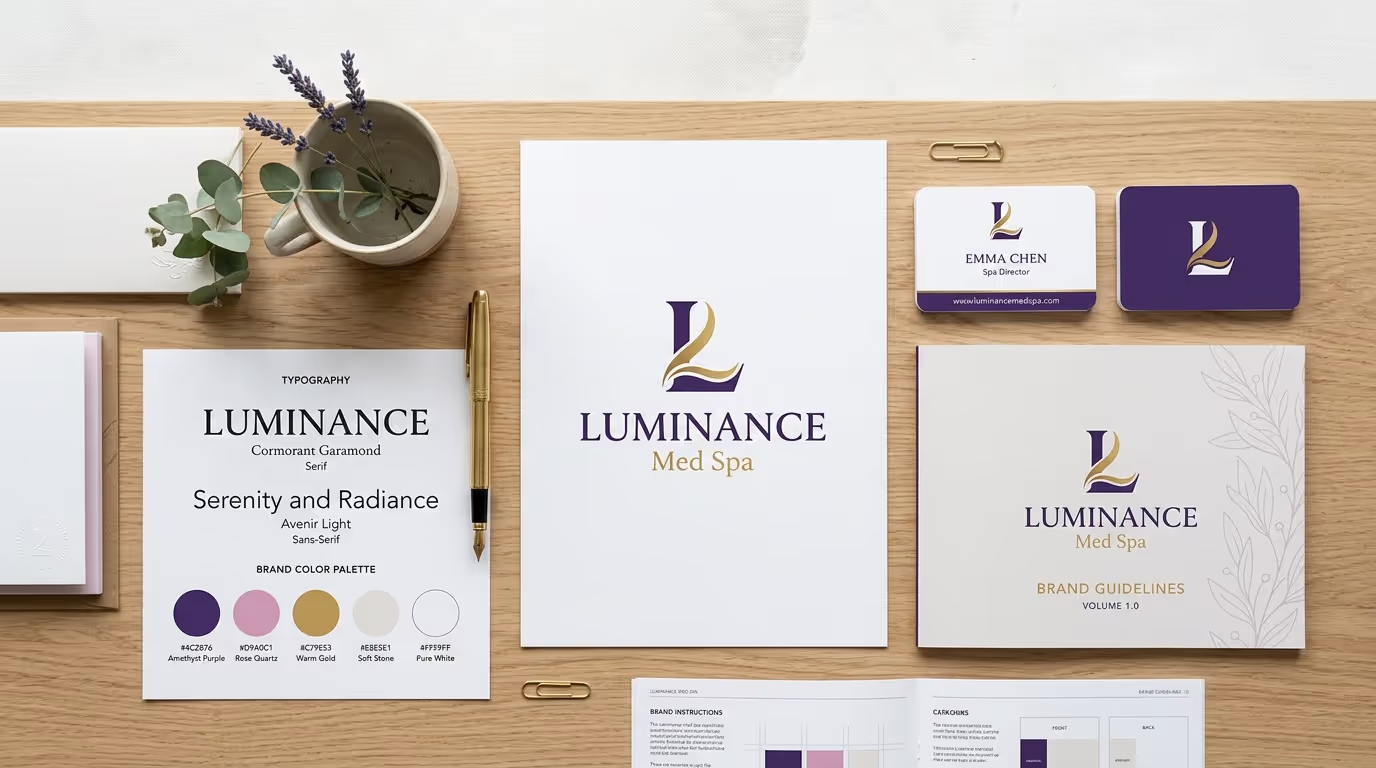
| Soft neutrals (cream, taupe, sage) | Organic, natural, spa-like | Practices emphasizing natural results and holistic wellness |
| Black and gold | Luxury, exclusivity, sophistication | Ultra-premium practices targeting affluent patients |
| Soft pinks and mauves | Feminine, gentle, beauty | Practices primarily serving women with aesthetic services |
| Clean whites with one bold accent | Modern, minimal, clinical precision | Tech-forward practices emphasizing innovation |
Your complete palette should include:
| Element | Count | Purpose | Example |
|---|---|---|---|
| Primary color | 1 | Main brand color, logo, key accents | Your signature brand color |
| Secondary color | 1 | CTAs, buttons, supporting accents | Complementary or contrasting accent |
| Neutral palette | 3-4 | Backgrounds, text, borders | Warm whites, soft grays, taupe |
| Dark palette | 1-2 | Headers, contrast sections, body text | Deep navy, charcoal, black |
Define exact hex codes, RGB values, and Pantone numbers. Consistency depends on precision — "kind of blue" is not a brand color.
Typography
Choose two fonts maximum:
| Font Role | Purpose | Selection Criteria |
|---|---|---|
| Heading font | Personality, distinction, visual identity | Serif = tradition/luxury. Sans-serif = modern/clean |
| Body font | Readability, paragraphs, interface text | Highly legible sans-serif. Not the place for personality. |
Define font weights, sizes, and hierarchy rules:
| Element | Typical Specs | Notes |
|---|---|---|
| H1 (Page titles) | 36-48px, heading font, bold | Used once per page |
| H2 (Section headers) | 28-36px, heading font, semibold | Primary content sections |
| H3 (Subsections) | 22-28px, heading font, medium | Secondary divisions |
| Body text | 16-18px, body font, regular | Main content |
| Captions/labels | 12-14px, body font, medium | Supporting text |
Photography Style
Photography is arguably the most impactful element of your visual identity. Stock photos scream "generic." Custom photography screams "real."
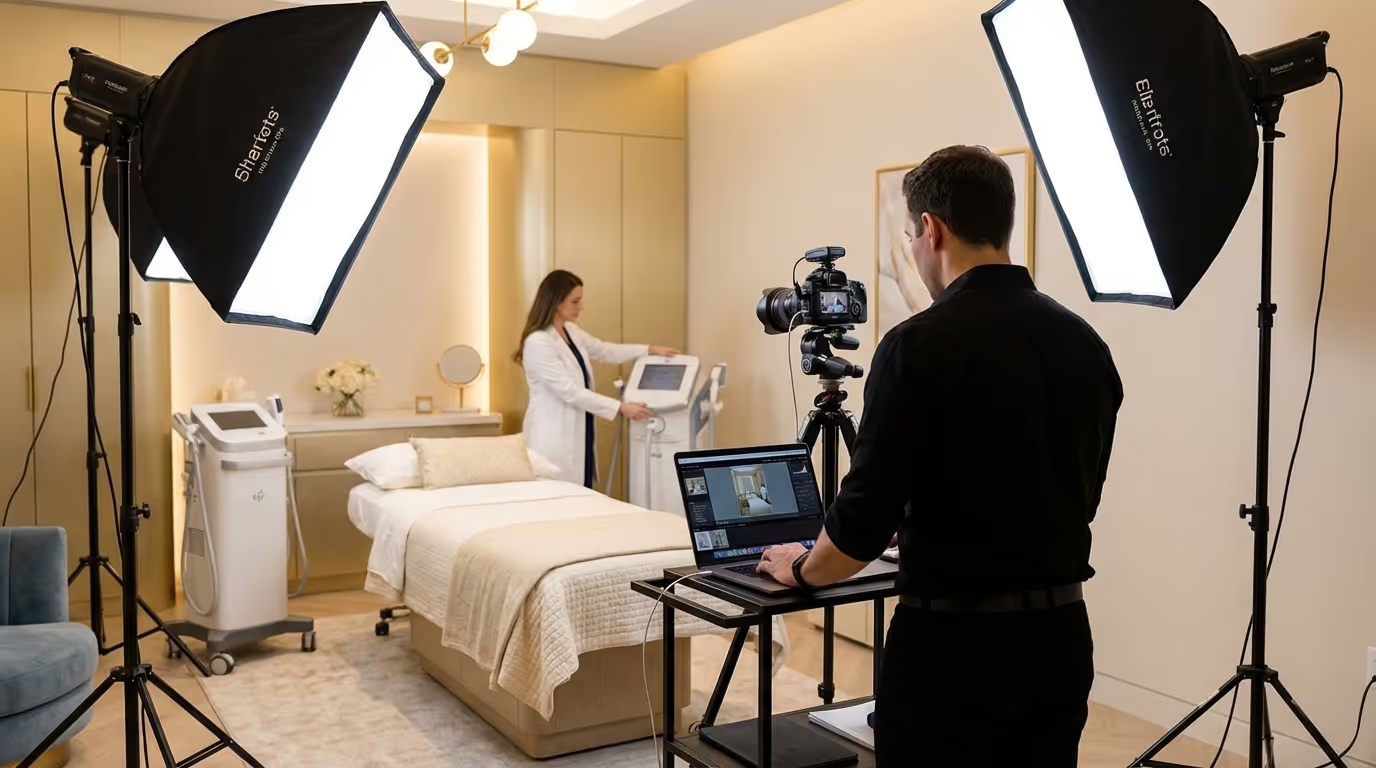
Investment: Budget $2,000-$5,000 per brand photography session. Schedule sessions twice per year.
Shot list for a brand photography session:
| Category | Shots Needed | Usage |
|---|---|---|
| Provider portraits | Professional headshots + candid treatment photos | Website, social, marketing materials |
| Practice interiors | Clean, well-lit photos of every space | Website, Google Business, social media |
| Treatment photos | Close-up shots during treatments (with consent) | Treatment pages, social media, ads |
| Lifestyle photos | Patients looking confident (not clinical) | Homepage, marketing collateral |
| Detail shots | Products, textures, equipment, branded elements | Social media, website accents |
| Before-and-after | Consistent lighting, angles, backgrounds | Treatment pages, social media, consultations |
Photography style guidelines should specify: Lighting preference (warm vs. cool vs. natural), editing style (bright and airy vs. moody and editorial), composition (close-up vs. wide vs. lifestyle), and mood (clinical vs. luxurious vs. warm vs. modern).
Brand Collateral Checklist
With your visual identity defined, create these core brand assets:
| Collateral | Purpose | Investment |
|---|---|---|
| Business cards | Networking, patient handout | $200-$500 |
| Appointment cards | Post-treatment reminder | $100-$300 |
| Social media templates | 5-10 branded templates for recurring post types | $500-$1,000 (one-time design) |
| Email templates | Branded headers, footers, CTA buttons | $300-$500 |
| Presentation template | Consultations, team training | $500-$1,000 |
| Signage system | Exterior, interior wayfinding, treatment rooms | $2,000-$10,000 |
| Branded packaging | Post-treatment kits, retail bags, gift packaging | $500-$2,000 |
Step 4: Develop Your Messaging Framework
Visual identity is what people see. Messaging is what people hear and read. Together, they create the complete brand experience.
Brand Voice Definition
Your brand voice is how you communicate — the personality behind your words. Define it across four spectrums:
| Spectrum | Options | Your Position |
|---|---|---|
| Formal ← → Casual | "We invite you to schedule a consultation" vs. "Ready to book? Let's do this" | Choose based on your positioning |
| Clinical ← → Lifestyle | "Neurotoxin injection therapy" vs. "Botox that looks like you, just refreshed" | Most med spas land toward lifestyle |
| Authoritative ← → Friendly | "Our board-certified physicians recommend" vs. "Here is what we would tell our best friend" | Balance both |
| Serious ← → Playful | "Precision aesthetic medicine" vs. "Because you deserve to love what you see in the mirror" | Match your ideal patient's energy |
Most successful med spa brands land somewhere in the middle on all four spectrums — professional but not stuffy, knowledgeable but not intimidating, warm but not casual.
Core Messages
Develop three to five core messages that communicate your positioning and value proposition:
Primary message (elevator pitch): One sentence that captures what you do and why it matters.
Supporting messages: Each reinforces one aspect of your brand.
| Message Type | Template | Example |
|---|---|---|
| Primary (elevator pitch) | "We help [ideal patient] in [location] achieve [desired outcome] with [approach]" | "We help professional women in Austin look as vibrant on the outside as they feel on the inside — with natural, elegant aesthetic treatments tailored to their unique goals." |
| Expertise | "[Credential or experience] that backs up our claims" | "Our providers have over 15,000 hours of injection experience and train at the most advanced programs in the country." |
| Experience | "[The feeling of being a patient here]" | "From your first consultation to your follow-up, every touchpoint is designed to make you feel valued, informed, and cared for." |
| Results | "[Your philosophy on outcomes]" | "We specialize in results you can see but others cannot point to — enhancements so natural they simply look like a great day." |
Treatment Descriptions: Your Biggest Messaging Opportunity
Rewrite every treatment description through your brand lens. Most med spas copy descriptions from manufacturer websites. The result is generic, clinical, and indistinguishable.
Generic Botox description: "Botox Cosmetic is an FDA-approved injectable that temporarily reduces the appearance of fine lines and wrinkles. Treatment takes 10-15 minutes with minimal downtime."
Branded Botox description: "Our signature Botox treatment is designed for women who want to look refreshed — not frozen. Using precise micro-dosing techniques developed over 10,000+ treatments, our injectors smooth fine lines while preserving every bit of your natural expression. Walk in on your lunch break, walk out looking like you had the best weekend of your life."
Same treatment. Completely different brand impression. Apply this approach to every service page on your website.
Patient-Facing Language Guidelines
Create a list of approved and avoided terms for everyone who communicates on behalf of your practice:
| Instead of... | Use... | Why |
|---|---|---|
| Anti-aging | Age-defying, refreshing, rejuvenation | "Anti-aging" implies aging is something to fight against |
| Procedure | Treatment, session, appointment | "Procedure" sounds surgical and intimidating |
| Fix | Enhance, refine, restore | "Fix" implies something is broken |
| Cheap / Affordable | Accessible, value, investment | "Cheap" undermines premium positioning |
| Pain | Slight discomfort, sensation | "Pain" triggers anxiety |
| Patient | Guest, client (if brand-appropriate) | Depends on your positioning — "guest" feels more hospitality-forward |
| Needles | Precise injections, micro-injections | "Needles" triggers fear |
| Results not guaranteed | Results vary by individual | More professional, less legally concerning |
Distribute these guidelines to your front desk, social media manager, email marketing team, and every provider.
Step 5: Brand the Patient Experience
The most overlooked element of med spa branding is the patient experience itself. Your brand is not just what people see online — it is what they feel when they interact with your practice at every touchpoint.
The Patient Journey Touchpoint Map
Map every interaction a patient has with your practice and brand each one:
Phase 1: Discovery (Online)
| Touchpoint | Brand Checklist |
|---|---|
| Website | Reflects visual identity, voice, and positioning? |
| Social media | Every post consistent with brand personality? |
| Google Business Profile | Photos professional and current? |
| Online reviews | Team responds in brand voice? |
| Blog content | Tone matches brand personality? |
Phase 2: First Contact
| Touchpoint | Brand Checklist |
|---|---|
| Phone greeting | Scripted brand-consistent greeting? |
| Online booking | Interface clean and on-brand? |
| Email confirmations | Branded with logo, colors, and voice? |
| Text reminders | Warm and professional, not robotic? |
| Consultation process | Designed to reflect brand values? |
Phase 3: In-Practice Experience
| Touchpoint | Brand Checklist |
|---|---|
| Exterior signage | Sets the right first impression? |
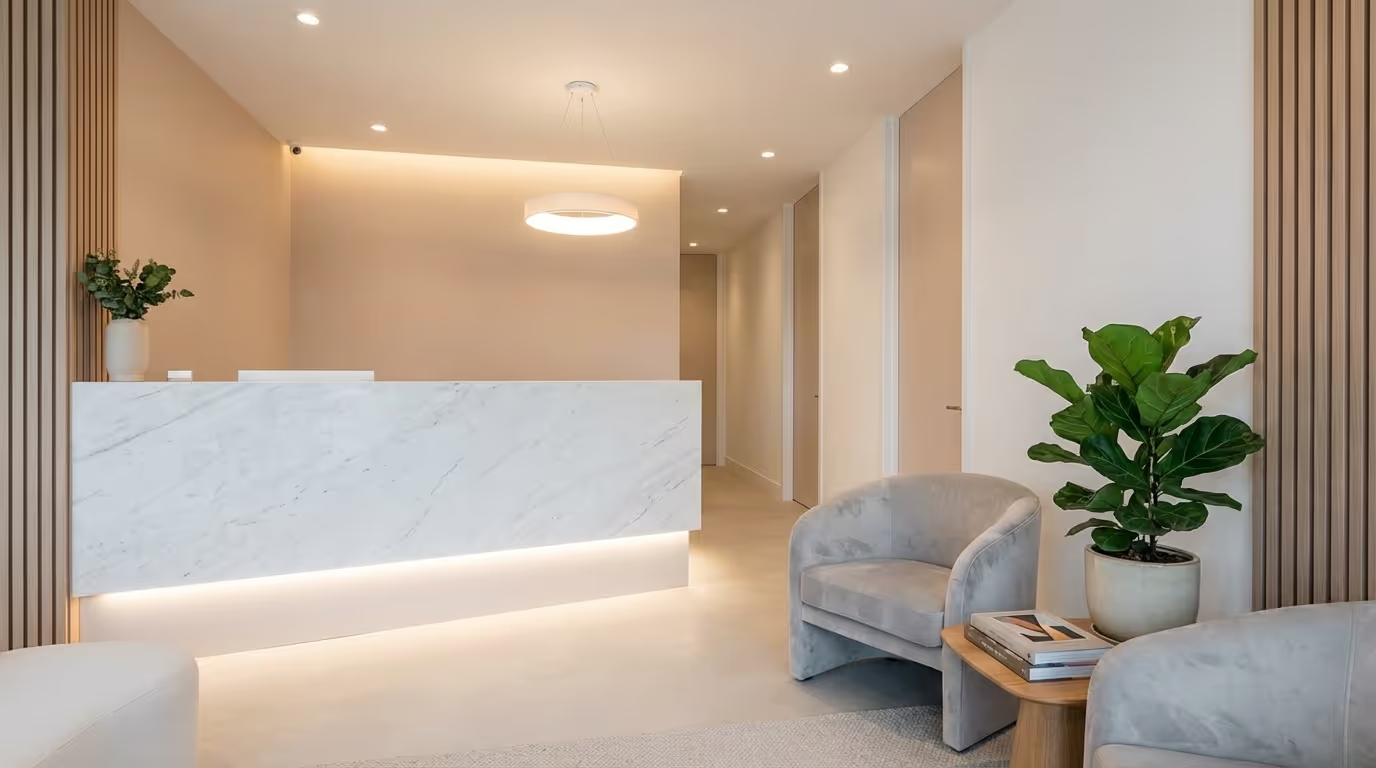
| Reception area | Aligned with brand positioning? |
| Check-in process | Smooth, private, efficient? |
| Treatment rooms | Immaculate, comfortable, designed? |
| Provider communication | Embodies brand personality? |
| Comfort amenities | Elevate beyond clinical minimum? |
Phase 4: Post-Treatment
| Touchpoint | Brand Checklist |
|---|---|
| Aftercare instructions | Branded and clear? |
| Follow-up emails | Branded follow-up sequence? |
| Review request | Timed well and on-brand? |
| Rebooking | Smooth process to schedule next appointment? |
| Loyalty program | Reinforces brand values? |
Creating Brand Rituals
Brand rituals are signature experiences that patients remember and talk about. They cost little but create disproportionate brand impact:
| Ritual | Cost | Perceived Value | Brand Impact |
|---|---|---|---|
| Signature welcome drink (infused water, specific tea, branded mint) | $0.50-$2/patient | High — feels personalized and premium | Patients mention it in reviews |
| Comfort menu (blanket warmth, music genre, aromatherapy choices) | $0/interaction | Very high — signals you care about their experience | Differentiates from clinical competitors |
| Departure gift (branded sample, handwritten note for first-timers) | $3-$10/patient | High — surprise and delight | Generates word-of-mouth and social sharing |
| Milestone acknowledgment (anniversary, 10th treatment, birthday) | $5-$25/patient | Very high — makes patients feel seen | Drives loyalty and retention |
These rituals become part of your brand identity. Patients associate these moments with your practice — and share them with friends. The practice that hands every patient a branded aftercare kit with a handwritten note creates a markedly different impression than the practice that says "you're all set" and walks them to the front desk.
Step 6: Internal Brand Alignment
Your brand is only as strong as your team's understanding and execution of it. Every team member — from the front desk to the aestheticians to the providers — needs to understand and embody the brand.
Brand Training Program
Implementation steps:
- New hire brand orientation (2 hours):
- Share the brand story, positioning, and personality
- Walk through the brand voice and language guidelines
- Review patient-facing language do's and don'ts
- Practice the phone greeting, consultation flow, and checkout experience
- Show examples of on-brand vs. off-brand communication
- Monthly brand reinforcement (15 minutes at team meetings):
- Read 2-3 recent patient reviews that reference brand elements
- Identify one brand touchpoint to improve this month
- Role-play one patient interaction scenario
- Celebrate team members who delivered exceptional brand experiences
- Quarterly brand audit (1 hour):
- Walk through the practice as if you are a first-time patient
- Review all marketing materials for brand consistency
- Check social media, website, and email for voice alignment
- Identify gaps between intended brand experience and actual experience
Brand Standards Quick Reference
Create a one-page brand cheat sheet that lives at the front desk:
- Brand personality traits (3-5 words)
- Phone greeting script
- Key phrases to use and avoid
- Patient experience standards (wait time limits, follow-up timelines)
- Visual standards (dress code, treatment room presentation)
This is not micromanagement. It is ensuring that the brand you built actually reaches the patient.
Step 7: Measure Brand Strength
Branding feels intangible, but you can measure its impact. Track these metrics quarterly:
| Metric | What It Measures | Target | How to Track |
|---|---|---|---|
| Price premium | Can you charge more than competitors? | 15-30% above market average | Competitive pricing analysis |
| Referral rate | % of new patients from word-of-mouth | 30-50% | Intake form: "How did you find us?" |
| Review sentiment | Patients mention specific brand elements? | 40%+ of reviews reference experience details | Review analysis |
| Social engagement | Brand affinity in organic interactions | 3-6% engagement rate | Instagram analytics |
| Patient retention | Rebooking rate for existing patients | 60-75% annual | CRM tracking |
| Consultation conversion | % of consults that become treatments | 65-80% | Sales funnel tracking |
| Net Promoter Score | Overall patient satisfaction and loyalty | 60+ NPS | Quarterly patient survey |
| Brand search volume | People searching your practice name | Growing month-over-month | Google Search Console |
Revenue Attribution to Branding
While you cannot directly attribute every dollar to branding, you can measure the indirect impact:
- Premium revenue: Your per-unit pricing minus the market average, multiplied by total units sold
- Referral value: Number of referral patients multiplied by average patient lifetime value
- Retention value: Additional revenue from increased retention rate vs. industry average
- Marketing efficiency: Cost per acquisition with brand vs. without (compare to industry benchmarks)
For a comprehensive framework for tracking marketing performance, see our med spa marketing ROI guide.
When to Rebrand
Not every struggling practice needs a rebrand. But some do. Consider a rebrand if:
| Signal | What It Means | Urgency |
|---|---|---|
| Visual identity is 7+ years old | Looks dated, patients notice | Medium |
| Attracting wrong patients (price shoppers when you want premium) | Positioning mismatch | High |
| Inconsistent visual presentation across channels | No brand system in place | High |
| Expanding to multiple locations | Need scalable brand system | Medium |
| Merged with or acquired another practice | Brand confusion | High |
| Revenue per patient is declining despite good clinical outcomes | Perception problem | High |
| Competitors have stronger brand presence | Market positioning erosion | Medium |
The Rebrand Process
A rebrand is not just a new logo. It is a strategic repositioning of your practice in the market.
Implementation steps for a full rebrand:
- Brand audit (2-4 weeks): Analyze current brand perception, patient feedback, competitive landscape, and performance data
- Strategy development (2-4 weeks): Define new positioning, personality, values, and messaging framework
- Visual identity creation (4-8 weeks): Logo, color palette, typography, photography direction
- Collateral development (4-6 weeks): Website redesign, marketing materials, social media templates, signage
- Internal rollout (2 weeks): Team training, brand standards documentation
- External launch (1-2 weeks): Announce the rebrand to patients, update all digital properties
- Monitoring (ongoing): Track patient response, adjust messaging, refine execution
Budget for a comprehensive med spa rebrand: $15,000-$50,000 depending on scope. This includes strategy, visual identity, website redesign, collateral, and launch marketing. If your website alone needs a rebuild, see our med spa website cost guide.
Common rebranding mistakes:
- Changing the logo without changing the strategy — this is cosmetic, not a rebrand
- Not involving the team — a rebrand that staff do not understand or support will fail
- Not announcing it to patients — they should feel part of the evolution
- Trying to do it cheaply — a half-done rebrand is worse than no rebrand
- Changing everything simultaneously — phase the rollout to manage both cost and patient adjustment
Brand Checklist for Med Spas
Use this as your comprehensive implementation guide:
Strategy Foundation
- [ ] Positioning statement defined
- [ ] Ideal patient profile documented
- [ ] Brand personality traits (3-5) established
- [ ] Brand values with operational definitions
- [ ] Brand story written
- [ ] Brand promise defined
- [ ] Competitive differentiation identified
Visual Identity
- [ ] Professional logo with all variations
- [ ] Color palette with exact hex/RGB codes
- [ ] Typography hierarchy defined
- [ ] Photography style guide created
- [ ] Brand photography completed
- [ ] Interior design aligned with brand
Messaging
- [ ] Brand voice defined across four spectrums
- [ ] Core messages (3-5) written
- [ ] Treatment descriptions rewritten in brand voice
- [ ] Patient-facing language guidelines distributed
- [ ] Phone scripts created and trained
Experience
- [ ] Patient journey touchpoints mapped and branded
- [ ] Brand rituals established (welcome, comfort, departure, milestone)
- [ ] Website reflects brand identity fully
- [ ] Social media templates created
Internal
- [ ] Team brand training completed
- [ ] Brand standards quick reference at front desk
- [ ] Monthly brand reinforcement in team meetings
- [ ] Quarterly brand audits scheduled
Measurement
- [ ] Brand metrics dashboard created
- [ ] Quarterly tracking cadence established
- [ ] Revenue attribution framework in place
- [ ] KPIs connected to brand performance
The Bottom Line
Your brand is happening whether you manage it or not. Every touchpoint, every interaction, every post, every phone call is shaping how prospective patients perceive your practice.
The question is whether that perception is intentional or accidental. The med spas that command premium pricing, generate consistent referrals, and build lasting patient loyalty are the ones that brand deliberately — from positioning to visual identity to patient experience.
A strong brand is not an expense. It is the highest-returning investment a med spa can make — because it amplifies the return on every other investment you make. Better branding makes your Google Ads convert higher. It makes your social media more engaging. It makes your email marketing more effective. It makes your SEO more impactful because branded search grows naturally.
If you are ready to build or rebuild your med spa brand with a team that understands the aesthetics industry inside and out, let's talk strategy.
[Book a Strategy Call →]