
The medical spa industry hit $21.4 billion in 2025 and is projected to grow at 14.5% annually through 2030. Patient demand for minimally invasive aesthetic treatments — Botox, fillers, laser treatments, body contouring — is accelerating. The average med spa generates $1.2 million to $4.8 million in annual revenue, with profit margins of 15% to 30% for well-run practices.
Those numbers are why you are reading this med spa startup guide. But here is what those numbers do not tell you: roughly 30% of new med spas fail within their first three years. Not because the market is bad — it is exceptional. They fail because they were started by people who understood the clinical side but not the business side, or the business side but not the regulatory side, or none of the above.
Learning how to start a med spa is not like opening a retail store or even a traditional medical practice. You are building a hybrid — a medical business that operates like a luxury retail experience, regulated like a healthcare facility, and marketed like a consumer brand. Getting any one of those dimensions wrong creates problems that are expensive to fix and sometimes impossible to recover from.
This guide on how to start a med spa walks you through every dimension: medical director requirements, business structure, licenses and permits, startup costs, equipment, hiring, location, marketing, and the realistic timeline from concept to grand opening. Each section includes implementation steps, cost benchmarks, and the mistakes that trip up first-time owners.
Medical Director Requirements: Essential to How to Start a Med Spa
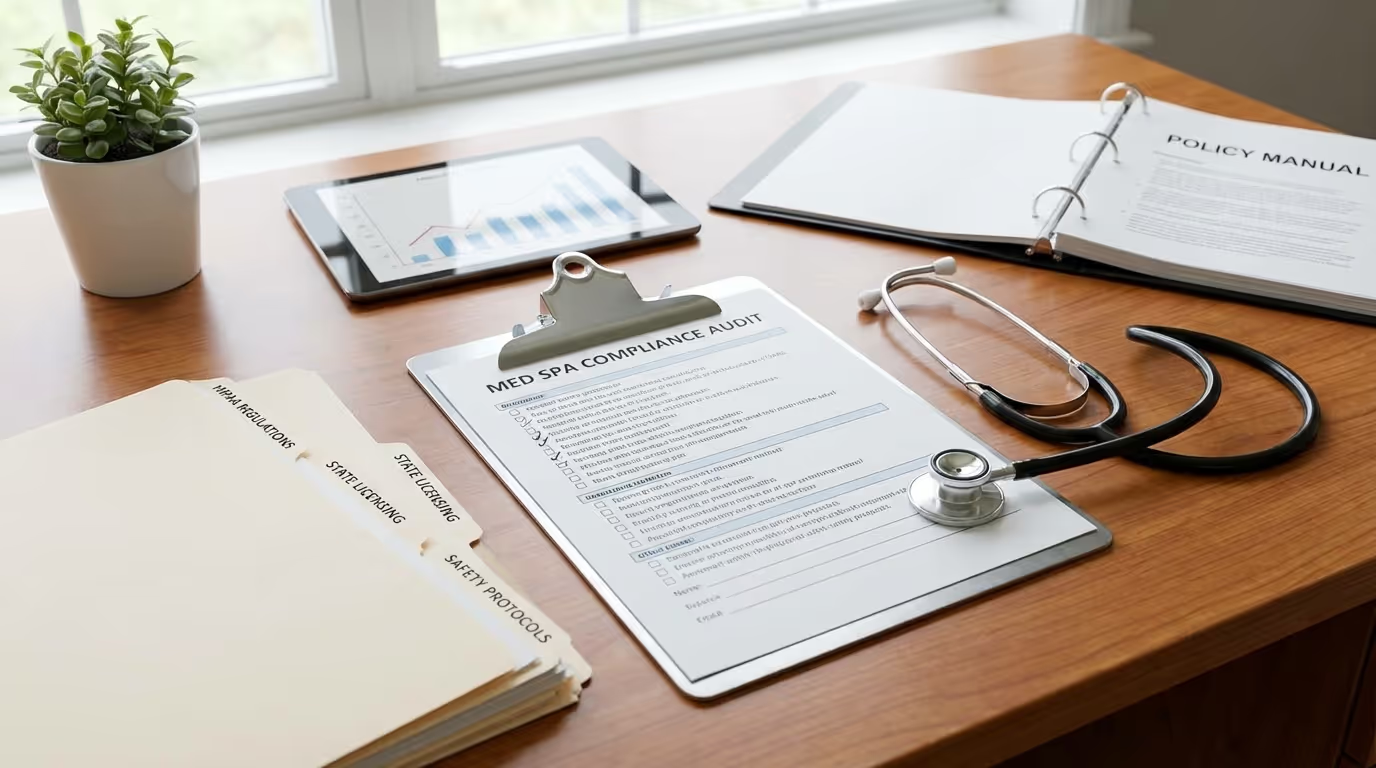
This is the most critical — and most misunderstood — aspect of how to start a med spa. Every med spa in the United States must operate under the supervision of a licensed physician. The specifics of what "supervision" means vary dramatically by state. Our compliance guide covers the regulatory landscape in more detail.
The Three Supervision Models
| Model | Description | States (Examples) |
|---|---|---|
| Direct supervision | Physician must be physically present during medical treatments | New Jersey, parts of New York |
| General supervision | Physician available for consultation, establishes protocols and standing orders | Most states (California, Texas, Illinois) |
| Collaborative practice | Mid-level providers operate with varying independence under collaborative agreements | Florida, many NP-friendly states |
State-by-State Critical Examples
California: Requires a licensed physician (MD or DO) as medical director who creates and approves treatment protocols. Corporate practice of medicine doctrine applies — non-physicians cannot own a medical practice directly but can use the MSO (Management Services Organization) model.
Texas: Physician must delegate procedures through proper delegation protocols. Clear regulations but strict enforcement. RNs can perform laser procedures under physician delegation.
Florida: More permissive. NPs have full practice authority after a supervised transition period. Physician serves as medical director but does not need to be on-site for all procedures.
New York: Among the most restrictive. Corporate practice of medicine is strictly enforced. Recent enforcement actions have targeted med spas with "ghost" medical directors. Medical director involvement must be substantive.
Finding and Structuring a Medical Director Relationship
Implementation steps:
- Research your specific state's requirements through the state medical board (do not rely on general advice)
- Identify physicians with aesthetic medicine experience — dermatologists, plastic surgeons, or physicians with aesthetic training
- Interview at least 3 candidates before selecting
- Negotiate a formal written agreement covering scope of oversight, availability, compensation, and termination terms
- Ensure the medical director will actively participate — not just sign documents
- Verify the physician has no board actions, malpractice history, or license restrictions
Medical director compensation benchmarks:
| Involvement Level | Monthly Cost | What You Get |
|---|---|---|
| Advisory/part-time | $2,000 – $5,000 | Protocol review, availability for consultation, monthly chart review |
| Active (1 – 2 days/week on-site) | $5,000 – $15,000 | On-site supervision, patient consultations, team training |
| Equity partnership | Negotiated | Full commitment, aligned incentives, shared risk |
| Per-procedure fee | $50 – $200/procedure | Pay-per-use model, lower fixed cost |
Common mistakes:
- Ghost medical directors. A physician who signs forms for a flat fee without actual involvement. This is the fastest way to get shut down — and enforcement is increasing.
- Hiring a physician unfamiliar with aesthetics. Your medical director should have relevant clinical experience. A retired cardiologist is not the right fit.
- No written agreement. Verbal agreements create liability for both parties. Document everything.
- Overloaded medical directors. A physician overseeing 5 or more locations cannot provide adequate oversight. Verify their other commitments.
The Corporate Practice of Medicine Doctrine
Many states prohibit non-physicians from owning medical practices. The MSO (Management Services Organization) model solves this:
Implementation steps:
- Form a physician-owned professional entity (PC or PLLC) for medical services
- Form a separately owned management company (LLC) for business operations, marketing, staffing
- Create a Management Services Agreement between the two entities
- Engage a healthcare attorney (not a general business attorney) to structure this properly
- Budget $5,000 to $15,000 for proper entity formation and agreements
Business Structure: LLC vs. PLLC vs. PC
| Entity Type | Best For | Tax Treatment | Key Feature |
|---|---|---|---|
| LLC | Non-physician management company (MSO) | Pass-through | Flexible, liability protection |
| PLLC | Licensed professionals forming a practice | Pass-through | Members must hold professional license |
| PC | Physician-owned medical practice (required in some states) | Corporate (unless S-corp election) | Shareholders must be licensed professionals |
Recommended structure for most startups:
- If you are a physician: PLLC or PC for the practice. Separate LLC for real estate (if owned) and non-medical activities.
- If you are not a physician: LLC as your management company (MSO) partnered with a physician's PLLC or PC.
Investment: $5,000 to $15,000 for proper entity formation, operating agreements, and compliance setup with a healthcare attorney.
Licenses and Permits
Complete licensing checklist:
| License/Permit | Typical Cost | Timeline | Notes |
|---|---|---|---|
| Business license | $50 – $500 | 1 – 2 weeks | City/county requirement |
| Medical facility license | $200 – $2,000 | 30 – 90 days | Requires facility inspection in many states |
| DEA registration | $888 (3-year) | 30 – 45 days | If handling controlled substances |
| State board registration | Varies | 30 – 60 days | Practice and individual provider registrations |
| OSHA compliance | $500 – $2,000 setup | Ongoing | Blood-borne pathogen training, exposure control plan |
| HIPAA compliance | $2,000 – $5,000 setup | 2 – 4 weeks | Privacy officer, policies, BAAs, staff training |
| Certificate of Occupancy | $100 – $500 | 1 – 4 weeks | Confirms medical zoning approval |
| Fire department inspection | $100 – $300 | 1 – 2 weeks | Required for medical facilities |
| Laser registration | $100 – $1,000 | 2 – 6 weeks | Many states require device registration |
| Pharmacy license (if applicable) | $200 – $1,000 | 30 – 90 days | If dispensing medications beyond samples |
Insurance requirements:
| Insurance Type | Annual Cost | Status |
|---|---|---|
| Medical malpractice | $2,000 – $10,000 | Required |
| General liability | $1,000 – $3,000 | Required |
| Property insurance | Varies by location | Required |
| Workers' compensation | Varies by state/payroll | Required (with employees) |
| Business interruption | $500 – $2,000 | Recommended |
| Cyber liability | $500 – $2,000 | Strongly recommended |
Startup Costs Breakdown
The total startup cost ranges from $250,000 to $500,000 or more. Here is the detailed breakdown with implementation guidance.
Facility Costs: $80,000 to $200,000
| Item | Low Estimate | High Estimate | Notes |
|---|---|---|---|
| Lease deposit (3 – 6 months) | $15,000 | $60,000 | Negotiate TI allowance |
| Build-out and construction | $40,000 | $100,000 | Use medical construction contractor |
| Interior design and furnishing | $15,000 | $30,000 | Invest in treatment rooms and reception |
| Signage | $2,000 | $5,000 | Exterior and interior |
| IT infrastructure | $5,000 | $10,000 | Network, security, POS system |
Implementation steps for build-out:
- Hire a medical construction contractor (not a general contractor)
- Plan for proper plumbing, electrical capacity for laser devices, ventilation, and clinical-grade surfaces
- Design 3 to 5 treatment rooms at minimum 100 to 120 square feet each
- Include reception, consultation room, storage, and staff area
- Plan for 1,500 to 3,000 square feet total
- Negotiate tenant improvement allowance from landlord ($10 to $50 per square foot is typical)
- Add 20% to contractor's timeline estimate — delays are standard
Equipment: $100,000 to $250,000
| Equipment | Purchase Price | Lease Alternative | Priority |
|---|---|---|---|
| Laser/IPL device | $60,000 – $150,000 | $1,500 – $3,500/month | Must-have |
| Body contouring device | $50,000 – $150,000 | $1,500 – $4,000/month | Add in 6 – 12 months |
| HydraFacial or equivalent | $20,000 – $30,000 | $800 – $1,200/month | Must-have |
| Microneedling device | $3,000 – $8,000 | — | Must-have |
| Exam tables/treatment beds | $5,000 – $15,000 | — | Must-have |
| Autoclave/sterilization | $2,000 – $5,000 | — | Must-have |
| Injectable supplies (initial) | $5,000 – $10,000 | — | Must-have |
Equipment acquisition strategy (implementation steps):
- Start with injectables (highest margin, lowest equipment cost), a versatile laser platform, a facial system, and microneedling
- Get demos from at least 3 manufacturers before purchasing anything
- Negotiate aggressively — list price is never the final price, especially at quarter-end
- Ask for marketing materials, training, and clinical support as part of the deal
- Check certified pre-owned options — 30 to 50 percent savings
- Lease your first major device to preserve cash; purchase outright as revenue grows
- Add body contouring and advanced laser platforms based on patient demand data after 6 to 12 months
Operating Capital: $50,000 to $100,000
You need 3 to 6 months of operating expenses in reserve before opening. Do not skip this — it is the difference between surviving a slow first quarter and closing your doors.
| Monthly Expense | Range |
|---|---|
| Rent | $4,000 – $12,000 |
| Payroll (initial team) | $15,000 – $35,000 |
| Medical supplies and products | $3,000 – $8,000 |
| Insurance | $500 – $1,500 |
| Software and technology | $500 – $1,500 |
| Marketing | $3,000 – $8,000 |
| Utilities | $500 – $1,500 |
| Medical director fee | $2,000 – $5,000 |
| Total monthly | $28,500 – $72,500 |
Pre-Opening Costs: $20,000 to $50,000
| Item | Range |
|---|---|
| Legal (entity formation, contracts, compliance) | $5,000 – $15,000 |
| Branding and website | $5,000 – $15,000 |
| Licensing and permits | $2,000 – $5,000 |
| Pre-opening marketing | $5,000 – $10,000 |
| Training and certifications | $3,000 – $5,000 |
Hiring Your First Team
Core Team for Launch
| Role | Responsibility | Salary Range | Priority |
|---|---|---|---|
| Lead provider (NP, PA, or RN) | Primary treatments, clinical standard | $80,000 – $130,000 + production bonus | Day 1 |
| Esthetician | Facials, peels, skin treatments | $40,000 – $65,000 + commission | Day 1 |
| Front desk / patient coordinator | Scheduling, sales, patient experience | $35,000 – $50,000 | Day 1 |
| Practice manager (or you) | Operations, inventory, vendor management | $50,000 – $75,000 | Month 3 – 6 |
See our med spa hiring guide for recruitment strategies and interview frameworks.
Implementation steps:
- Hire for attitude and train for skill (except providers — they need both)
- Prioritize aesthetic experience for providers — a skilled injector with 3 or more years of aesthetic experience is worth a significant salary premium
- Your front desk person is your number one sales asset. Invest in finding someone exceptional who is comfortable discussing treatments and pricing
- Start lean. Prove demand, then expand
- Use commission structures for providers: base salary plus 10 to 20% of personally produced revenue above a threshold
Staffing as you grow:
| Revenue Level | Typical Team Size |
|---|---|
| $0 – $30K/month | Owner/lead provider + 1 esthetician + 1 front desk |
| $30K – $80K/month | + 1 provider + 1 front desk + part-time esthetician |
| $80K – $150K/month | + practice manager + 1 – 2 providers + marketing coordinator |
| $150K+/month | Full team with dedicated roles — see our growth guide |
Location Selection
Implementation steps:
- Demographics analysis: Target areas with high concentration of women aged 30 to 65, household incomes above $75K. Use Census data, not assumptions.
- Visibility and access: Ground-floor or street-level is ideal. Easy parking is non-negotiable. Your location should feel premium, not clinical.
- Competition mapping: Map every med spa, dermatology practice, and plastic surgery office within 10 miles. Identify underserved areas and competitive gaps.
- Co-tenancy: Being near complementary businesses (high-end retail, fitness studios, salons, wellness centers) creates natural cross-referral traffic.
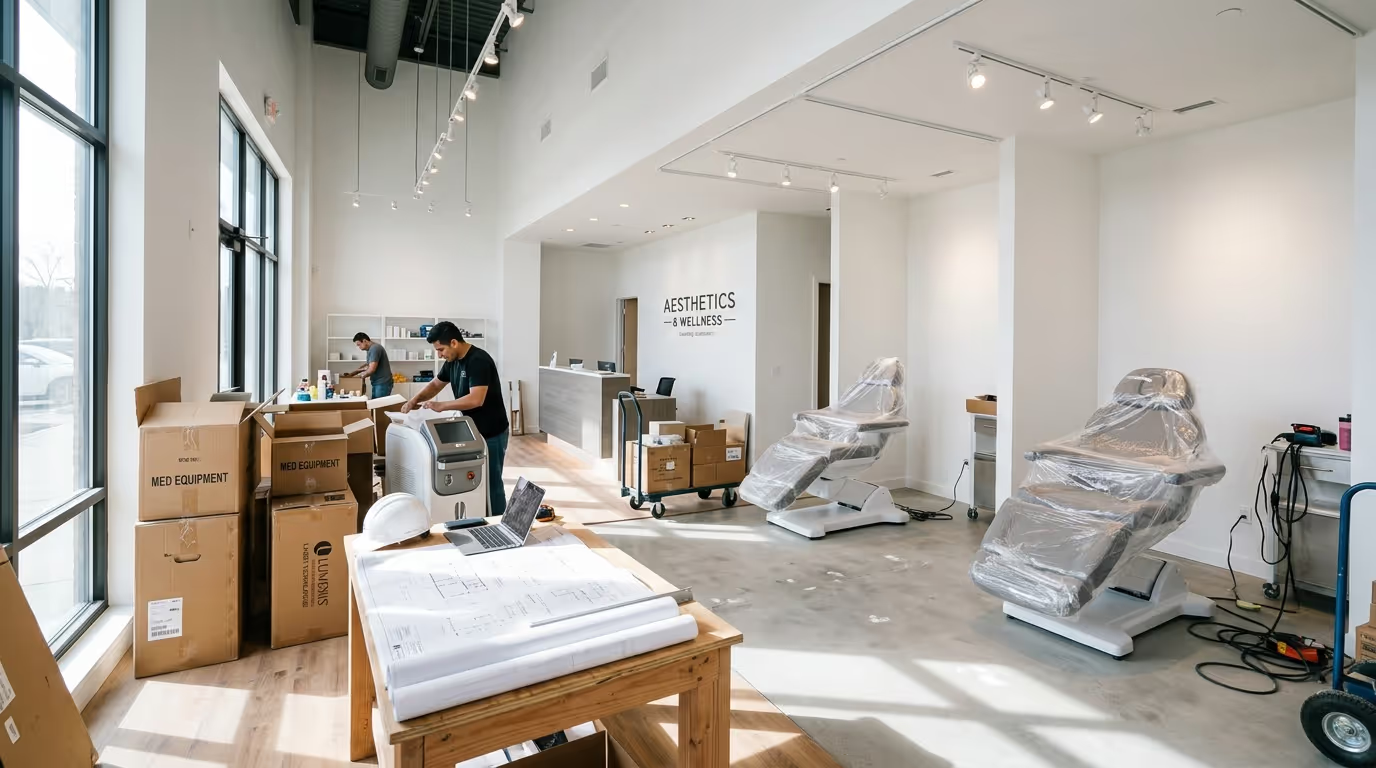
- Lease negotiation: 5-year term with renewal options, tenant improvement allowance, reduced rent during build-out. Med spa build-outs take 2 to 4 months.
- Size planning: 1,500 to 3,000 square feet with 3 to 5 treatment rooms. Build for where you will be in 2 years.
Location evaluation scorecard:
| Factor | Weight | Questions to Answer |
|---|---|---|
| Demographics match | 25% | Is median HHI above $75K? Female population 30 – 65 sufficient? |
| Visibility and access | 20% | Street-level? Adequate parking? Easy to find? |
| Competition | 20% | How many competitors within 5 miles? What gaps exist? |
| Lease economics | 15% | Rent per sq ft competitive? TI allowance? Favorable terms? |
| Co-tenancy | 10% | Complementary businesses nearby? Traffic generators? |
| Growth potential | 10% | Room to expand? Area developing? Future demand indicators? |
Common mistakes:
- Choosing based on rent alone. A cheap location with poor visibility and demographics will cost you far more in lost revenue than the rent savings.
- Underestimating build-out time. Add 2 to 4 weeks to whatever the contractor tells you.
- Not verifying medical zoning. Not all commercial spaces are zoned for medical use. Verify before signing a lease.
- Signing a short-term lease. Med spas take 12 to 18 months to mature. A 2-year lease creates uncertainty just as you are hitting your stride.
Marketing From Day One
Do not wait until your doors are open to start marketing. Your marketing timeline should begin 60 to 90 days before your grand opening. Everything in this section connects to our complete med spa marketing playbook.
Pre-Opening (60 to 90 Days Before)
Implementation steps:
- Build your Google Business Profile immediately. Create and verify before opening. Populate with photos, services, and business information.
- Launch your website. It needs your services, providers, location, and a way to book or inquire. Budget $4,000 to $15,000 — see our website cost guide.
- Start social media. Document your build-out. Share behind-the-scenes content. Introduce your team.
- Run pre-opening ads. Facebook and Instagram ads targeting local demographics. Goal: build an email list and generate awareness. "Coming soon: [Practice Name], [City]'s newest medical spa."
- Network locally. Introduce yourself to every complementary business within a mile. Hair salons, fitness studios, wellness centers, boutiques.
- Build your email list. Capture emails from every interaction — website sign-ups, social media, networking events.
Grand Opening Strategy
Your grand opening should be an event, not just a social media post.
Implementation steps:
- Host an open house with tours, mini-treatments (express facials, skin analyses), and refreshments
- Invite local influencers, media, and complementary business owners
- Offer a grand opening special (limited to 50 spots to create urgency)
- Collect email addresses and phone numbers from every attendee
- Have providers available for complimentary consultations
- Set up a review request process for attendees who receive treatments
- Capture professional photos and video for social media content
First 90 Days of Marketing
| Month | Focus | Budget | Key Actions |
|---|---|---|---|
| Month 1 | Google Ads for high-intent searches | $2,000 – $5,000 | Fastest path to booked appointments |
| Month 2 | Add Meta Ads for awareness | $2,000 – $4,000 | Start review generation, begin email marketing |
| Month 3 | Launch SEO strategy | $1,000 – $3,000 | Begin content marketing, optimize ads based on data |
Ongoing marketing budget: 8 to 12 percent of revenue minimum. During your first year, invest 15 to 20 percent until organic channels mature. The practices that underinvest in marketing during year one are the ones that fail by year three.
Marketing Checklist for New Med Spas
Use our complete marketing checklist alongside this guide. Key items:
| Item | Timeline | Priority |
|---|---|---|
| Google Business Profile created and verified | 90 days pre-opening | Critical |
| Website launched with service pages | 60 days pre-opening | Critical |
| Social media accounts active | 60 days pre-opening | High |
| Google Ads campaign launched | Opening week | Critical |
| Meta Ads campaign launched | Month 2 | High |
| CRM/automation configured | Opening week | High |
| Review generation system active | Opening week | High |
| SEO and content program started | Month 3 | High |
| Retargeting pixels installed | Opening week | Medium |
| Email welcome sequence built | Opening week | Medium |
Timeline: From Concept to Grand Opening
| Phase | Timeframe | Key Activities | Common Delays |
|---|---|---|---|
| Planning | Months 1 – 2 | Business plan, financial projections, entity formation, medical director | Legal complexity |
| Site selection | Months 2 – 3 | Location scouting, lease negotiation, demographic analysis | Lease negotiations |
| Build-out | Months 3 – 6 | Construction, interior design, equipment procurement | Contractor delays (add 2 – 4 weeks) |
| Licensing | Months 3 – 5 (parallel) | State and local licenses, DEA, insurance | Medical facility license (60 – 90 days) |
| Hiring | Months 4 – 5 | Recruiting, interviewing, hiring core team | Finding experienced injectors |
| Training | Months 5 – 6 | Clinical, systems, customer service, role plays | — |
| Pre-marketing | Months 4 – 6 | Website, social, GBP, pre-opening campaigns | Website development delays |
| Soft opening | Week before launch | Friends and family treatments, systems testing | — |
| Grand opening | Target date | Launch event, marketing push, start seeing patients | — |
Total timeline: 6 to 12 months from serious planning to opening day.
Financial Projections: Year One
Here are realistic financial benchmarks for a well-executed new med spa:
| Month | Revenue | Expenses | Net Profit/Loss | Cumulative |
|---|---|---|---|---|
| 1 | $15K – $30K | $35K – $55K | -$20K to -$25K | -$20K to -$25K |
| 2 | $25K – $45K | $35K – $55K | -$10K to -$10K | -$30K to -$35K |
| 3 | $35K – $60K | $35K – $55K | $0 to +$5K | -$30K to -$30K |
| 4 – 6 | $50K – $80K | $40K – $60K | +$10K to +$20K | -$10K to +$30K |
| 7 – 9 | $70K – $110K | $45K – $65K | +$20K to +$45K | +$10K to +$75K |
| 10 – 12 | $90K – $150K | $50K – $75K | +$30K to +$75K | +$40K to +$150K |
Key milestones:
- Breakeven: Month 3 to 5 for well-executed launches
- First profitable month: Month 4 to 6
- Annual revenue year one: $600K to $1.2M
- Annual revenue year two: $1M to $2.5M
- Annual revenue year three: $1.5M to $4M
These projections assume proper capitalization, experienced providers, and consistent marketing investment. Undercapitalized practices take longer to reach profitability.
The Hard Truth About Starting a Med Spa
Starting a med spa is not a get-rich-quick play. The first year is a grind. You will spend more than you earn for the first 3 to 6 months. You will question every decision. You will deal with problems you did not know existed — a medical director who is not responsive enough, a front desk person who cannot sell, a laser that does not perform as advertised, a slow month that makes you wonder if you made a mistake.
The practices that survive the first year and thrive in years two and three are the ones that get three things right:
- The clinical foundation. A qualified medical director, properly credentialed providers, and rigorous treatment protocols. This is not negotiable. See our compliance guide.
- The business fundamentals. Proper entity structure, adequate capitalization, realistic financial projections, and disciplined expense management. Track your KPIs from month one. Understand your revenue potential and most profitable services.
- The marketing engine. A systematic approach to patient acquisition, retention, and reputation building that starts before you open and never stops. Follow our marketing strategies guide and commit to the marketing plan.
Get all three right, and you have the foundation for a practice that generates $1 million to $5 million in annual revenue within 3 to 5 years.
Get any one wrong, and you are fighting uphill every day.
Technology and Software Stack
Choosing the right technology from day one prevents expensive migrations later. Here is the essential software stack for a new med spa.
Core Technology Requirements
| Category | Tool | Monthly Cost | Priority | Why It Matters |
|---|---|---|---|---|
| CRM / Patient Management | GoHighLevel, HubSpot, or Salesforce | $97-$297 | Critical | Manages patient relationships, automates follow-up |
| EMR / Charting | Aesthetic Record, Nextech, or Symplast | $200-$500 | Critical | Clinical documentation, treatment records |
| Booking Software | Jane App, Vagaro, or Boulevard | $100-$300 | Critical | Online scheduling, appointment management |
| Management Software | Zenoti or Mangomint | $200-$500 | High | Operations, inventory, reporting |
| Payment Processing | Square, Stripe, or CareCredit | Transaction fees | Critical | In-office and online payments |
| Marketing Automation | GHL or Mailchimp | $97-$199 | High | Email, SMS, automation |
| Reviews | Birdeye or Podium | $200-$400 | High | Review generation and reputation management |
| Analytics | Google Analytics 4 + Google Search Console | Free | Critical | Website and SEO performance tracking |
| Social Media | Later or Hootsuite | $50-$100 | Medium | Social media scheduling and management |
Implementation steps for technology setup:
- Select and configure your EMR/charting system first — this is your clinical backbone
- Set up your CRM or GHL with patient intake forms, automated follow-up sequences, and pipeline tracking
- Integrate your booking software with your website and CRM — online booking must work seamlessly from day one
- Configure payment processing with ability to handle deposits, packages, and membership billing
- Set up appointment reminder automation: SMS 48 hours before, email 24 hours before
- Install Google Analytics 4 and Google Search Console on your website before launch
- Build your welcome sequence in your automation platform before opening day
Common mistakes:
| Mistake | Consequence | Fix |
|---|---|---|
| Using separate, unintegrated systems | Data silos, manual work, dropped leads | Choose platforms that integrate or use a unified platform like GHL |
| No automation from day one | Staff overwhelmed with manual follow-up | Build core automations before opening |
| Skipping call tracking | Cannot attribute leads to marketing channels | Install call tracking with dynamic number insertion |
| Choosing the cheapest option | Outgrow the platform within 6 months, expensive migration | Choose scalable technology that fits your 2-year growth plan |
The Service Menu: What to Offer First
Not every treatment belongs in your launch menu. Start focused, prove demand, then expand.
Recommended Launch Menu (Highest ROI)
| Treatment Category | Specific Treatments | Startup Investment | Margin | Monthly Revenue Potential | Priority |
|---|---|---|---|---|---|
| Injectables | Botox, fillers (lips, cheeks, jawline) | $5,000-$10,000 (product inventory) | 60-75% | $20,000-$60,000 | Must-have — highest margin |
| Skin treatments | HydraFacial, chemical peels, microneedling | $25,000-$40,000 | 50-65% | $8,000-$25,000 | Must-have — entry point |
| Laser | Hair removal, IPL, skin resurfacing | $60,000-$150,000 | 55-70% | $10,000-$30,000 | Add months 3-6 |
| Body contouring | CoolSculpting, Emsculpt | $50,000-$150,000 | 50-65% | $10,000-$40,000 | Add months 6-12 |
| Weight loss | Semaglutide, B12 injections | $2,000-$5,000 | 60-75% | $5,000-$20,000 | Consider at launch — high demand |
See our most profitable med spa services analysis for detailed margin data.
Implementation steps for building your service menu:
- Start with injectables and skin treatments — lowest startup cost, highest margins, fastest return
- Research local demand: what are patients in your market searching for? Use keyword research to validate demand
- Evaluate your providers' training and certifications — only offer treatments your team can deliver at a high level
- Create detailed treatment protocols for every service before opening
- Set pricing based on market research — never price in a vacuum
- Plan your service expansion roadmap: which treatments will you add at 3, 6, and 12 months?
- Create a dedicated website page for every treatment you offer — this is critical for SEO
Common Mistakes That Kill New Med Spas
| Mistake | How Common | Financial Impact | Prevention |
|---|---|---|---|
| Undercapitalization (not enough cash reserves) | 40% of failures | Practice closes before reaching profitability | 6 months of operating expenses in reserve minimum |
| Ghost medical director (no real oversight) | 25% of failures | Regulatory shutdown, fines, criminal liability | Active, engaged medical director with written agreement |
| No marketing before opening | 35% of new med spas | Empty calendar for months 1-3 | Start marketing 60-90 days before grand opening |
| Overspending on equipment | 30% of startups | Cash flow crisis, unable to cover operations | Lease first major device, buy only what demand supports |
| Hiring inexperienced providers | 20% of failures | Poor results, bad reviews, liability exposure | Pay premium for experienced injectors with 3+ years |
| Wrong location | 15% of failures | Insufficient patient volume, demographic mismatch | Thorough demographic analysis and competition mapping |
| No financial tracking from day one | 30% of startups | Cannot identify problems until too late | Track KPIs weekly from opening day |
| Trying to offer everything at launch | 25% of startups | Diluted focus, higher startup costs, uneven quality | Launch with 5-8 core treatments, expand based on demand |
| Ignoring online reputation | 20% of new med spas | Competitors with more reviews dominate local search | Start review generation from day one |
| No business plan | 30% of startups | No roadmap, reactive decision-making | Complete a detailed business plan before signing a lease |
Franchise vs. Independent: Making the Decision
For some aspiring med spa owners, franchising offers a shortcut with brand recognition and proven systems. Here is how the paths compare.
| Factor | Independent | Franchise |
|---|---|---|
| Startup cost | $250K-$500K | $300K-$600K (includes franchise fee) |
| Franchise fee | $0 | $30,000-$100,000 |
| Ongoing royalties | None | 5-8% of revenue |
| Brand recognition | Build from scratch | Established (varies by brand) |
| Operational freedom | Full control | Must follow franchisor's systems |
| Marketing support | You handle everything | Some franchisor support (varies widely) |
| Exit value/multiple | Based on your performance | Franchise resale market exists |
| Break-even timeline | 3-6 months | 4-8 months (higher fixed costs) |
Implementation steps for evaluating the franchise path:
- Research franchise disclosure documents (FDD) for any franchise you consider — this is required by law
- Talk to 5-10 existing franchisees (not just the ones the franchisor recommends) about their real experience
- Calculate total cost including ongoing royalties over 5 years — the 5-8% adds up significantly
- Evaluate whether the brand recognition in your specific market justifies the premium
- Assess your own experience — if you have no business experience, franchise systems may reduce risk
For comprehensive franchise analysis, read our med spa franchise guide.
The Hard Truth About Starting a Med Spa
Starting a med spa is not a get-rich-quick play. The first year is a grind. You will spend more than you earn for the first 3 to 6 months. You will question every decision. You will deal with problems you did not know existed — a medical director who is not responsive enough, a front desk person who cannot sell, a laser that does not perform as advertised, a slow month that makes you wonder if you made a mistake.
The practices that survive the first year and thrive in years two and three are the ones that get three things right:
- The clinical foundation. A qualified medical director, properly credentialed providers, and rigorous treatment protocols. This is not negotiable. See our compliance guide.
- The business fundamentals. Proper entity structure, adequate capitalization, realistic financial projections, and disciplined expense management. Track your KPIs from month one. Understand your revenue potential and most profitable services.
- The marketing engine. A systematic approach to patient acquisition, retention, and reputation building that starts before you open and never stops. Follow our marketing strategies guide and commit to the marketing plan.
Get all three right, and you have the foundation for a practice that generates $1 million to $5 million in annual revenue within 3 to 5 years.
Get any one wrong, and you are fighting uphill every day.
Related Resources
Your startup journey connects to many specialized topics. These guides go deeper on specific aspects of building and growing a med spa:
- How to Open a Medical Spa — Complementary startup guide with additional detail
- Med Spa Business Plan — Template and framework for your business plan
- Med Spa Marketing Strategies — Complete marketing framework
- How to Market a Med Spa — Tactical marketing playbook
- New Med Spa Marketing — Marketing strategies specifically for new practices
- Med Spa Grand Opening — How to launch with impact
- Med Spa Branding Guide — Building your brand identity
- Med Spa Logo Design — Visual identity fundamentals
- Med Spa Interior Design — Creating a premium patient experience
- Med Spa Design Ideas — Inspiration for your space
- Med Spa Insurance Cost — Insurance planning and budgeting
- Med Spa Compliance — Regulatory requirements and risk management
- Med Spa Medical Director — Finding and structuring the relationship
- Med Spa Hiring — Recruiting your team
- How to Grow a Med Spa — Scaling from startup to thriving practice
- How to Sell a Med Spa — Planning your eventual exit from day one
Starting a med spa and want to make sure your marketing is built right from day one? We work exclusively with med spas — from pre-opening strategy to full-scale growth. Whether you are 12 months from opening or 12 days, we can build the marketing engine that fills your calendar from launch.