
Your website is not a brochure. It is a booking machine — or at least it should be. Finding the best medspa websites to model yours after is the fastest shortcut to higher conversion rates.
The average med spa website converts at 2 to 3 percent of visitors into booked appointments. The best ones hit 8 to 12 percent. That gap represents hundreds of thousands of dollars in annual revenue sitting on the table.
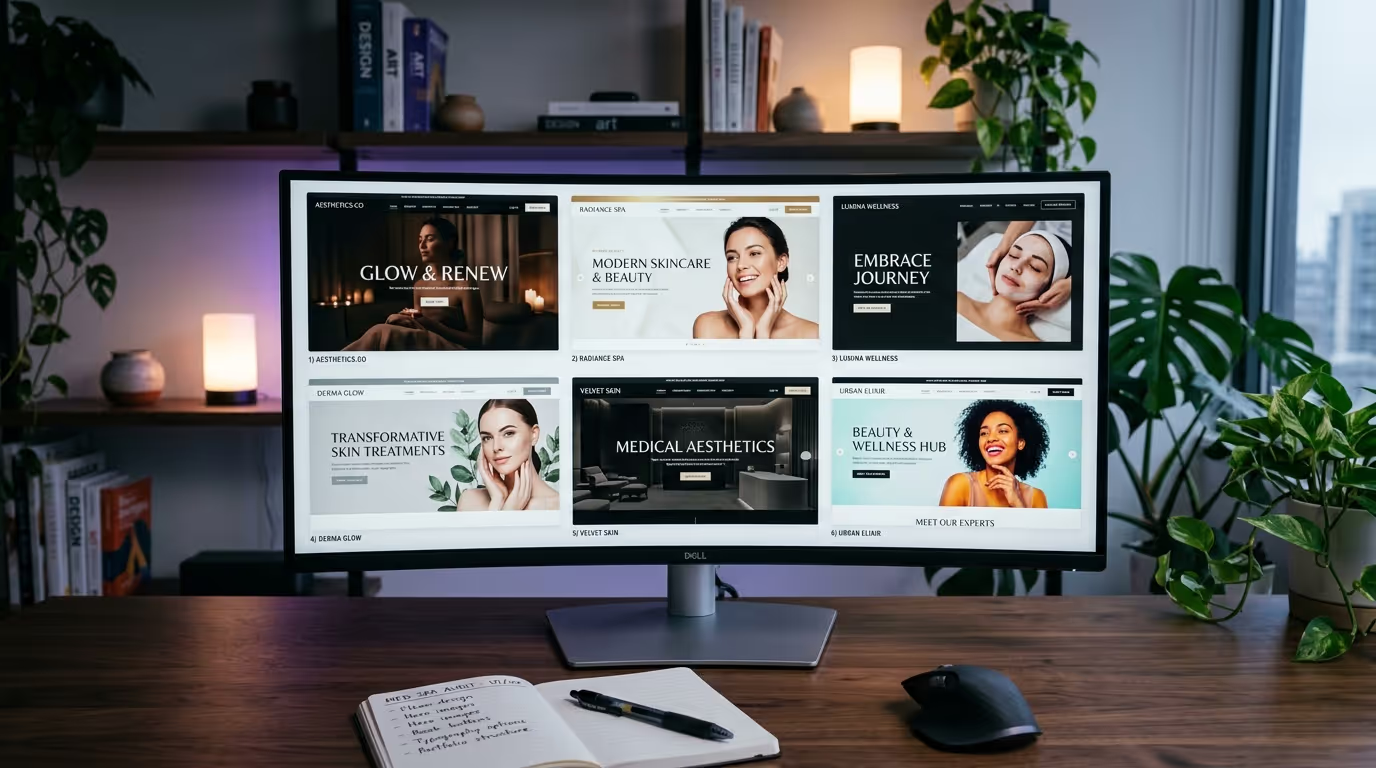
We analyzed 20 of the best medspa websites in 2026 to find out what separates high-converting sites from expensive digital dead ends. These are real practices with real results — and every medspa web design example in this list was chosen because it demonstrates a specific conversion principle you can apply to your own site.
Here is what the best medspa websites look like, organized by what they do better than everyone else.
The Economics of Best Medspa Websites: Why Conversion Matters
Before we look at specific sites, understand the math that makes website design your highest-leverage marketing investment.
| Monthly Visitors | 2% Conversion Rate | 8% Conversion Rate | Revenue Difference (at $500 avg treatment) |
|---|---|---|---|
| 2,000 | 40 bookings | 160 bookings | $60,000/month |
| 5,000 | 100 bookings | 400 bookings | $150,000/month |
| 10,000 | 200 bookings | 800 bookings | $300,000/month |
A 4x improvement in conversion rate is not theoretical. It is the difference between a website that was designed by someone who understands med spa marketing and one that was designed by someone who makes pretty pictures.
Every design element we analyze below ties directly to conversion rate, page speed, SEO performance, or patient trust. This is not a beauty contest — it is a business analysis.
Common Website Mistakes That Kill Conversions
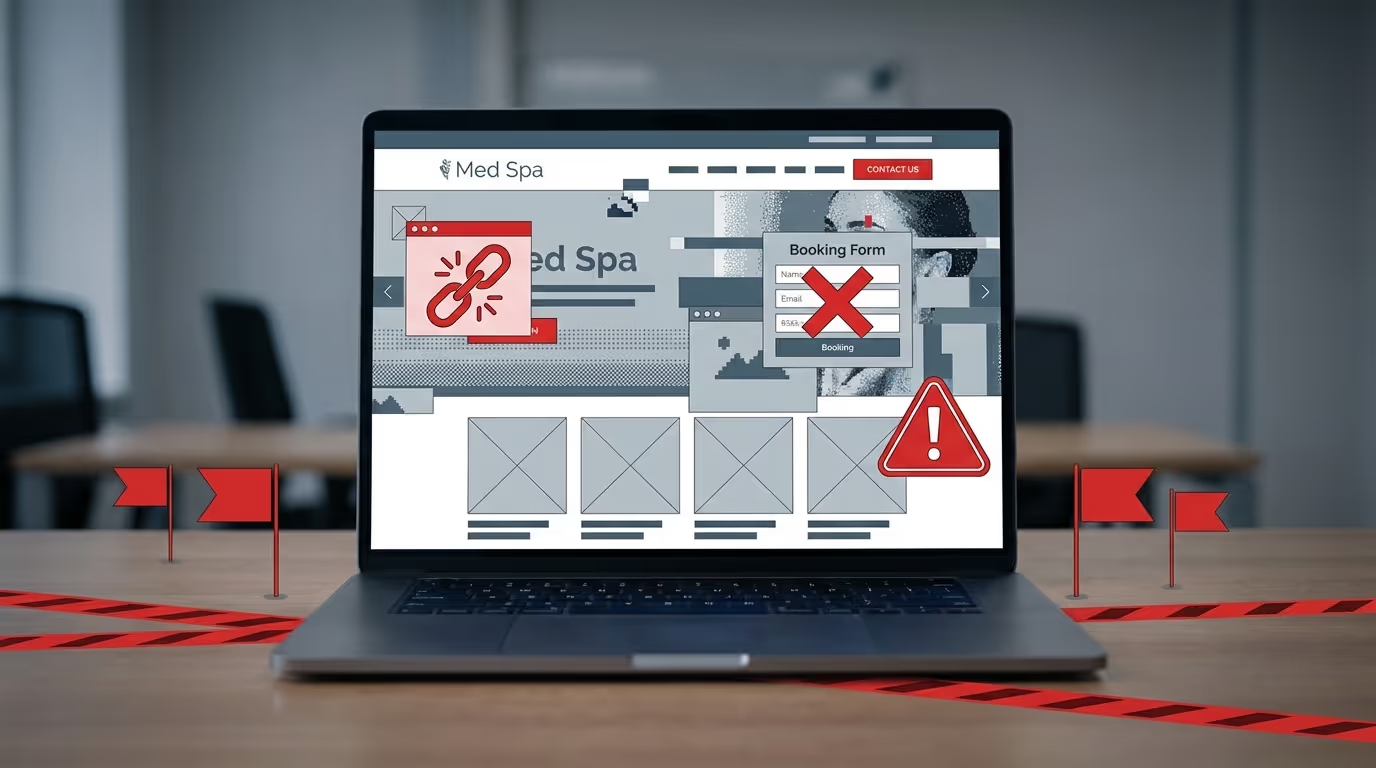
Before studying what works, here are the mistakes we see on 80 percent of med spa websites:
- No clear CTA above the fold. The hero section is a mood photo with no button, no phone number, no next step.
- Homepage as the only landing page. All Google Ads and Meta Ads traffic goes to the homepage instead of dedicated landing pages.
- Missing or buried phone number. Forty percent of med spa patients prefer to call. If the number requires scrolling to find, you are losing them.
- No online booking. A "Call to schedule" message in 2026 is leaving 30 to 50 percent of potential bookings on the table.
- Slow load times. Every second above 3 seconds costs you 7 percent of conversions. Image-heavy med spa sites are the worst offenders.
- No social proof. Reviews, ratings, credentials, and certifications are not on the homepage or service pages.
- Generic stock photos. Patients can spot stock photography instantly. It destroys trust and makes you look like every other practice.
Best Overall Design
1. SkinSpirit
SkinSpirit operates 30-plus locations and their website reflects the scale. Clean, editorial design with generous white space. High-end photography that feels aspirational without being intimidating. Treatment pages are comprehensive with pricing transparency, expected results timelines, and provider credentials.
What they nail: Visual hierarchy. Every page guides your eye from headline to benefit to CTA without feeling forced. The treatment category navigation is intuitive — you can find what you want in two clicks maximum.
What could improve: Mobile booking flow requires too many taps. The sheer volume of locations creates decision paralysis on the location selector.
Key takeaway: Treat your website like a luxury brand editorial — clean, confident, and curated.
Implementation steps to steal this approach:
- Audit your current visual hierarchy using a heatmap tool (Hotjar, Microsoft Clarity).
- Reduce visual clutter by limiting each page to one primary CTA and one secondary CTA.
- Invest in professional photography — custom shoots outperform stock by 35 percent in engagement.
- Implement a clear treatment navigation structure: broad categories linking to individual treatment pages.
- Test your booking flow on mobile — count the taps from any treatment page to a completed booking.
2. EverBody
EverBody built their entire brand around transparency and accessibility. The website reflects this with upfront pricing on every treatment, a clean sans-serif design system, and a booking flow that feels like scheduling a haircut — intentionally low-friction.
What they nail: Pricing transparency. They list exact prices for every treatment, which builds trust immediately and pre-qualifies visitors. Their "How It Works" sections demystify every procedure.
What could improve: The design could use more visual warmth. It reads slightly clinical — which works for their brand but may not suit every market.
Key takeaway: Showing prices on your website does not scare patients away. It filters out price shoppers and builds trust with serious buyers.
Pricing display benchmark data:
| Pricing Approach | Conversion Impact | Patient Quality |
|---|---|---|
| No pricing shown | Baseline | Mixed — attracts price shoppers who call to compare |
| "Starting at" ranges | +15 to 20% conversion | Better — sets expectations |
| Exact pricing per treatment | +25 to 35% conversion | Best — pre-qualifies and builds trust |
| Pricing with financing calculator | +30 to 40% conversion | Best — removes cost objection |
For more on this, read our guide on med spa pricing strategy.
3. LaserAway
LaserAway is one of the largest med spa chains in the US and their site reflects aggressive conversion optimization. Bold colors, strong CTAs above the fold, and social proof everywhere. They lean heavily into celebrity endorsements and influencer partnerships.
What they nail: Social proof at scale. Celebrity partnerships, influencer content, and user-generated photos create an aspirational brand that targets a younger demographic effectively. Their treatment pages include video content that boosts engagement.
What could improve: The site can feel overwhelming. Too many competing CTAs and promotional banners create visual noise that dilutes the primary conversion path.
Key takeaway: Social proof drives conversion — but curate it. More is not always better if it creates clutter.
4. Skin Laundry
Skin Laundry takes a minimalist approach that mirrors their "no-frills luxury" brand positioning. The website uses a restricted color palette, minimal copy, and large lifestyle photography. Navigation is dead simple — there are only a handful of core treatments.
What they nail: Brand consistency. Every touchpoint feels the same — website, social, in-clinic. The limited menu simplifies decision-making and reduces bounce rates. Load times are fast because the design is intentionally lean.
What could improve: SEO is weak. Minimal copy means minimal keyword targeting. Treatment pages are too thin for Google to rank competitively. Read our guide on med spa content strategy to understand why content depth matters.
Key takeaway: Simplicity converts — but do not sacrifice SEO content for minimalism. You can have both.
The simplicity vs. SEO balance:
| Element | Minimalist Approach | SEO-Optimized Approach | Best Practice |
|---|---|---|---|
| Treatment page copy | 100 to 200 words | 1,500 to 2,500 words | Use expandable sections — clean default, detailed on click |
| FAQ sections | None | 8 to 12 questions with schema | Always include — they answer patient questions AND rank |
| Blog | None | 3 to 4 posts per month | Essential for organic growth |
| Internal links | Minimal | 10 to 15 per page | More is better for both UX and SEO |
Best Mobile Experience
5. AesthetiCare
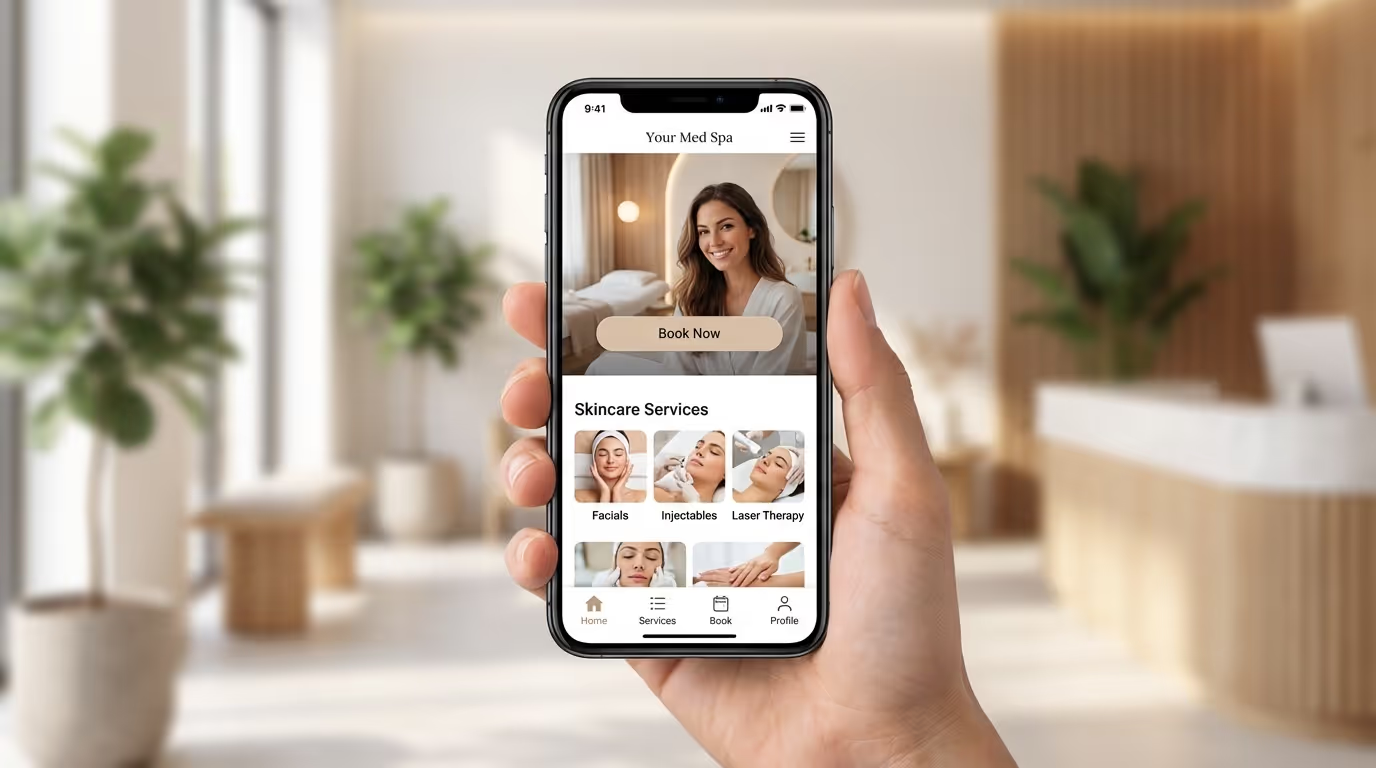
AesthetiCare's mobile experience is best-in-class for a multi-location med spa. Thumb-friendly navigation, tap-to-call prominently placed, and a mobile booking widget that stays fixed without being annoying. Treatment pages reflow beautifully with stacked sections that feel native to mobile.
What they nail: Mobile booking friction is near zero. Two taps to start booking from any page. The sticky header is compact and functional without eating screen real estate.
What could improve: Desktop experience feels like an afterthought in some sections — the opposite problem most med spas have.
Key takeaway: Design mobile-first, not mobile-also. Over 70 percent of med spa website traffic comes from mobile devices.
Mobile design checklist for med spas:
- Tap-to-call button visible on every page without scrolling.
- Booking widget accessible within 2 taps from any page.
- Forms limited to 4 to 5 fields maximum on mobile.
- Images optimized for mobile bandwidth (WebP format, lazy loading).
- Text readable without pinching or zooming (minimum 16px body text).
- Sticky header under 60px tall to preserve content space.
- Touch targets at least 44px by 44px (Apple's recommendation).
- No horizontal scrolling on any page at any breakpoint.
- Page speed under 3 seconds on a 4G connection.
- Before/after galleries that work with swipe gestures.
6. Ideal Image
Ideal Image serves 150-plus locations and their mobile UX handles the complexity well. Location detection is automatic, treatment browsing uses swipeable cards, and the financing calculator works flawlessly on small screens.
What they nail: Their financing integration is seamless on mobile. Patients can check their rate, see monthly payments, and apply for financing without leaving the mobile experience. This removes the biggest conversion barrier for high-ticket treatments like body contouring and CoolSculpting.
What could improve: Page speed suffers from heavy imagery. Several treatment pages exceed 4-second load times on mobile, which directly hurts both rankings and conversions.
Key takeaway: If you offer financing, make it frictionless on mobile. Cherry, PatientFi, or Alphaeon integrations should feel native, not bolted on.
Financing integration impact on conversion:
| Financing Visibility | Conversion Impact | Average Order Value Impact |
|---|---|---|
| Not mentioned | Baseline | Baseline |
| Mentioned in text only | +10 to 15% | +5% |
| Calculator on treatment pages | +25 to 35% | +20% |
| Pre-qualification without leaving page | +35 to 50% | +30% |
7. Peachy
Peachy, a Botox-focused chain, designed their site mobile-first from day one. The result is a fast, focused experience that mirrors the simplicity of booking a ride-share. Minimal navigation, clear pricing, instant booking.
What they nail: Speed. The entire site loads in under 1.5 seconds on mobile. The booking flow is three steps: choose treatment, pick location, select time. No account creation required for first-time visitors.
What could improve: The hyper-focus on Botox means limited content depth for broader aesthetic services. If they expand their treatment menu, the current architecture will not scale.
Key takeaway: Speed and simplicity beat feature richness on mobile. Every additional step in your booking flow costs you 10 to 15 percent of conversions.
Page speed benchmarks for med spa websites:
| Load Time | Conversion Impact | Google Ranking Impact |
|---|---|---|
| Under 2 seconds | Optimal — maximum conversion | Positive ranking signal |
| 2 to 3 seconds | Acceptable — minimal conversion loss | Neutral |
| 3 to 5 seconds | 20 to 30% conversion loss | Negative signal |
| 5+ seconds | 40 to 60% conversion loss | Significant ranking penalty |
For more on technical optimization, see our med spa website optimization guide.
8. Glowbar
Glowbar's mobile experience uses a card-based UI that feels like scrolling through a curated social feed. Treatment cards show key details (time, price, skin concern) at a glance, and the booking calendar uses a familiar date-picker pattern.
What they nail: Visual consistency across breakpoints. The desktop-to-mobile transition is seamless — no content is hidden or awkwardly reflowed. Image compression is handled well, maintaining quality while keeping pages fast.
What could improve: The card layout makes it difficult to compare treatments side-by-side, which matters for patients deciding between similar options. A comparison feature or service page design with comparison tables would help.
Key takeaway: Use UI patterns patients already know. Familiar design patterns reduce cognitive load and increase completion rates.
Best Conversion Rate Optimization
9. SEV Laser Aesthetics
SEV runs a tight conversion machine. Every page has a single primary CTA, exit-intent popups offer a first-visit discount, and the booking widget pre-populates based on the treatment page you are viewing. Smart, not aggressive.
What they nail: Contextual CTAs. If you are on the Botox page, the booking widget defaults to Botox. If you are on a location page, it defaults to that location. This reduces booking friction by eliminating redundant selection steps.
What could improve: The first-visit discount popup fires too quickly (under 3 seconds). Give visitors time to evaluate before pushing a promotion.
Key takeaway: Make your CTAs contextually aware. The booking form should know what page the visitor is on and act accordingly.
Implementation steps for contextual CTAs:
- Pass the current page URL or treatment category to your booking widget via URL parameters.
- Pre-select the treatment or service in the booking form based on the page.
- Pre-select the location based on IP geolocation or previous selection.
- Use dynamic headline text on the CTA: "Book Your Botox Consultation" instead of generic "Book Now."
- Test contextual versus generic CTAs — expect a 15 to 25 percent conversion improvement.
10. Moxie Med Spa (Various Franchisees)
Moxie is a med spa franchise platform, and their top-performing franchisee sites share common conversion elements: before-and-after galleries with consent-verified photos, treatment quizzes that recommend services, and SMS-based booking confirmation.
What they nail: Treatment quizzes. A short "What are your skin goals?" quiz that recommends treatments based on answers. This increases engagement time by 3x and converts at nearly double the rate of standard service pages.
What could improve: Franchise inconsistency. The best Moxie sites are excellent, but quality varies wildly across franchisees.
Key takeaway: Interactive elements like quizzes and assessments outperform static content for conversion. They also capture lead data even if the visitor does not book immediately.
Treatment quiz conversion benchmarks:
| Element | Standard Service Page | Page with Treatment Quiz |
|---|---|---|
| Average time on page | 45 to 90 seconds | 2.5 to 4 minutes |
| Bounce rate | 60 to 70% | 30 to 40% |
| Lead capture rate | 3 to 5% | 8 to 15% |
| Consultation booking rate | 2 to 4% | 5 to 10% |
11. Skinney Medspa
Skinney Medspa in New York uses aggressive but effective conversion tactics. Countdown timers on limited promotions, live chat with real staff (not bots), and a "Why Us" comparison table on every treatment page that positions them against competitors.
What they nail: The comparison table is brilliant. It shows what is included at Skinney versus "other med spas" — provider credentials, included follow-ups, product quality. This reframes price comparisons and justifies premium positioning. See our med spa specials guide for more on promotional strategies.
What could improve: Countdown timers can erode trust if overused. If every promotion has a timer, none of them feel urgent.
Key takeaway: Comparison tables beat price lists. Show patients the value differential, not just the number.
Comparison table template for med spa treatment pages:
| Feature | Your Practice | Typical Med Spa |
|---|---|---|
| Provider credentials | Board-certified, 10+ years | Varies |
| Before/after consultation | Included | Often extra |
| Follow-up appointment | Included at no charge | Not always included |
| Product quality | Premium brands only | Mix of brands |
| Treatment time | Full protocol, no rushing | May vary |
| Satisfaction guarantee | Written policy | Often no formal policy |
12. RefinedMD
RefinedMD in the Bay Area has one of the highest-converting treatment page structures we have seen. Each page follows a consistent template: hero with before/after, treatment overview, candidacy checklist, procedure walkthrough, results timeline, pricing range, FAQ, and CTA.
What they nail: The candidacy checklist ("Am I a good candidate?") is a conversion accelerator. Patients self-qualify before booking, which reduces no-shows and increases consultation-to-treatment conversion rates.
What could improve: The site architecture could benefit from better internal linking between related treatments for cross-selling opportunities. Our guide on med spa homepage design covers how to structure navigation for cross-treatment discovery.
Key takeaway: A standardized treatment page template is not boring — it is effective. Patients learn the layout and navigate faster on repeat visits.
The high-converting treatment page template:
- Hero section — Treatment name, one-sentence benefit, before/after thumbnail, primary CTA.
- Overview — 200 to 300 words explaining the treatment in patient-friendly language.
- Candidacy checklist — "You may be a good candidate if..." with 5 to 7 checkboxes.
- How it works — Step-by-step walkthrough with numbered steps or timeline graphic.
- Results and expectations — What to expect, timeline for results, how long results last.
- Before/after gallery — 4 to 8 examples organized by treatment area and patient type.
- Pricing — Range or exact pricing, plus financing options.
- Provider credentials — Who performs the treatment, their qualifications.
- FAQ section — 8 to 12 questions with FAQPage schema markup for SEO benefit.
- Final CTA — Consultation booking form or phone number with supporting trust signals.
Best Content Strategy
13. Westlake Dermatology
Westlake Dermatology in Austin runs one of the most impressive content operations in the med spa space. Their blog publishes 8 to 10 posts per month covering treatment deep-dives, provider spotlights, and patient education content that ranks for hundreds of long-tail keywords.
What they nail: Content depth. Their treatment pages are 1,500 to 2,000 words with clinical detail, FAQ sections, and video content. They rank for competitive terms like "Botox Austin" and "CoolSculpting Austin" in the top 3 positions.
What could improve: Blog navigation could be better organized. With hundreds of posts, finding specific content requires search — a category-based architecture would improve discoverability.
Key takeaway: Volume plus quality wins SEO. You need both — thin content at scale or deep content at a trickle both underperform.
Content velocity benchmarks for med spa websites:
| Publishing Cadence | SEO Impact at 6 Months | SEO Impact at 12 Months |
|---|---|---|
| 1 post/month | Minimal | Slight improvement |
| 2 to 4 posts/month | Moderate — long-tail rankings emerging | Strong — 50+ keywords ranking |
| 4 to 8 posts/month | Strong — topical authority building | Dominant — 100+ keywords, significant organic traffic |
| 8+ posts/month | Rapid authority gains | Market leader in content |
For a complete content framework, see our med spa content strategy guide and med spa content ideas for monthly inspiration.
14. The Skin Clinic
The Skin Clinic uses a content cluster model where each major treatment has a pillar page surrounded by supporting blog content. Their Botox pillar page links to 15-plus supporting articles covering cost, areas treated, longevity, comparisons, and recovery.
What they nail: Internal linking structure. Every blog post links to relevant treatment pages, and treatment pages link back to related blog content. This creates topical authority that Google rewards with higher rankings across the entire cluster.
What could improve: Content freshness. Some supporting articles have not been updated in 18-plus months, which signals staleness to Google.
Key takeaway: Build content clusters, not random blog posts. Every piece of content should serve a strategic purpose in your topical authority map.
Content cluster architecture for a treatment like Botox:
| Content Type | Page | Internal Links |
|---|---|---|
| Pillar page | "Botox Treatment at [Practice]" | Links to all supporting content |
| Cost content | "How Much Does Botox Cost?" | Links to pillar + related treatments |
| Comparison | "Botox vs Dysport" | Links to pillar + alternative treatments |
| Recovery | "Botox Recovery: What to Expect" | Links to pillar + aftercare page |
| FAQ | "Botox FAQ: Everything You Need to Know" | Links to pillar + booking page |
| Results | "Botox Results: Before and After Gallery" | Links to pillar + consultation page |
This is how med spa SEO builds compounding organic traffic.
15. Halo Laser and Aesthetics
Halo takes a unique approach with provider-authored content. Each blog post is written by (or attributed to) a specific provider with their credentials displayed. This directly supports E-E-A-T signals and builds trust with both Google and patients.
What they nail: Author authority. Provider bios on blog posts include medical credentials, years of experience, and links to professional profiles. Google recognizes this as genuine expertise signals for YMYL content.
What could improve: Post frequency is inconsistent. The content quality is high but publishing cadence varies from 4 posts one month to zero the next.
Key takeaway: Attribute your content to real providers. Anonymous med spa blog posts carry zero E-E-A-T weight in 2026.
Implementation steps for E-E-A-T optimization:
- Create detailed author bio pages for every provider who contributes content.
- Add author bylines with credentials to every blog post and treatment page.
- Include "Medically reviewed by [Provider Name], [Credentials]" on clinical content.
- Link author bios to professional profiles (LinkedIn, medical board verification, association memberships).
- Add AuthorSchema markup to author pages.
- Have providers contribute firsthand insights ("In my experience treating...") to content.
16. Rejuvenation Clinics of Australia
While Australian-based, their content strategy is worth studying for US med spas. They publish comprehensive treatment comparison guides ("Botox vs Dysport," "Laser vs IPL") that capture high-intent search traffic. Each comparison is genuinely balanced and clinically accurate.
What they nail: Comparison content. These pages rank for some of the highest-intent keywords in aesthetics because they match exactly what patients are searching when they are close to making a decision.
What could improve: The design feels dated compared to US competitors. Content quality outpaces the visual presentation.
Key takeaway: Comparison content converts at 2 to 3x the rate of standard treatment pages because it captures patients in the decision stage of their journey.
Best Photography and Visual Content
17. Aman Beverly Hills
Aman's med spa section features the most premium photography in the industry. Custom-shot, editorially styled images that feel like a luxury magazine spread. No stock photos anywhere. The visual quality alone communicates premium positioning.
What they nail: Photography as brand differentiation. Every image tells a story of luxury, precision, and exclusivity. The photography eliminates the need for excessive copy — the visuals do the selling.
What could improve: Accessibility. Beautiful images need proper alt text and loading optimization. Several hero images exceed 2MB, which kills mobile performance.
Key takeaway: Invest in professional photography. It is the single highest-ROI design investment a med spa can make. Custom photography outperforms stock imagery by 35 percent in engagement metrics.
Photography investment benchmarks:
| Investment Level | Deliverables | Impact on Website Conversion |
|---|---|---|
| $0 (stock photos) | Generic images | Baseline — low trust |
| $500 to $1,000 (basic shoot) | 20 to 30 facility and team photos | +15 to 20% conversion |
| $2,000 to $5,000 (professional shoot) | 50 to 100 photos including treatment rooms, team, lifestyle | +25 to 35% conversion |
| $5,000 to $10,000 (editorial shoot) | 100+ photos, styled, multiple setups, video clips | +35 to 50% conversion |
18. Jolie Plastic Surgery
Jolie features one of the best before-and-after galleries in the industry. High-quality, consistently lit comparison photos organized by treatment, body area, and provider. Each gallery entry includes treatment details and patient age/skin type for context.
What they nail: Before-and-after organization. Patients can filter results by the exact treatment and body area they are considering. Consistent lighting and angles across all photos build credibility — these are clearly real results, not cherry-picked outliers.
What could improve: Gallery pages are image-heavy without lazy loading, causing slow initial page loads. Technical optimization would improve both UX and SEO.
Key takeaway: A well-organized before-and-after gallery is your highest-converting page. Invest in standardized photography protocols (lighting, angles, backgrounds) and proper consent documentation.
Before/after gallery best practices:
- Standardize shooting conditions: same room, same lighting, same camera distance, same background.
- Use the same camera and lens for consistency.
- Photograph at consultation, treatment day, 30 days, 60 days, and 90 days.
- Include patient demographics (age, skin type, treatment area) without identifying information.
- Get written consent that specifically covers website, social media, and advertising use.
- Organize by treatment type, body area, and patient age range.
- Include the treatment protocol (what was done, how many sessions, timeline).
- Add disclaimer: "Individual results may vary."
19. SkinCeuticals SkinLab
SkinCeuticals SkinLab blends product photography with treatment imagery in a way that feels cohesive. The site uses lifestyle photography that shows real skin texture and real results — not airbrushed perfection.
What they nail: Authenticity in imagery. The trend toward "real skin" photography resonates with younger demographics who are skeptical of overly polished before-and-afters. Their product-meets-treatment visual approach also cross-sells retail effectively.
What could improve: The brand integration sometimes feels more like a SkinCeuticals product site than a treatment destination. The med spa services need to stand on their own.
Key takeaway: Authentic, realistic photography builds more trust than over-edited perfection. Show real skin, real texture, real results.
20. VTOX
VTOX uses video content throughout their site in a way most med spas have not figured out yet. Short treatment walkthrough videos, provider introduction clips, and patient testimonial videos are embedded contextually on relevant pages rather than siloed in a "Videos" section.
What they nail: Video integration. Treatment pages include 30 to 60-second clips showing the actual procedure, which reduces anxiety and builds confidence in the booking decision. Video thumbnails in Google search results also increase click-through rates by 40-plus percent.
What could improve: Video hosting could be optimized. Self-hosted video files slow page loads. Moving to a CDN-delivered solution would maintain quality while improving performance.
Key takeaway: Short-form video on treatment pages increases conversion rates by 20 to 30 percent. You do not need a production crew — a provider with a smartphone and good lighting is enough to start.
Video content types and their impact:
| Video Type | Length | Placement | Conversion Impact |
|---|---|---|---|
| Provider introduction | 30 to 60 seconds | Homepage, About page | +10 to 15% trust signals |
| Treatment walkthrough | 60 to 120 seconds | Treatment pages | +20 to 30% conversion |
| Patient testimonial | 30 to 90 seconds | Treatment pages, landing pages | +15 to 25% conversion |
| Before/after reveal | 15 to 30 seconds | Gallery, social embeds | +10 to 20% engagement |
| FAQ answer clips | 30 to 60 seconds | FAQ sections | +5 to 10% time on page |
The Patterns That All 20 Share
Across these 20 sites, clear patterns emerge. The best medspa websites in 2026 share these characteristics:
Navigation
- Treatment-first navigation (not "Services" — specific treatment categories)
- Persistent booking CTA in the header (button, not link)
- Location selector for multi-location practices
- Maximum 3 clicks to book any treatment
- Mobile-optimized navigation with hamburger menu that is easy to tap
Homepage Structure
- Hero with clear value proposition and primary CTA
- Social proof within the first scroll (reviews, ratings, certifications)
- Featured treatments with visual cards (not text lists)
- Provider highlights with credentials
- Before-and-after preview gallery
- Secondary CTA for visitors not ready to book (quiz, guide, consultation)
Treatment Pages
- 800 to 1,500 words of clinically accurate content (more for SEO-priority pages)
- Before-and-after photos specific to that treatment
- Pricing information (exact or range)
- FAQ section with schema markup
- Related treatments for cross-referencing
- Provider credentials relevant to that procedure
- Single, clear booking CTA
Trust Elements
- Google review ratings displayed site-wide
- Provider credentials on every relevant page
- Certifications and accreditations in footer or trust bar
- HIPAA-compliant patient testimonials
- Association memberships (AmSpa, etc.)
Build Your Own: The Best Medspa Websites Implementation Checklist
Before you redesign or audit your current site, run through this checklist based on the medspa web design examples above. Every item directly impacts conversion rates.
Non-Negotiables
- Mobile-first responsive design (test on actual devices, not just browser resize).
- Page speed under 3 seconds on mobile (test with Google PageSpeed Insights).
- SSL certificate (HTTPS) active and properly configured.
- HIPAA-compliant forms and data handling.
- Online booking integration (not just a contact form).
- Google Business Profile linked and optimized.
- Individual treatment pages (not bundled service categories).
- Real photography (at minimum: facility, providers, results).
- Provider bios with credentials.
- NAP consistency across all pages.
High-Impact Optimizations
- Before-and-after gallery with consent documentation.
- Treatment comparison pages for competing services.
- Pricing information (ranges are fine if exact pricing is not possible).
- Video content on treatment pages.
- Treatment quiz or assessment tool.
- Financing integration (Cherry, PatientFi, Alphaeon, CareCredit).
- SMS booking confirmation.
- Exit-intent lead capture.
- Schema markup (MedicalBusiness, MedicalProcedure, FAQPage).
- Blog with content cluster strategy.
Conversion Accelerators
- Contextual CTAs that adapt to page content.
- Candidacy checklist on treatment pages.
- Live chat or chatbot during business hours.
- Review integration showing Google and Yelp ratings.
- Urgency elements (limited availability, seasonal promotions).
- Retargeting pixel installed (Meta, Google).
- Drip campaign signup for visitors not ready to book.
- Welcome email sequence triggered by form submissions.
The Website Redesign Decision: When and How
When to Redesign vs. Optimize
Not every underperforming website needs a full redesign. Here is how to decide:
| Situation | Recommendation | Timeline | Budget |
|---|---|---|---|
| Site is less than 2 years old, conversion is low | Optimize — CRO improvements, speed fixes, content additions | 1 to 3 months | $2,000 to $5,000 |
| Site is 3 to 5 years old, design is dated | Partial redesign — new homepage, treatment pages, mobile overhaul | 2 to 4 months | $5,000 to $15,000 |
| Site is 5+ years old or built on outdated platform | Full redesign | 3 to 6 months | $10,000 to $30,000 |
| No website exists | Build from scratch | 2 to 4 months | $8,000 to $20,000 |
For a complete cost breakdown, see our guide on how much a med spa website costs.
Platform Selection
| Platform | Best For | Monthly Cost | Pros | Cons |
|---|---|---|---|---|
| Webflow | Design-forward, custom builds | $29 to $49/month | Beautiful output, fast, great SEO | Steeper learning curve |
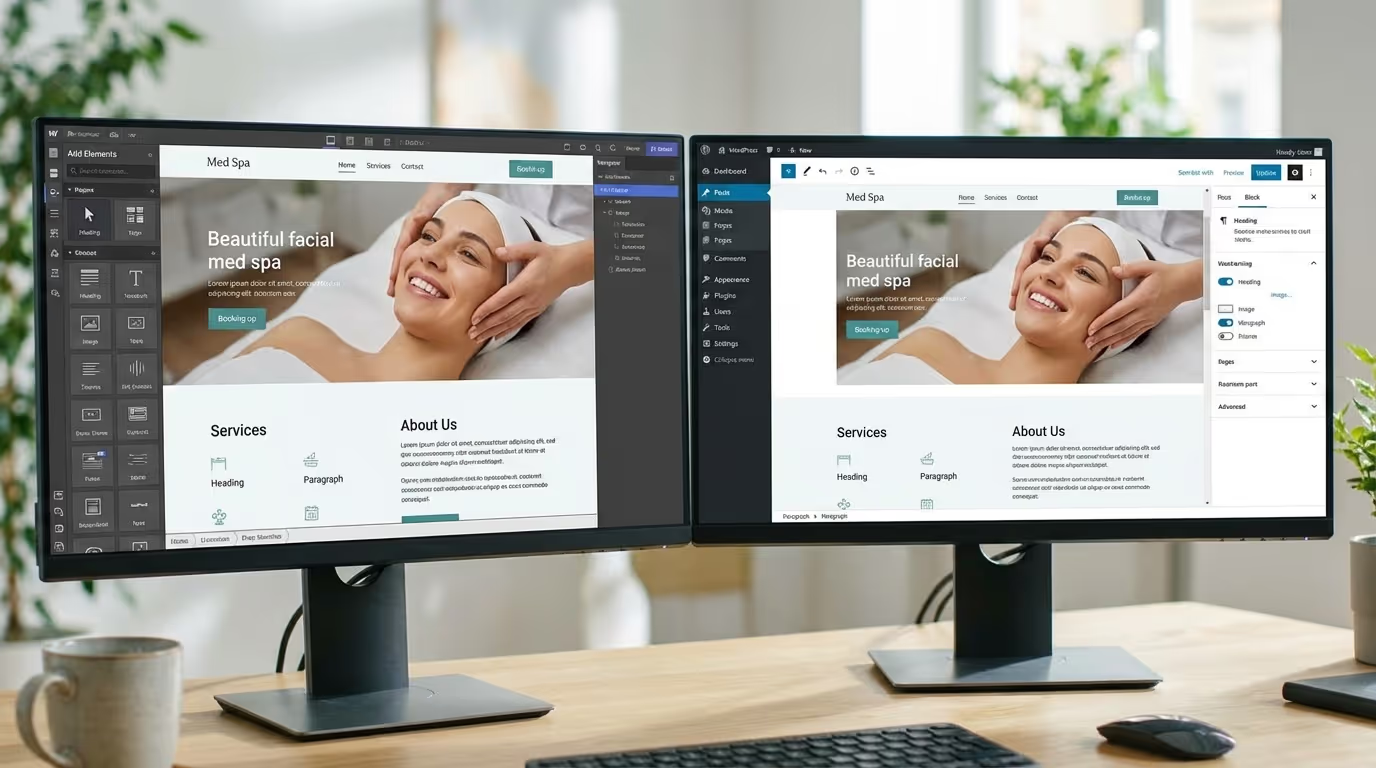
| WordPress | Content-heavy, SEO-focused | $30 to $100/month (hosting + plugins) | Massive ecosystem, flexible | Requires maintenance, plugin conflicts |
| Squarespace | Simple, clean, DIY-friendly | $27 to $49/month | Easy to use, good templates | Limited customization, SEO limitations |
| Custom-built | Enterprise, multi-location | $200+/month (hosting) | Full control, unlimited flexibility | Expensive, slow to update |
Our detailed Webflow vs WordPress comparison covers this in depth for med spa owners specifically.
Your Website Is Leaving Money on the Table
The gap between a 2 percent conversion rate and an 8 percent conversion rate on a med spa website getting 5,000 monthly visitors is the difference between 100 and 400 booked appointments per month. At an average treatment value of $500, that is $150,000 in monthly revenue you are not capturing.
Your website does not need to be the prettiest in your market. It needs to be the most effective. Every design decision should serve one purpose: turning visitors into booked patients.
The best medspa websites in this analysis prove that conversion-focused design is not about following trends — it is about understanding patient psychology, reducing friction, building trust, and making the next step obvious.
Start with the non-negotiables. Add the high-impact optimizations. Test the conversion accelerators. And measure everything.
Want to See How Your Website Stacks Up?
We will audit your current website against the best medspa websites benchmarks in this guide — conversion rate analysis, UX scoring, speed testing, SEO evaluation, and specific recommendations based on top-performing medspa web design examples in your market. No obligation, no generic PDF.
Related reading:
- Med Spa Website Design: What Makes a High-Converting Site
- Med Spa Homepage Design: 12 Elements That Convert
- Med Spa Service Page Design: Templates That Book Patients
- Med Spa Mobile Website Design: Why Mobile-First Matters
- How Much Does a Med Spa Website Cost?
- Webflow vs WordPress for Med Spas
- Med Spa Website Mistakes That Cost You Patients
- Med Spa Website Optimization: Speed, UX & Conversions
- Med Spa Schema Markup: Technical SEO That Wins
- Med Spa Landing Pages That Convert
- SEO for Medical Spas: Why Most Agencies Get It Wrong
- Med Spa Content Strategy for SEO Growth
- Med Spa Google Ads: Strategy & Best Practices
- Med Spa Reputation Management: Getting & Managing Reviews
- Med Spa Photography: How to Create Stunning Content