

Most healthcare content marketing is a waste of time.
That's not provocative for the sake of it. It's true. The average med spa publishes a blog post every few weeks — some generic piece about "5 Benefits of Botox" or "Why You Should Consider CoolSculpting" — and wonders why it doesn't move the needle. The content gets published, maybe shared on social media once, and then it sits there. No traffic. No leads. No patients.
The problem isn't that content marketing doesn't work for healthcare businesses. It does. Spectacularly. The problem is that most practices approach content the way they approach an afterthought — no strategy, no keyword research, no distribution plan, and no measurement.
We build content marketing for healthcare systems — specifically for med spas and medical aesthetics practices. Our medical content marketing approach has been refined across dozens of practices, and we have seen what works and what wastes money. This guide is the blueprint for content that actually drives patient bookings — not vanity metrics.
Why Healthcare Content Marketing Matters More in 2026
Three forces have converged to make content the most important long-term investment in your marketing mix. Understanding these forces isn't optional — they explain why practices that ignore content marketing are losing ground every month.
1. Paid Media Costs Are Rising Faster Than Ever
Google Ads CPCs for med spa keywords have increased 15% to 25% year over year since 2023. Markets like Miami, LA, and New York have seen Botox-related CPCs climb past $40. Weight loss and GLP-1 keywords have surged 200% to 300% in cost over two years. The cost of acquiring patients through paid channels alone is becoming unsustainable for practices that aren't also building organic traffic.
Here's the economic comparison that should change your strategy:
| Channel | Year 1 Cost | Year 1 Leads | Year 2 Cost | Year 2 Leads | Year 3 Cost | Year 3 Leads |
|---|---|---|---|---|---|---|
| Google Ads (only) | $60,000 | 1,000 | $66,000 | 1,000 | $73,000 | 1,000 |
| Content Marketing | $48,000 | 200 | $48,000 | 800 | $48,000 | 2,000 |
| Combined | $84,000 | 1,200 | $84,000 | 1,800 | $84,000 | 3,000 |
Content is the hedge against rising ad costs. A blog post that ranks on page one for "how much does Botox cost in [your city]" generates free traffic indefinitely. The upfront investment in creating that content pays for itself within 3 to 6 months and then produces pure profit after that. For a detailed breakdown of what Google Ads cost for med spas, see our benchmark guide.
2. Patients Research More Before Booking
The patient journey has gotten longer. The average aesthetics patient now consumes 7 to 12 pieces of content before booking their first treatment. They read blog posts, watch videos, check reviews, compare providers, and educate themselves on procedures before they ever pick up the phone.
The content consumption journey for a typical Botox patient:
- Googles "is Botox safe" — reads 2-3 articles
- Watches a treatment video on YouTube or TikTok
- Searches "Botox near me" — compares 3-4 provider websites
- Reads Google reviews for top 2-3 practices
- Returns to preferred provider's website — reads cost page and FAQ
- Checks the provider's Instagram for before-and-after results
- Reads a "what to expect" article on the provider's blog
- Finally books a consultation
If your practice isn't producing that content, someone else is. And the practice that educates the patient typically earns the patient. Building a patient acquisition system that includes content at every stage of this journey is what separates practices that grow from those that plateau.
3. Google Rewards Expertise More Aggressively
Google's algorithm updates over the past two years have aggressively prioritized E-E-A-T: Experience, Expertise, Authoritativeness, and Trustworthiness. In healthcare, this is amplified because Google classifies medical content as "Your Money or Your Life" (YMYL) — content that could impact a person's health or financial wellbeing.
For med spas, this means generic, thin content doesn't rank anymore. Google wants to see content written by (or attributed to) qualified medical professionals, published on authoritative sites, and demonstrating real clinical expertise. This is actually an advantage for practices — you have the expertise that content mills don't.
What Google's quality raters look for in medical content:
| E-E-A-T Signal | What It Means | How to Demonstrate It |
|---|---|---|
| Experience | Author has firsthand treatment experience | Author bio mentions performing these treatments |
| Expertise | Author has relevant credentials | MD, DO, NP, PA credentials displayed prominently |
| Authoritativeness | Site is recognized in the field | Backlinks from medical associations, press mentions |
| Trustworthiness | Content is accurate and transparent | Citations, medical review process, disclaimers |
The Healthcare Content Marketing Framework
Random content doesn't work. You need a framework that connects every piece of content to a business outcome. Here's the one we use with every med spa client, and it maps directly to the patient journey outlined above.
Level 1: Bottom-of-Funnel Content (Books Appointments)
This content targets people who are ready to book. They've already decided they want a treatment — they're choosing a provider. This is your highest-priority content because it converts at 5x to 10x the rate of awareness content.
Content types and their performance:
| Content Type | Example | Search Intent | Avg. Conversion Rate |
|---|---|---|---|
| Treatment cost pages | "How Much Does Botox Cost in [City]?" | Transactional | 6-10% |
| Treatment comparison pages | "Botox vs. Dysport: Which Is Right for You?" | Commercial investigation | 4-8% |
| Provider bio pages | "Meet Dr. [Name] — Board-Certified Injector" | Navigational | 5-8% |
| "What to Expect" pages | "Your First CoolSculpting Session" | Commercial investigation | 4-7% |
| Location pages | "[Treatment] in [City/Neighborhood]" | Transactional | 5-9% |
Implementation steps:
- List every treatment your practice offers
- Create a cost page for each treatment with local pricing context
- Identify the top 3-5 comparisons patients ask about (Botox vs. Dysport, CoolSculpting vs. Emsculpt, etc.)
- Write a comprehensive "what to expect" guide for each treatment category
- Build individual provider pages with credentials, photos, and specialization areas
- If you serve multiple cities, create location-specific pages for your top treatments
Priority: Build this content first. Always. Every week you delay is a week of high-intent traffic going to competitors. For more on this approach, see our full med spa content strategy guide.
Level 2: Middle-of-Funnel Content (Builds Trust)
This content targets people who are interested in a treatment but haven't committed. They're educating themselves, weighing options, and evaluating whether a specific treatment is right for them.
Content types:
- Treatment deep-dives ("The Complete Guide to CoolSculpting: What You Need to Know")
- Before-and-after case studies with patient stories
- FAQ articles addressing common objections and concerns
- "Am I a Good Candidate?" content for specific treatments
- Recovery guides and aftercare instructions
- Video content: treatment walkthroughs, provider Q&As, patient testimonials
Why this content matters: It builds the trust that converts researchers into patients. A patient who reads your comprehensive guide to dermal fillers, watches your provider explain the process, and sees real before-and-after results is far more likely to book with you than with a competitor who has a one-paragraph service description.
Implementation steps:
- Identify the top 5 questions patients ask during consultations for each treatment
- Turn each question into a comprehensive blog post or video
- Create before-and-after case studies with detailed patient narratives (with consent)
- Build FAQ pages that address fear-based objections (pain, side effects, recovery time, cost concerns)
- Develop recovery and aftercare content that positions your practice as the thorough, expert choice
Level 3: Top-of-Funnel Content (Creates Awareness)
This content reaches people who don't yet know they need your services — or don't know your practice exists. It's broader, more educational, and designed to introduce your brand.
Content types:
- Trend articles ("Healthcare marketing trends in 2026")
- Lifestyle content ("How to Build an Anti-Aging Routine That Actually Works")
- Myth-busting content ("5 Myths About Botox That Need to Die")
- Industry news and commentary
- Social media content (Instagram, TikTok, YouTube)
Why this content matters: It fills the top of your funnel with people who will eventually become patients. But it has the longest path to revenue, which is why it should be your third priority — not your first.
Keyword Research: The Foundation of Healthcare Content Marketing
Content without keyword research is content without traffic. You're writing for an audience that will never find it.
Here's how to do keyword research for med spa content the right way.
Step 1: Map Your Treatment Menu to Search Queries
Every treatment you offer has a set of related searches. For Botox alone, the keyword universe includes:
| Keyword | Monthly Volume (National) | Intent | Priority |
|---|---|---|---|
| botox near me | 450,000 | High — ready to book | 1 |
| how much does botox cost | 110,000 | High — comparing prices | 1 |
| botox vs dysport | 33,000 | Commercial investigation | 2 |
| botox side effects | 74,000 | Concern-driven | 3 |
| how long does botox last | 60,500 | Educational | 3 |
| botox for jawline | 22,000 | Treatment-specific | 2 |
| best botox provider in [city] | Varies | High — ready to choose | 1 |
| what to expect after botox | 18,000 | Pre-booking research | 2 |
| botox forehead before and after | 27,000 | Visual research | 2 |
Multiply this across every treatment you offer, and you have hundreds of content opportunities. Each one is a potential patient acquisition channel.
Step 2: Prioritize by Intent and Volume
Not all keywords are equal. A keyword with 10 monthly searches but extremely high purchase intent ("botox appointment [your city]") is worth more than a keyword with 5,000 searches and zero intent ("what is botox").
Prioritization matrix:
| Priority | Intent Level | Volume | Content Type | Expected Conversion |
|---|---|---|---|---|
| 1 | High intent + Local | Any volume | Treatment/cost/location pages | 5-10% |
| 2 | High intent + Non-local | Medium-High | Treatment comparison/deep-dive | 3-6% |
| 3 | Mid intent | Medium-High | Educational guides | 1-3% |
| 4 | Low intent | High | Awareness/trend content | 0.5-1% |
Step 3: Analyze Competition
For every target keyword, check what's currently ranking on page one. Can you create something better? "Better" means more comprehensive, more authoritative (written by or reviewed by a medical professional), more up-to-date, and better optimized.
Competitive analysis checklist:
- Search the keyword and study the top 5 results
- Note word count, content depth, and structure
- Check author credentials and E-E-A-T signals
- Look for content gaps — questions they don't answer
- Assess design and user experience quality
- Check their backlink profiles (using Ahrefs or similar)
- Determine if you can realistically outrank them within 6-12 months
In the med spa space, the good news is that competition for long-tail keywords is surprisingly low. Most practices aren't investing in content marketing at all, which means the bar for ranking is lower than in more mature industries.
Step 4: Build a Content Calendar
Map your keywords to a quarterly content calendar. For a typical med spa, we recommend this monthly publishing cadence:
| Content Tier | Pieces Per Month | Focus |
|---|---|---|
| Bottom-of-funnel | 4 | Treatment pages, cost pages, location pages |
| Middle-of-funnel | 2-3 | Guides, comparisons, FAQ articles |
| Top-of-funnel | 1-2 | Trend content, myth-busting, lifestyle |
| Total | 8-10 | Consistent weekly publishing |
That's 8 to 10 pieces per month, or roughly 2 per week. Consistent publishing signals to Google that your site is active and authoritative, which accelerates ranking improvements across your entire domain.
For help building this calendar, see our guide on creating a med spa marketing calendar.
Content Formats That Work for Med Spas
Not all content is a blog post. The best healthcare content marketing strategies use multiple formats to reach patients where they are.
Written Content
Blog posts and website pages are the foundation of any healthcare content marketing strategy. They're indexable by Google, they compound over time, and they serve as the definitive reference for every topic you cover.
Best practices for med spa written content:
| Element | Guideline | Why It Matters |
|---|---|---|
| Length | 2,000-5,000 words for guides | Google rewards depth; longer content ranks better |
| Structure | H2/H3 headers every 200-300 words | Scannable content keeps readers engaged |
| Author attribution | Named medical professional | Critical for E-E-A-T |
| Internal linking | 5-8 links to related content per piece | Distributes authority, keeps visitors on site |
| CTAs | One every 500-700 words, varied | Multiple conversion opportunities |
| Visuals | Custom images, infographics, tables | Break up text, improve comprehension |
| Schema markup | FAQ, HowTo, Article schema | Enhanced search appearances |
Implementation steps for written content:
- Research the target keyword and study competing content
- Create a detailed outline with H2/H3 structure
- Write the draft with specificity, data, and actionable advice
- Have a licensed provider review for medical accuracy
- Add "Medically reviewed by [Provider Name], [Credentials]" attribution
- Optimize on-page SEO (title tag, meta description, header tags, image alt text)
- Build internal links to 5-8 related pages on your site
- Add contextual CTAs throughout the content
- Publish and distribute across all channels
Video Content
Video is the fastest-growing content format in healthcare marketing, and med spas have a massive advantage: your work is visual. Before-and-after results, treatment processes, and provider expertise all translate beautifully to video.
Video content priorities for med spas:
| Video Type | Length | Purpose | Platform Priority |
|---|---|---|---|
| Treatment walkthroughs | 2-5 min | Demystify the experience | YouTube, website |
| Provider introductions | 1-2 min | Build trust and familiarity | Website, Instagram |
| Patient testimonials | 1-3 min | Social proof on camera | Website, Meta ads |
| Short-form clips | 15-60 sec | Discovery and engagement | TikTok, Reels, Shorts |
| Educational Q&A | 3-7 min | Demonstrate expertise | YouTube, website |
| Behind-the-scenes | 30-90 sec | Humanize the practice | Stories, TikTok |
Where to publish: YouTube (for search — it's the second largest search engine), Instagram, TikTok, and embedded on your website's treatment pages.
Implementation steps:
- Start with the 3 highest-revenue treatments at your practice
- Record a treatment walkthrough video for each (even iPhone quality works)
- Film 2-3 patient testimonials (with written consent)
- Create a 60-second provider introduction video
- Cut long videos into 15-60 second clips for social media
- Upload to YouTube with keyword-optimized titles and descriptions
- Embed videos on relevant treatment pages on your website
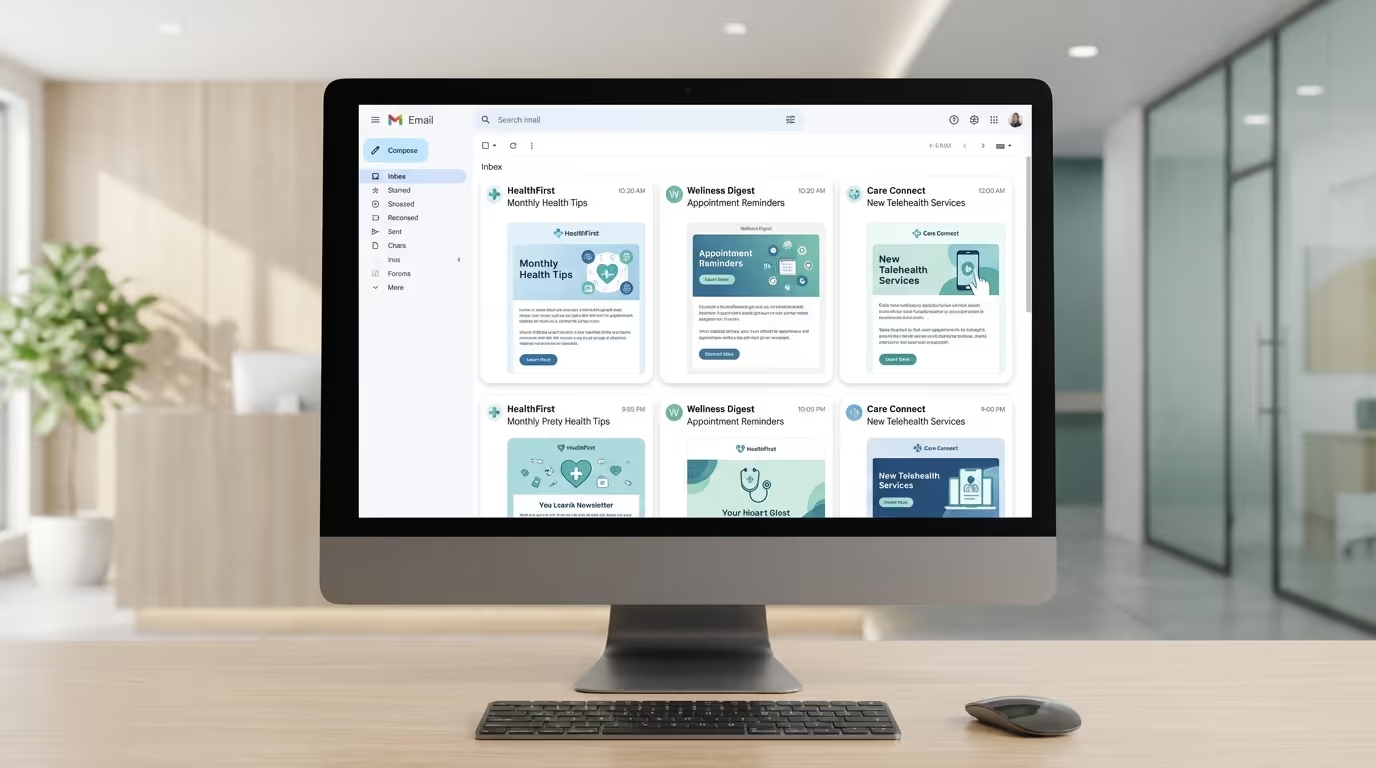
Email Content
Your email list is owned media. Unlike social media followers, your email list can't be taken away by an algorithm change. Email content nurtures leads who aren't ready to book and re-engages patients who haven't visited recently.
Email content that drives results:
- Treatment education series (drip campaigns for specific treatments)
- Monthly practice newsletter (new treatments, provider spotlights, patient stories)
- Seasonal campaigns tied to treatment demand (summer body prep, holiday glow-up, wedding season)
- Reactivation sequences for lapsed patients
- Welcome sequences for new subscribers and patients
Benchmark metrics: 35%+ open rate, 3% to 5% click-through rate. Med spa email lists should outperform general marketing benchmarks because the content is personally relevant and the audience is engaged.
Social Media Content
Social media is not a search engine. It's a trust engine. The purpose of social media content isn't to drive direct bookings — it's to build familiarity, credibility, and emotional connection with potential patients.
What works on social for med spas:
- Before-and-after results (with disclaimers)
- Day-in-the-life content from providers
- Treatment education (breaking down what happens during a procedure)
- Behind-the-scenes of the practice
- Staff introductions and culture content
- Patient stories and testimonials (with consent)
What doesn't work:
- Stock photos with generic captions
- Constant promotional posts ("20% off Botox this month!")
- Posting without engaging (social media is a conversation, not a billboard)
- Trying to be on every platform without doing any of them well
Pick 2 platforms. Do them exceptionally. Instagram and TikTok are the highest-ROI social channels for med spas in 2026. For a complete social media calendar, see our planning guide. And for inspiration, check our med spa content ideas and med spa social media posts guides.
The E-E-A-T Factor: Why Healthcare Content Needs Medical Authority
Google holds healthcare content to a higher standard than other industries. Every piece of content you publish needs to demonstrate Experience, Expertise, Authoritativeness, and Trustworthiness.
How to build E-E-A-T into your content — implementation steps:
- Create author bios for every provider. Include name, credentials (MD, DO, NP, PA), years of experience, specialty areas, professional memberships, and a professional photo. Link to their full bio page.
- Establish a medical review process. Even if a marketing team writes the content, have a licensed provider review and approve every piece. Note "Medically reviewed by [Provider Name], [Credentials]" on each post.
- Cite authoritative sources. Link to peer-reviewed studies, manufacturer data, and professional organization guidelines (AAD, ASAPS, ASLMS). Use a minimum of 3-5 citations per medical content piece.
- Keep content current. Review and update clinical content every 6 to 12 months. Outdated medical information hurts both your E-E-A-T signals and your patients' trust.
- Build a comprehensive about page. Your website needs an about page that establishes your practice's authority, including provider credentials, certifications, professional memberships, and practice history.
- Earn authoritative backlinks. Get mentioned or linked from medical associations, local news outlets, and health publications. Each authoritative backlink amplifies your entire domain's trustworthiness.
E-E-A-T checklist for every piece of medical content:
- [ ] Named author with medical credentials
- [ ] "Medically reviewed by" attribution
- [ ] 3+ citations to peer-reviewed or authoritative sources
- [ ] Updated within the last 12 months
- [ ] Accurate clinical information verified by a licensed provider
- [ ] Appropriate disclaimers ("results may vary," "consult your provider")
- [ ] Author bio page linked from the content
- [ ] No exaggerated claims or guaranteed outcomes
Content Distribution: Publishing Is Not Enough
Creating content is half the job. Distributing it is the other half. The "publish and pray" approach doesn't work.
The Distribution System for Every Piece of Content
| Channel | Timing | Format | Purpose |
|---|---|---|---|
| Your website | Day 0 (publish day) | Full article | Primary home, SEO |
| Email newsletter | Day 1-2 | Summary + link | Drive traffic from existing audience |
| Day 1-3 | Carousel or Reel summary | Visual engagement, brand awareness | |
| TikTok | Day 1-5 | Short video excerpt | Discovery, younger demographic |
| Day 2-3 | Professional angle excerpt | B2B credibility, referral network | |
| Google Business Profile | Day 1-2 | Summary with link | Local SEO signal |
| YouTube | Day 3-7 | Video companion | Search visibility, depth |
| Day 3-7 | Infographic or key visual | Long-tail discovery |
The Repurposing Multiplier
One comprehensive blog post should become 8 to 12 pieces of content across channels. Here's how:
Example: "Complete Guide to CoolSculpting" (3,000-word blog post)
- Blog post on website (original)
- Instagram carousel — "5 Things to Know Before CoolSculpting"
- Instagram Reel — 30-second treatment walkthrough clip
- TikTok — "What actually happens during CoolSculpting"
- Email newsletter feature with key takeaways
- Google Business post — "New guide: Everything you need to know about CoolSculpting"
- YouTube video — provider answering top CoolSculpting questions
- Pinterest infographic — CoolSculpting results timeline
- Facebook post — patient testimonial quote from the article
- LinkedIn post — industry perspective on body contouring trends
- SMS blast to body contouring interested segment — "New CoolSculpting guide — check it out"
- Patient handout/PDF — condensed version for consultation appointments
Write it once, distribute it everywhere. This isn't lazy — it's efficient. Different patients consume content in different formats on different platforms.
Internal Linking: The Overlooked Content Multiplier
Every piece of content should link to related content on your site. This keeps visitors engaged, distributes SEO authority across your domain, and creates a logical content architecture that Google can crawl efficiently.
How to Build an Internal Linking Strategy
Implementation steps:
- Map your content clusters. Group all content by topic (e.g., all Botox-related pages, all body contouring content, all business/pricing content).
- Identify your pillar pages. These are your most comprehensive, highest-authority pages for each topic cluster. For a med spa marketing strategies cluster, the pillar page would be your main marketing guide.
- Link cluster pages to the pillar page and vice versa. Every blog post about marketing should link to the pillar marketing guide.
- Cross-link related clusters. A post about Google Ads should link to posts about landing pages, ad copy, and Google Ads costs.
- Use descriptive anchor text. Don't link on "click here." Link on the keyword or topic: "our med spa SEO checklist" is better than "our checklist here."
- Audit internal links quarterly. As you publish new content, go back and add links from older, relevant posts.
Internal Linking Benchmarks
| Content Type | Minimum Internal Links | Target Internal Links |
|---|---|---|
| Blog post (1,500-2,000 words) | 5 | 8-12 |
| Blog post (3,000+ words) | 8 | 15-25 |
| Treatment/service page | 5 | 8-12 |
| Pillar page | 10 | 20-30 |
| Location page | 3 | 5-8 |
For more on building your site's linking architecture, see our med spa link building guide.
Measuring Healthcare Content Marketing: Metrics That Matter
If you can't measure it, you can't manage it. Here are the metrics that tell you whether your content marketing is working, organized by what to measure and when.
Monthly Tracking Dashboard
| Metric Category | Metric | Target | Tool |
|---|---|---|---|
| Traffic | Organic search sessions | +15-25% MoM growth | GA4 |
| Traffic | Top pages by organic traffic | Identify winners | GA4 |
| Rankings | Keywords on page 1 | Growing monthly | Ahrefs / GSC |
| Rankings | Keywords positions 4-10 (close to page 1) | Action items | Ahrefs |
| Engagement | Average time on page | 3-5 min for guides | GA4 |
| Engagement | Bounce rate | Under 60% blog, under 40% treatment pages | GA4 |
| Engagement | Pages per session | 2.5+ | GA4 |
| Conversion | Leads from content pages | Growing monthly | GA4 + CRM |
| Conversion | Conversion rate by content type | BOFU: 5-10%, TOFU: 1-2% | GA4 |
| Revenue | Revenue attributed to content | Growing monthly | CRM |
| Revenue | Cost per lead from content vs. paid | Content CPL should decrease over time | CRM + GA4 |
Quarterly Content Audit
Every 90 days, run a content audit:
- Identify top performers. Which pieces drive the most traffic, leads, and revenue? Create more content in these topic areas.
- Identify underperformers. Which pieces have low traffic despite targeting good keywords? Refresh the content, improve the on-page SEO, or build internal links to boost them.
- Check for content decay. Are any previously high-performing pieces losing traffic? Update with fresh data, new sections, and current information.
- Gap analysis. Which keywords are competitors ranking for that you haven't covered? Add these to your content calendar.
- ROI calculation. Total content investment (writing, design, distribution) divided by total leads and revenue attributed to content. After 6 months, your content CPL should be below your paid channel CPL and declining.
Common Healthcare Content Marketing Mistakes
Mistake 1: Writing for Google Instead of Patients
Keyword stuffing died a decade ago, but a subtler version persists: content that's technically optimized but reads like it was written for an algorithm. Your content needs to serve the patient first. If it answers their question comprehensively and with genuine expertise, Google will reward it.
How to fix it: Read your content aloud. If it sounds robotic or unnatural, rewrite it. The best healthcare content reads like a knowledgeable provider explaining something to a patient in plain language.
Mistake 2: Ignoring Local Keywords
National keywords like "best anti-aging treatments" have massive competition and low conversion for a single-location practice. Local keywords like "anti-aging treatments in Scottsdale" have lower volume but dramatically higher conversion rates.
How to fix it: Every content strategy should include location-specific content. Build dedicated pages for "[Treatment] in [City]" for your top services. Mention your location naturally throughout your content. Optimize your Google Business Profile to reinforce local relevance.
Mistake 3: No Internal Linking Strategy
Every piece of content should link to related content on your site. This keeps visitors engaged, distributes SEO authority across your domain, and creates a logical content architecture that Google can crawl efficiently.
How to fix it: Before publishing any new piece, identify 5-8 existing pages that relate to the topic and link to them. Then go to those existing pages and add a link back to your new content.
Mistake 4: Publishing and Forgetting
Content needs maintenance. Prices change, new treatments launch, clinical guidelines update, and competitors publish better content.
How to fix it: Review and update your top-performing content every 6 months. Refresh statistics, add new sections, update internal links, and re-optimize for any keyword shifts. Set a recurring calendar reminder.
Mistake 5: No Conversion Mechanism
Every piece of content needs a clear next step for the reader. A blog post without a CTA is a dead end.
How to fix it: Include contextually relevant calls to action throughout the content — not just at the bottom. Vary between "book a consultation," "call us," "see before and after results," "learn more about [related treatment]," and "download our guide."
Mistake 6: Inconsistent Publishing
Publishing 8 posts in one month and then nothing for three months is worse than publishing 2 posts per month consistently. Google rewards consistent signals of activity. Your audience rewards reliability.
How to fix it: Build a marketing calendar and stick to it. If you can only publish 4 pieces per month consistently, that's better than 10 followed by zero. Use the marketing checklist to stay on track.
Building Your Healthcare Content Marketing Team
You have three options, and each has trade-offs.
Option 1: In-House
| Factor | Details |
|---|---|
| Pros | Deep brand knowledge, provider access, full control, consistent voice |
| Cons | Expensive ($60K-$90K/year for skilled writer), limited capacity, requires SEO knowledge |
| Best for | Multi-location practices with $500K+ monthly revenue |
| Expected output | 6-10 pieces per month |
Option 2: Freelancers
| Factor | Details |
|---|---|
| Pros | Flexible capacity, lower fixed costs, can find niche healthcare writers |
| Cons | Quality varies wildly, requires management, often lack SEO expertise |
| Best for | Practices that need supplemental content beyond in-house capacity |
| Expected output | 4-8 pieces per month |
Option 3: Specialized Agency
| Factor | Details |
|---|---|
| Pros | Full strategic capability (research, creation, optimization, distribution), healthcare expertise, accountability |
| Cons | Monthly investment ($3K-$10K), need to find one that actually specializes |
| Best for | Practices that want a complete content system without building a team |
| Expected output | 8-12+ pieces per month |
The worst option? Trying to do it yourself between patients. You're a provider. You should be treating patients, not writing blog posts at 10 PM. Build or buy a content team that can execute consistently.
The 90-Day Healthcare Content Marketing Launch Plan
If you're starting from zero, here's how to build momentum fast.
Days 1-30: Foundation
| Task | Deliverable | Impact |
|---|---|---|
| Keyword research | Treatment-to-keyword map for all services | Strategic foundation |
| Content audit | Gap analysis of existing website content | Identifies opportunities |
| Content calendar | 90-day publishing schedule | Execution roadmap |
| Tracking setup | GA4, Google Search Console, call tracking, CRM attribution | Measurement capability |
| Author bios | Provider bio pages with credentials | E-E-A-T foundation |
| Publish BOFU content | 4 treatment/cost pages | Immediate ranking targets |
Days 31-60: Acceleration
| Task | Deliverable | Impact |
|---|---|---|
| Publish 8+ pieces | Mix of BOFU and MOFU content | Content velocity |
| Email newsletter launch | Weekly or biweekly distribution | Audience engagement |
| Social repurposing | Blog content adapted for Instagram/TikTok | Multi-channel reach |
| GBP optimization | Weekly Google Business posts | Local SEO signal |
| Video production | First 2-3 treatment walkthrough videos | YouTube presence |
| Internal linking audit | Link new content to existing pages | Authority distribution |
Days 61-90: Measurement and Optimization
| Task | Deliverable | Impact |
|---|---|---|
| Keyword ranking review | Movement report for all target terms | Progress validation |
| Top performer analysis | Identify content themes that resonate | Strategy refinement |
| Content refresh | Update underperforming pieces | Ranking improvement |
| Publish 8+ pieces | Continued publishing velocity | Compounding momentum |
| Organic traffic assessment | Trend analysis in GA4 | ROI beginning to form |
| Content ROI calculation | Investment vs. leads generated | Budget justification |
By day 90, you should have 20+ pieces of optimized content, a clear understanding of what's working, and the beginning of an organic traffic curve that will compound for years.
Content Marketing Is Not Optional Anymore
Five years ago, a med spa could grow entirely on paid ads and referrals. That era is ending. Ad costs are rising, competition is increasing, and patients expect to find comprehensive, expert content from any practice they're considering.
Healthcare content marketing is the long game that makes every other marketing channel more effective. It lowers your cost per acquisition over time. It builds trust before the first appointment. It creates a compounding asset that generates leads while you sleep.
But it only works when it's strategic, consistent, and measured against real business outcomes. Blog posts without keyword research are diary entries. Content without distribution is invisible. And pageviews without conversion tracking are vanity.
The practices that invest in healthcare content marketing now will dominate their local search results for years to come. The ones that wait will spend exponentially more on paid ads to catch up.
Build the system. Publish with purpose. Measure everything.
Get Your Free Marketing Audit — We'll evaluate your current content marketing efforts, identify the highest-value keyword opportunities for your practice, and show you exactly what a 90-day content strategy looks like for your market. No cost. No commitment. Just a clear picture of what's possible.
We build healthcare content marketing systems exclusively for med spas and medical aesthetics practices. It's all we do.