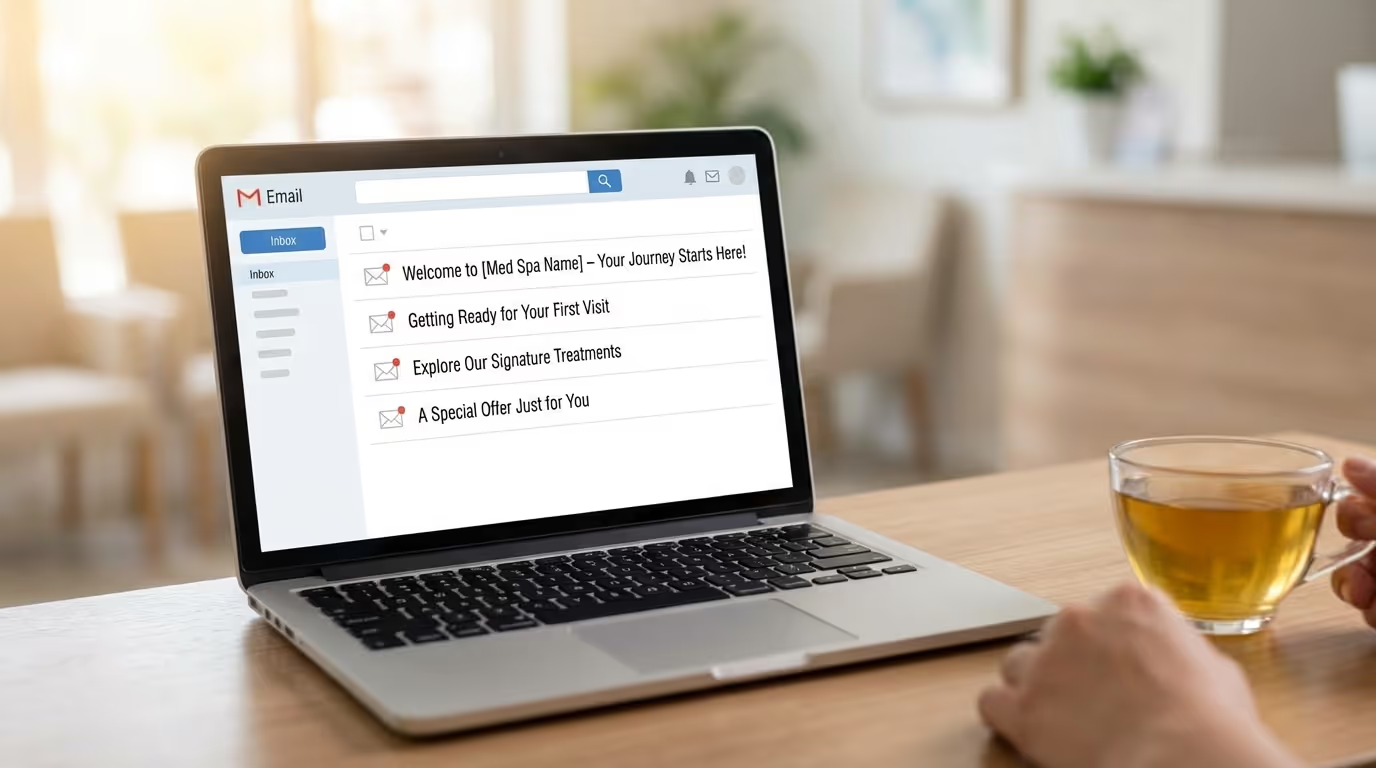

Let me tell you about the easiest money in the med spa business.
It is not from new patients. New patients cost $100-300 each to acquire through advertising. It is not from walk-ins. It is not from social media followers who have never visited your practice.
It is from the patients who already know you, already trust you, and already have a credit card on file — but have not thought about you since their last visit.
A monthly newsletter is the simplest, cheapest, and most effective way to stay in front of those patients. When done right, it reminds them to rebook, introduces them to treatments they have not tried, and keeps your practice top of mind when they or their friends are looking for aesthetic services.
When done wrong — or not done at all — those patients drift. They see a competitor's Instagram ad, get a mailer from the new place down the street, or simply forget about you until their Botox has fully worn off and they start their search from scratch.
The numbers back this up. Practices with a consistent monthly newsletter retain patients at 15-25% higher rates than practices without one. The average patient on a newsletter list visits 1.8x more frequently and spends 40% more per year than a patient who is not on the list. That is the difference between a $600/year patient and an $840/year patient — multiplied across your entire database.
This guide gives you everything you need to send a monthly newsletter your patients actually open, read, and act on: content ideas for every month, templates, format guidelines, benchmarks, common mistakes, and strategies to maximize engagement and revenue. If you are building an email marketing system, your newsletter is the backbone.
Why Monthly Newsletters Work for Med Spas
A monthly newsletter is not revolutionary. It is not a growth hack. It is a fundamentally sound business practice that most med spas ignore — and that is exactly why it is such an opportunity.
The Business Case
Consistency builds habit. When patients receive a newsletter from you on the same day every month, it becomes expected. Anticipated, even. They check for your specials, they look forward to the content, and they begin to think of your practice as a regular part of their routine — not just something they do when they notice wrinkles.
One email replaces ten. Instead of sending one-off blasts about every promotion, event, and announcement, a monthly newsletter packages everything into a single, well-organized communication. This is better for your patients (less inbox clutter) and better for your team (one production cycle instead of ten).
Newsletters nurture the middle of the funnel. Not every patient is ready to book every month. But a newsletter keeps your practice in their consideration set. When they are ready — next week, next month, next quarter — you are the practice they think of first. This is the essence of funnel strategy applied to retention.
Revenue attribution is direct. When a patient books through a link in your newsletter, you can track it. When they mention a special they saw in your email, you can attribute it. Newsletter ROI is not theoretical — it is measurable.
Newsletter ROI Benchmarks
Here is what a well-executed newsletter program delivers for the average med spa:
| Metric | Industry Average | Well-Executed Newsletter |
|---|---|---|
| Monthly revenue from newsletter | $0 (most do not send one) | $3,000 – $15,000 |
| Patient rebooking influenced by email | Unknown | 20-30% of rebookings |
| Cost to produce monthly | N/A | $200-500 (internal) or $500-1,500 (agency) |
| ROI per newsletter sent | N/A | 5:1 to 15:1 |
| Annual retention lift (newsletter subscribers vs non) | N/A | 15-25% higher |
| Average revenue per subscriber per year | $500-800 (non-subscribers) | $800-1,400 (subscribers) |
For a practice with 2,000 email subscribers, a newsletter generating even $5 per subscriber per month produces $10,000 in monthly attributed revenue. That is $120,000 annually from a channel that costs less than $15,000 to operate.
Newsletter Format and Structure
Before we get to content ideas, let us establish the format that works best for med spa newsletters. Getting the structure right is the difference between an email patients read and one they delete.
Length and Layout
Target length: 600-800 words.
Your newsletter is not a blog post. It is a curated snapshot of what is happening at your practice and what matters to your patients. If it takes more than 3-4 minutes to read, it is too long.
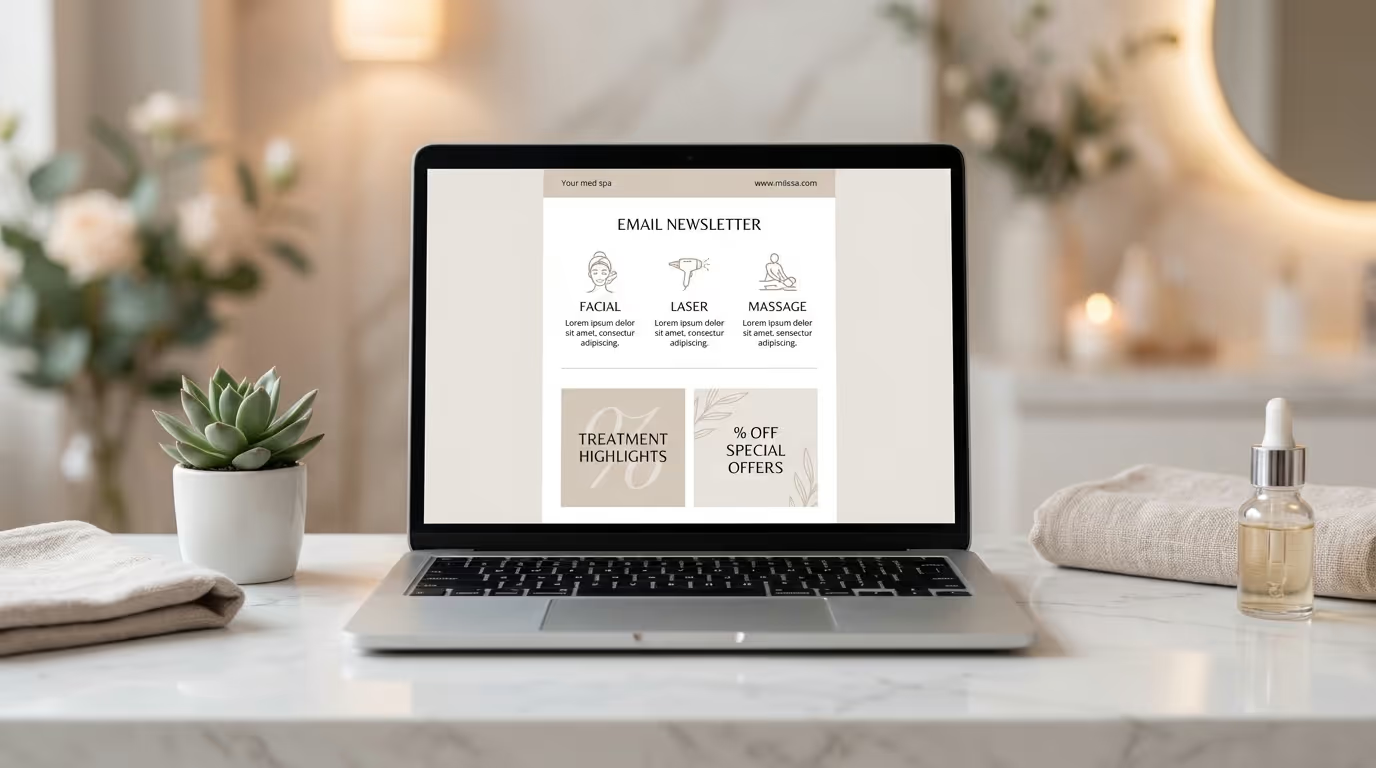
Recommended layout:
- Header — Your logo, the month, and a brief greeting (1-2 sentences)
- Hero section — Your featured content for the month (main promotion, spotlight treatment, or biggest announcement)
- Section 2 — Educational content or tips (1 short article or tip)
- Section 3 — Secondary promotions or events
- Section 4 — Quick links (social media, booking, reviews)
- Footer — Contact info, unsubscribe link, legal disclaimers
Implementation Steps: Building Your Newsletter Template
- Choose your email platform — GoHighLevel, Mailchimp, Constant Contact, or Klaviyo all work. GHL is ideal if you are already using it as your CRM
- Create a branded template using your brand colors, fonts, and logo. Most platforms have drag-and-drop builders
- Set up your template sections per the layout above — build it once, then swap content monthly
- Configure your sending domain with SPF, DKIM, and DMARC records to avoid spam filters
- Send a test to yourself and your team on desktop and mobile before the first real send
- Save the template as your master — duplicate it each month for the new edition
- Create a content calendar using the monthly ideas in this guide
Design Principles
- Mobile-first. Over 60% of emails are opened on mobile devices. Single-column layout, large fonts (minimum 14px body text), and thumb-friendly buttons. Test every newsletter on a phone before sending.
- On-brand. Your newsletter should use your practice's colors, fonts, and photography style. If someone opened it without seeing the sender name, they should know it is from you.
- Scannable. Bold headlines for each section, short paragraphs, clear visual hierarchy. Patients scan before they read — make scanning rewarding.
- One primary CTA. Every newsletter should have one primary action you want the reader to take. Book a treatment, RSVP to an event, claim an offer. Secondary CTAs are fine, but one should dominate.
- Image-to-text ratio. Keep it around 60% text, 40% images. All-image emails get flagged by spam filters. All-text emails feel sterile for a visual industry like aesthetics.
Sending Schedule
Same day, same time, every month.
Pick a day and time and stick with it. Research suggests Tuesday, Wednesday, and Thursday mornings (9-11 AM local time) generate the highest open rates for healthcare emails. But consistency matters more than optimization — your patients will learn when to expect your email.
When in the month to send:
| Timing | Best For | Trade-Off |
|---|---|---|
| First week of the month | Announcing monthly specials while patients have time to book | Patients may procrastinate booking |
| Last week of the prior month | Creates anticipation, lets patients plan ahead | Requires earlier content production |
| Mid-month | Works if specials run mid-to-mid | Less aligned with natural monthly billing cycles |
Pick one approach and be consistent. We recommend first week of the month for most practices — it aligns with the natural "what is new this month" mindset.
Monthly Newsletter Content Ideas: The 12-Month Calendar
Here is a complete year of newsletter content, organized by month. Customize the specific treatments and offers based on your practice's strengths, service menu, and seasonal demand patterns.
January: Fresh Start
Hero: "New Year, New Glow" — feature your most popular rejuvenation package or a treatment bundle priced for the new year. This is the highest-intent month for aesthetic services behind March/April.
Education: "What to Do in Your 30s/40s/50s" — age-specific treatment guides that help patients understand what is appropriate for their stage. This is the type of content that gets forwarded to friends.
Promo: Membership program enrollment push — "Join our membership this month and lock in last year's pricing"
Quick win: Share a dramatic before and after from last year with patient's consent
CTA: Book your "New Year Glow" package
February: Love Yourself
Hero: Valentine's Day packages — couples treatments, gift cards, self-care bundles. Gift card promotions are patient acquisition plays — the recipient is often a new patient.
Education: "The Truth About Anti-Aging: What Actually Works" — debunk myths, position your treatments as evidence-based solutions
Promo: Gift card special — "Buy a $200 gift card, get $25 bonus" (drives gifting and new patient acquisition)
Quick win: Feature a patient testimonial about their confidence transformation
CTA: Shop Valentine's packages and gift cards
March: Spring Prep
Hero: Spring skin reset — chemical peels, facials, microneedling to shed winter skin. This aligns with the "pre-summer" mindset that drives booking intent.
Education: "Your Pre-Summer Skin Prep Timeline" — map out what treatments to start now for summer-ready skin. Include specific booking dates for each treatment step (this creates urgency and multiple bookings from one email).
Promo: Laser hair removal packages (spring is peak booking season — patients need to start now for summer results)
Quick win: Provider Q&A — your lead provider answers the three most common patient questions
CTA: Book your Spring Skin Reset consultation
April: Body Season Begins
Hero: Body contouring spotlight — CoolSculpting, Emsculpt, Morpheus Body. "Summer bodies are made in April."
Education: "What Body Contouring Can (and Cannot) Do" — set realistic expectations, build credibility. Honest education converts better than hype.
Promo: Body treatment package pricing — bundle treatments for better results and better value
Quick win: Side-by-side before and after body results
CTA: Book your body contouring consultation
May: Mother's Day + Summer Preview
Hero: Mother's Day gift guide — curated treatment packages at different price points for gifting. This is the second-best gift card month after December.
Education: "How to Protect Your Skin (and Your Results) This Summer" — sunscreen, post-treatment care, what to avoid
Promo: Early summer booking incentive — "Book your June-August treatments now and save [X%]"
Quick win: Introduce any new summer treatments or products
CTA: Shop Mother's Day packages
June: Summer Glow
Hero: Summer treatment menu — spotlight treatments that work well in summer (certain facials, lip filler, IV therapy, wellness treatments)
Education: "Treatments You Can Get in Summer (and Ones to Wait On)" — build trust by telling patients what NOT to do in summer. This positions you as their advisor, not their salesperson.
Promo: Referral bonus — "Refer a friend this summer and you both receive [reward]"
Quick win: Staff summer skincare routines — humanizes your team
CTA: Book a summer-safe treatment
July: Mid-Year Check-In
Hero: "Half-Year Glow Check" — encourage patients to reassess their treatment plan at the six-month mark. Position this as a complimentary consultation for existing patients.
Education: "Understanding Your Aesthetic Journey: Why Maintenance Matters" — reinforce the importance of ongoing care vs. one-time treatments. This supports your membership program and package sales.
Promo: Mid-year loyalty reward — give existing patients an exclusive offer to thank them for their loyalty
Quick win: Patient milestone celebration — "Congratulations to our patients who have been with us for 1+ years"
CTA: Schedule your mid-year consultation
August: Back-to-School / Fall Prep
Hero: Fall treatment planning — "The treatments you should book NOW for holiday-ready skin." Create a treatment timeline from September through December.
Education: "Everything You Need to Know About [Your Most-Requested Treatment]" — deep dive into your most popular service. This is great content that also drives bookings for that specific treatment.
Promo: Back-to-school special for moms — "You have been taking care of everyone else. It is your turn."
Quick win: Behind-the-scenes look at a treatment or your team's continuing education
CTA: Book your fall treatment plan
September: Fall Reset
Hero: Fall rejuvenation packages — laser treatments, deeper peels, and skin resurfacing that require less sun exposure. Fall is the best time for aggressive skin treatments.
Education: "Why Fall Is the Best Time for Laser Treatments" — educate on why certain treatments are seasonal. Patients who understand this book proactively.
Promo: Series pricing — "Book a full series of [Treatment] this fall and save [X%]"
Quick win: New product launches — feature any new skincare products in your retail line
CTA: Book your fall rejuvenation series
October: Spooky Good Deals
Hero: October specials — "Scary Good Deals" or "Treat, Don't Trick" themed promotions (keep it tasteful, you are a medical practice)
Education: "How to Build a Medical-Grade Skincare Routine" — position your retail products as essential, not optional. This drives retail revenue and builds treatment-product packages.
Promo: Pre-holiday booking push — "November and December slots are filling fast. Book now."
Quick win: Patient appreciation event announcement — plan a fall event with exclusive pricing and live demos
CTA: Claim your October special
November: Gratitude + Holiday Prep
Hero: Holiday prep guide — "Get glowing for the holidays" with a treatment timeline (what to book and when for Thanksgiving, holiday parties, and New Year's)
Education: "Gift Guide for the Person Who Has Everything" — position your gift cards and treatment packages as unique holiday gifts. Include 3-4 gift card price points.
Promo: Black Friday / holiday sale — one weekend of special pricing (if this aligns with your brand positioning)
Quick win: Year-in-review preview — "This year at [Practice Name]..." tease your achievements and patient count milestones
CTA: Shop holiday packages and gift cards
December: Celebrate + Look Ahead
Hero: "New Year, New Treatment Menu" — preview what is coming in the new year (new treatments, new providers, new technology). This creates anticipation that bridges the holiday lull.
Education: "Your 2027 Aesthetic Plan" — help patients think about the year ahead and what they want to achieve. Include a treatment frequency guide by treatment type.
Promo: End-of-year membership push — "Lock in this year's membership pricing before rates increase January 1"
Quick win: Thank you message from the team — genuine gratitude to your patient community. This is the one month where the personal touch matters more than the promotion.
CTA: Lock in your 2027 membership rate
Evergreen Newsletter Content Ideas
Beyond seasonal content, keep these ideas in rotation throughout the year. These are the building blocks that fill your newsletter sections month after month.
Educational Content
- Treatment deep-dives. One treatment per month, explained in plain language: what it is, who it is for, what to expect, what results look like, and how much it costs. Link to the relevant service page on your website.
- Myth-busting. "Does Botox freeze your face?" "Is CoolSculpting dangerous?" Address the misconceptions patients hear from friends and the internet.
- Ingredient spotlights. Feature one ingredient from your skincare line each month. Explain what it does, who should use it, and what to pair it with.
- Provider profiles. Introduce your team members — their training, their specialties, why they love aesthetics. This builds trust and helps patients choose the right provider.
- FAQ compilations. Gather the most common questions your front desk and providers answer and address them in print.
- Treatment combination guides. "The Ultimate Facial Rejuvenation Plan: Botox + Filler + Microneedling" — show how treatments work together for better results (and higher per-patient revenue).
- Recovery and aftercare tips. Practical advice that demonstrates your commitment to patient outcomes, not just treatment volume.
Social Proof Content
- Patient spotlights. With consent, feature a patient's journey — what they wanted, what they got, and how they feel about it. First-person quotes are powerful. This is reputation management built into your newsletter.
- Before and after highlights. Your best results, with treatment details and context. Include the treatment name, number of sessions, and timeline.
- Review highlights. Pull your best Google reviews and feature them. This reinforces the social proof for existing patients and motivates them to leave their own review.
- Milestone announcements. "We have performed 5,000 Botox treatments." "We just celebrated our 3rd anniversary." Milestones build credibility.
Engagement Content
- Polls and surveys. "What treatment do you want us to spotlight next month?" This generates engagement data and makes patients feel heard.
- Behind the scenes. Show what happens behind the treatment room door — your team training, new equipment arriving, a day in the life of your practice.
- Community involvement. If your practice sponsors local events, participates in charity work, or supports community causes, share it.
- Staff picks. "Our providers' favorite treatments" or "What our aesthetician uses every morning" — personal recommendations from your team drive bookings for specific treatments.
Revenue-Driving Content
- Package spotlights. Feature one treatment package per newsletter with value breakdown (individual price vs. package price).
- Membership benefits reminder. Remind subscribers what members get. Include a "not a member yet?" CTA.
- Cross-sell education. "Already love your Botox? Here is why your provider might recommend filler too." Educate on complementary treatments.
- Limited availability alerts. "Only 5 spots left for our October chemical peel special." Scarcity drives action.
Subject Lines That Get Opened
Your subject line determines whether your newsletter gets read or deleted. This is the single most leveraged element of your entire newsletter — a 10% improvement in open rate means 10% more patients see every piece of content and every offer you send.
Frameworks That Work for Med Spas
| Framework | Example | Why It Works |
|---|---|---|
| Curiosity | "The treatment our providers cannot stop talking about" | Creates an information gap patients want to close |
| Benefit-driven | "How to keep your summer glow all winter" | Promises a specific outcome |
| Urgency | "3 days left to book our most popular package" | Time pressure drives opens |
| Personal | "[Name], your October treatment plan is here" | Personalization increases open rates 10-15% |
| List-based | "5 things to do before your next Botox appointment" | Numbers create concrete expectations |
| Question | "Are you making this skincare mistake?" | Triggers self-assessment curiosity |
| Announcement | "We just added something new to the menu" | News value drives opens |
| Exclusive | "VIP access: November specials before anyone else" | Exclusivity creates value perception |
Subject Line Rules
- Keep it under 50 characters (so it is not cut off on mobile)
- Avoid ALL CAPS and excessive punctuation (!!!!) — they trigger spam filters
- Do not use "Free" in the subject line — spam filter trigger
- Personalization (first name) increases open rates by 10-15%
- Test two subject lines per send (A/B test) and use the winner for the next campaign
- Preview text matters as much as subject lines — write 40-90 characters of preview text that complements (not repeats) the subject line
- Track which frameworks perform best for YOUR audience — every patient list is different
Common Subject Line Mistakes
- Too generic: "March Newsletter" — this tells patients nothing about why they should open it
- Too promotional: "50% OFF EVERYTHING THIS WEEK!!!!" — spam filters will catch this, and patients will unsubscribe
- Too long: "Everything you need to know about our amazing new spring treatment packages and special pricing" — cut off on mobile, no impact
- Misleading: "Urgent: your appointment" — using fake urgency erodes trust immediately
- No benefit: "Update from [Practice Name]" — patients do not care about updates; they care about what is in it for them
Building Your Subscriber List
Your newsletter is only as good as your list. A small, engaged list outperforms a large, disinterested one every time. Here is how to grow your list with subscribers who actually want to hear from you.
Implementation Steps: List Building
- Audit your existing patient database. How many patients have email addresses in your system? What percentage have opted in to marketing communications? This is your starting point.
- Update your intake form. Add an email consent checkbox: "I would like to receive monthly treatment updates, exclusive offers, and skincare tips from [Practice Name]." Make it a separate checkbox from your HIPAA consent — per CAN-SPAM and best practices.
- Train your front desk. At every visit, confirm the email address on file and ask if they would like to receive monthly offers. Script: "We send a monthly email with exclusive specials and treatment tips. Would you like to be included?"
- Add website sign-up forms. Place newsletter opt-ins in three locations on your website:
- Header or navigation bar (persistent visibility)
- Footer (every page)
- Pop-up on blog posts (triggered after 30 seconds or 50% scroll)
- Offer an incentive. "Sign up for monthly tips and get 10% off your next treatment" or "Join our VIP list for early access to monthly specials." The incentive should be valuable but not so large it attracts price-shoppers who never convert.
- Leverage social media. Once a month, post a Story or feed post inviting followers to join your email list. "Want our monthly specials before anyone else? Join our VIP email list — link in bio." This is part of a broader social media strategy.
- Add in-practice signage. A small sign at checkout or on your treatment room counter: "Scan to join our VIP email list for exclusive monthly offers." Use a QR code linked to your sign-up form.
- Never buy lists. Purchased email lists have terrible engagement, damage your sender reputation, and can result in CAN-SPAM violations. Build your list organically with people who actually want to hear from you.
List Segmentation
A single newsletter sent to everyone is good. A segmented newsletter sent to targeted groups is great. Here are the segments that matter for med spas:
| Segment | Content Differentiation | Example |
|---|---|---|
| New patients (first visit < 90 days) | Welcome series integration, treatment education heavy | Extra educational content, first-time offers |
| Active patients (visited in last 6 months) | Rebooking reminders, new treatment introductions | Emphasis on cross-selling and upgrades |
| Lapsed patients (no visit in 6-12 months) | Reactivation offers, "we miss you" messaging | Special offer to rebook, new services since last visit |
| Members | Exclusive member content, benefit reminders | Member-only specials, loyalty milestones |
| Treatment-specific (Botox patients, laser patients, etc.) | Treatment-relevant content and offers | Botox patients get neurotoxin education and rebooking prompts |
You do not need to create five different newsletters. You need one core newsletter with 1-2 variable sections that change based on segment. Most email platforms — including GoHighLevel — support dynamic content blocks that swap based on contact tags.
List Hygiene
A dirty list kills your deliverability. Clean your list quarterly:
- Remove hard bounces immediately (invalid email addresses)
- Remove soft bounces after 3 consecutive failures
- Segment contacts who have not opened any email in 6+ months into a "re-engagement" campaign
- If re-engagement fails (they do not open 2 consecutive re-engagement emails), remove them from the active list
- Monitor spam complaints — if they exceed 0.1%, investigate immediately
- Verify new email addresses at the point of collection (use double opt-in for web sign-ups)
Measuring Newsletter Performance
Track these metrics for every newsletter you send. Without measurement, you are guessing — and guessing is not a marketing strategy.
Core Metrics
| Metric | Industry Average | Your Target | Action If Below Target |
|---|---|---|---|
| Open rate | 20-25% | 25-35% | Improve subject lines, test send times, clean list |
| Click-through rate (CTR) | 2-3% | 3-6% | Better CTAs, more relevant content, stronger offers |
| Conversion rate | 0.5-1% | 1-3% | Improve landing pages, reduce friction to book |
| Unsubscribe rate (per send) | 0.2-0.5% | Below 0.3% | Reduce frequency, improve relevance, segment better |
| Revenue attributed | Not tracked | $3,000-15,000/month | Track unique promo codes, UTM links, patient self-report |
| List growth rate | Flat or declining | 3-5% monthly growth | Activate all list-building touchpoints above |
Advanced Metrics
Revenue per subscriber. Total newsletter-attributed revenue divided by list size. This is the metric that tells you whether your list is an asset or just a number. Target: $2-$8 per subscriber per month.
Revenue per email sent. Total revenue attributed divided by total emails delivered. This normalizes for list size and tells you how well each email performs. Track month-over-month.
Forward rate. What percentage of recipients forward the email? A high forward rate means your content is share-worthy — and every forward is a potential new patient acquisition at zero cost.
Device breakdown. What percentage open on mobile vs. desktop? This informs your design decisions.
Implementation Steps: Setting Up Tracking
- Set up UTM parameters on every link in your newsletter. Format:
?utm_source=newsletter&utm_medium=email&utm_campaign=2026-march - Create unique promo codes for each newsletter: "MARCH26" or "NEWSLETTER-MAR"
- Configure goal tracking in GA4 to attribute form submissions and calls to newsletter traffic
- Train your front desk to ask "How did you hear about this offer?" at booking — manual attribution supplements digital tracking
- Build a monthly reporting template that captures all metrics above
- Review and compare month-over-month to identify trends and optimize
The Newsletter Production Process
Creating a monthly newsletter does not have to be a heavy lift. With a system in place, it takes less than two hours per month — and returns thousands in revenue.
Week-by-Week Production Schedule
Week 1 of the month (15 minutes): Plan next month's content.
- Decide on the hero topic, educational content, and promotions using the calendar above
- Assign any content or images that need to be created (photography, graphics)
- Pull relevant before and after photos and testimonials
- Confirm any specials or pricing with management
Week 2-3 (45 minutes): Create the newsletter.
- Write the copy (use your templates as starting points)
- Select or create images
- Build the email in your platform (duplicate last month's template, swap content)
- Proof and test (send a test to yourself and one team member on both desktop and mobile)
Week 4 (15 minutes): Send and measure.
- Schedule or send the newsletter
- After 48 hours, review open rates and click rates
- After 1 week, review conversion data and revenue attribution
- Note what worked and what did not for next month
Total time investment: roughly 75 minutes per month. For a channel that can generate thousands in monthly revenue from your existing patient base, that is an exceptional return on time. Compare that to the hours you spend on social media for a fraction of the direct revenue impact.
Outsourcing vs. In-House
| Approach | Cost | Pros | Cons |
|---|---|---|---|
| In-house (practice manager or marketing coordinator) | $200-500/month (time cost) | Full brand control, authentic voice, quick turnaround | Requires skill, time, and consistency |
| Freelance copywriter | $300-800/month | Professional writing, consistent production | Needs brand education, less authentic voice |
| Marketing agency | $500-1,500/month | Full service (copy, design, strategy, analytics) | Higher cost, less personal touch |
| AI-assisted + human review | $100-300/month | Fast production, consistent, scalable | Requires editing for brand voice and accuracy |
For most single-location med spas, the best approach is in-house production with a template system. The person closest to your patients writes the most authentic content. For multi-location practices or practices that struggle with consistency, an agency handles production so you can focus on operations.
Common Newsletter Mistakes
Every mistake below is one we see weekly across the med spa industry. Each one costs you patients, revenue, and engagement.
Mistake 1: Only Sending Promotions
If every newsletter is "20% off this, BOGO that," patients will tune out. They train themselves to ignore your emails — or worse, they only visit when there is a discount, destroying your pricing strategy.
The fix: Balance promotional content with educational and relationship content. A 60/40 mix (60% value, 40% promotion) keeps patients engaged without training them to wait for deals.
Mistake 2: Inconsistency
Sending a newsletter in January, skipping February and March, sending one in April — this tells patients you are disorganized. It also tanks your email deliverability because email providers flag inconsistent senders as potential spam.
The fix: Commit to monthly and do not skip. Put it on your marketing calendar. If you cannot commit to monthly, commit to bi-monthly — but be consistent.
Mistake 3: No Mobile Optimization
If your newsletter looks great on desktop but is unreadable on a phone, 60%+ of your audience is having a bad experience. They are not going to pinch-zoom and scroll horizontally to read your Botox special.
The fix: Single-column layout, minimum 14px font, buttons instead of text links (easier to tap), and test on a phone before every send.
Mistake 4: Burying the CTA
Your primary call to action should be visible without scrolling. Do not make patients read 800 words before seeing the booking button.
The fix: Place your primary CTA in the hero section (above the fold). Repeat it at the bottom. Make it a button, not a text link. Use action-oriented language: "Book Your Treatment" not "Learn More."
Mistake 5: Ignoring Data
If your open rates are declining, something is wrong — your subject lines, your sending frequency, or your list quality. If your click rates are low, your content is not driving action. The data tells you what to fix.
The fix: Review metrics after every send. If open rate drops below 20%, test new subject line approaches. If CTR drops below 2%, test new content formats and offers. If unsubscribes spike, survey unsubscribers (most platforms allow this) to understand why.
Mistake 6: Making It About You
"We are so excited to announce..." "Our team recently attended..." Patients do not care about you. They care about what you can do for them.
The fix: Frame everything from the patient's perspective. Instead of "We are excited to introduce our new laser," write "Your skin just got a new best friend — meet the [Laser Name]." Instead of "Our provider attended a training," write "Your provider just learned a technique that could improve your results by 30%."
Mistake 7: No Segmentation
Sending the same email to a new lead who has never visited and a 3-year member who visits monthly is a waste of both their inboxes. The new lead needs education and trust-building. The member needs loyalty rewards and exclusive access.
The fix: At minimum, segment into three groups: new patients, active patients, and lapsed patients. Customize at least one section of your newsletter for each group.
Mistake 8: Weak or Missing Internal Links
Every newsletter should drive patients back to your website. Your website is where they book, learn more about treatments, and convert. If your newsletter does not link to your site, it is a dead end.
The fix: Include 3-5 links in every newsletter pointing to relevant pages on your website: treatment pages, booking page, blog posts, and your review page.
Advanced Newsletter Strategies
Once you have mastered the monthly send, these strategies take your newsletter program to the next level.
Automated Welcome Sequence Integration
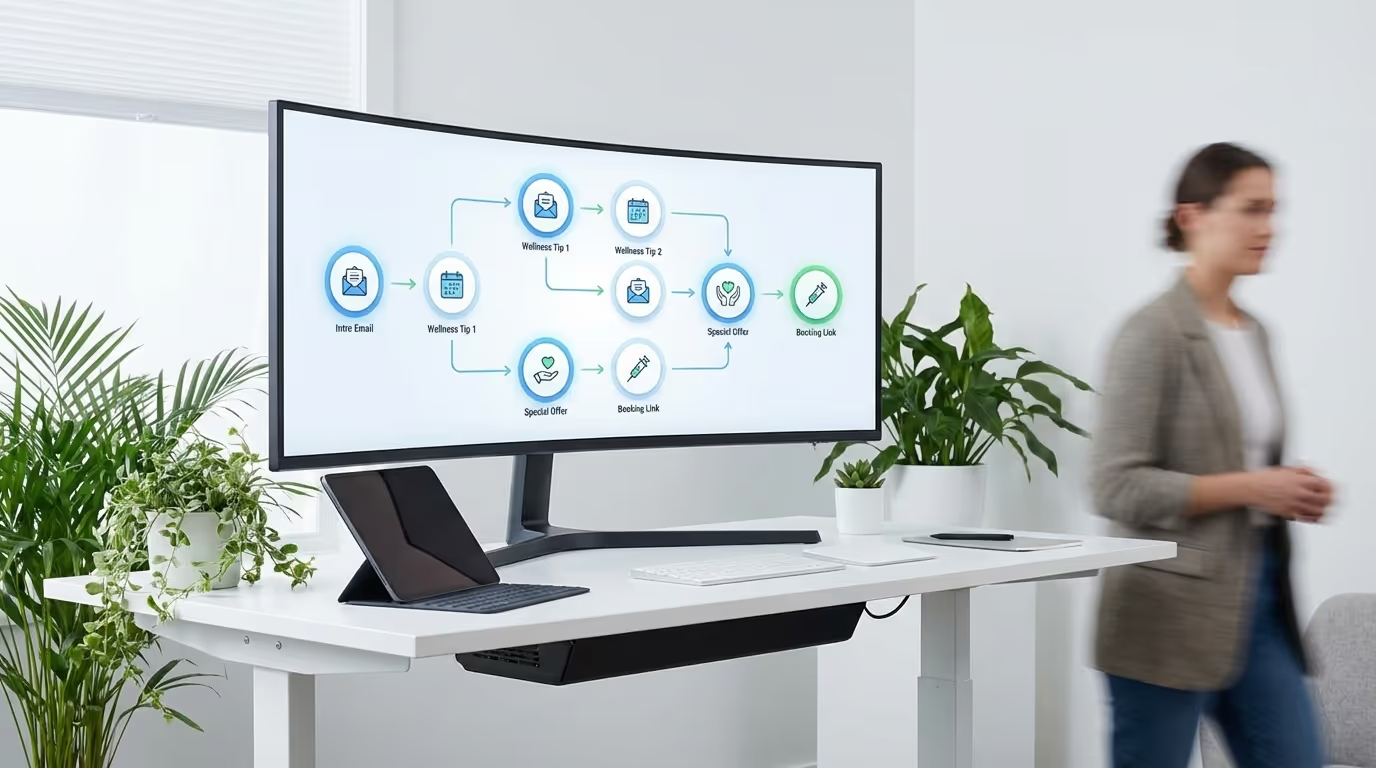
New subscribers should not wait until next month's newsletter to hear from you. Set up a welcome sequence that activates immediately upon sign-up:
- Email 1 (immediate): Welcome + what to expect + first-time offer
- Email 2 (day 3): Your most popular treatment explained
- Email 3 (day 7): Patient testimonial + booking CTA
- Email 4 (day 14): Educational content + second booking nudge
After the welcome sequence completes, the subscriber enters the monthly newsletter flow.
Triggered Newsletter Supplements
These are not part of your monthly newsletter but complement it:
- Birthday email (automated) — "Happy birthday + special offer"
- Treatment anniversary — "It has been 1 year since your first visit"
- Rebooking reminder — "[Treatment] is due for maintenance" (this overlaps with your SMS strategy — use both channels)
- Drip campaigns — Automated sequences triggered by specific patient actions or treatment history
User-Generated Content Integration
Feature patient-generated content in your newsletter:
- Instagram posts where patients tagged your practice
- Video testimonials from happy patients
- Before/after submissions from patients who want to share their results
This creates a virtuous cycle: patients see their content featured, which motivates more patients to create content, which gives you more material for future newsletters.
A/B Testing Program
Do not guess what works — test it. A/B test one element per newsletter:
| Month | Test Element | Variants |
|---|---|---|
| January | Subject line style | Curiosity vs. benefit-driven |
| February | CTA placement | Top only vs. top + bottom |
| March | Content ratio | 70/30 education/promo vs. 50/50 |
| April | Send time | Tuesday 9AM vs. Thursday 10AM |
| May | Image ratio | High imagery vs. text-heavy |
| June | Personalization | First name in subject vs. generic |
After 6 months, you will have a data-driven understanding of what YOUR patients respond to — not generic industry benchmarks.
Newsletter Revenue Maximization Playbook
Here are the specific tactics that turn a newsletter from a communication channel into a revenue engine.
Tactic 1: The Countdown Offer
Create urgency with a limited-time offer exclusive to newsletter subscribers. Include a countdown: "This offer expires in 72 hours — only available to email subscribers." Track redemption to measure direct newsletter revenue.
Tactic 2: The Bundle Feature
Each month, feature one treatment bundle at a compelling price point. Show the individual value vs. the bundle price. "Individually: $2,400. Bundle: $1,800. You save $600." Link directly to a booking page or reply-to-book mechanism.
Tactic 3: The Wait-List Offer
"We are opening 10 spots for our new [treatment] — reply to this email to claim yours before we announce it on social media." Exclusivity drives action, and reply-based engagement boosts your email sender reputation.
Tactic 4: The Member Spotlight
Feature one membership tier per quarter with a full value breakdown. Include testimonial from a current member. End with "Join this month" CTA. This drives membership enrollment — your highest-LTV revenue stream.
Tactic 5: The Referral Prompt
Once per quarter, dedicate a newsletter section to your referral program. Make it easy: "Forward this email to a friend. When they book and mention your name, you both get [reward]." Email forwarding is the lowest-friction referral mechanism.
Start This Month
You do not need a perfect template, a massive list, or a content team to start sending a newsletter. You need your patient email list, a simple template in your email platform, and 75 minutes.
Start with next month's content from the calendar above. Customize it for your practice. Send it to your list. Measure what happens.
Then do it again the next month. And the month after that.
The practices that show up consistently in their patients' inboxes — with relevant content, timely offers, and genuine value — are the practices that keep their chairs full without spending a fortune on advertising to acquire new patients.
Your best revenue source is not out there somewhere. It is already in your database. A monthly newsletter is how you activate it.
Want monthly marketing insights, industry trends, and growth strategies delivered to your inbox? Subscribe to Our Newsletter — built specifically for med spa owners who want to grow smarter, not just louder.