
Your service pages are the most important pages on your entire med spa website. Not the homepage. Not the about page. Not the blog. The service pages.
Here is why: when a patient searches "Botox in [your city]" or "CoolSculpting near me," Google does not send them to your homepage. It sends them to the page that most specifically answers their query — which should be your dedicated service page for that treatment. These pages are your highest-intent landing pages. The visitor already knows what they want. Your only job is to convince them you are the right provider and make booking effortless.
And yet, most med spa service pages are terrible. A paragraph of text, a stock photo, and a "contact us" link buried at the bottom. That is not a service page. That is a placeholder — and it is costing you patients every single day.
The med spas with service pages that convert at 5–10% (compared to the 1–2% industry average) use a specific template. A deliberate sequence of 12 sections that answers every question, addresses every objection, and makes booking the obvious next step. This template is not a design suggestion — it is a conversion framework built on data from hundreds of med spa websites we have analyzed and optimized.
This is that template. Section by section. With implementation steps, benchmarks, and the mistakes that kill conversions.
Why Every Treatment Needs Its Own Page
Before we get into the design, let us address the most common and costly mistake: putting all your services on a single "Services" page.
This destroys your SEO and your conversion rate simultaneously. Here is why:
SEO impact: Google ranks individual pages, not sections of a page. If you want to rank for "Botox [your city]," you need a dedicated page about Botox. A single services page with 20 treatments listed cannot effectively target any individual treatment keyword. You are competing against med spas that have 2,000-word dedicated Botox pages — with yours having a 100-word paragraph. Google will never choose your paragraph over their comprehensive page.
Conversion impact: A patient who searches "CoolSculpting" and lands on a page titled "Our Services" that lists 20 treatments has to hunt for the information they want. Most will not. They will bounce and click on the next search result — a competitor with a dedicated CoolSculpting page that answers all their questions immediately.
Paid ads impact: If you are running Google Ads for specific treatments, sending traffic to a generic services page wastes your ad spend. Dedicated landing pages convert at 2–3x the rate of generic pages because the content matches the search intent exactly.
The rule: One page per treatment. If you offer 15 treatments, you need 15 service pages. If you offer 25 treatments, you need 25 service pages. Yes, that is a significant content investment. No, it is not optional if you want to rank and convert.
| Approach | SEO Performance | Conversion Rate | Recommended? |
|---|---|---|---|
| All services on one page | Cannot target individual treatment keywords | 0.5–1% | No |
| Category pages (Injectables, Body) | Targets categories, not specific treatments | 1–2% | Only as navigation pages |
| Dedicated page per treatment | Targets specific treatment + city keywords | 3–10% | Yes — always |
| Dedicated page + supporting blog content | Dominates treatment topic with content clusters | 5–10%+ | Ideal setup |
The High-Converting Service Page Template: 12 Sections
Here is the section-by-section template, in order from top to bottom. Every section has a purpose. Every section moves the visitor closer to booking.
Section 1: Treatment Hero
The hero section of a service page is different from your homepage hero. The visitor already knows what treatment they are interested in. Your hero needs to confirm they are in the right place and immediately establish credibility.
Elements:
- Treatment name as H1. "Botox in [City]: Expert Injectors, Natural Results" — clear, keyword-rich, benefit-oriented. This is your most important on-page SEO element.
- Subheadline. One sentence that reinforces the value: "Reduce wrinkles and fine lines with the most popular cosmetic treatment in the world. Natural-looking results from board-certified providers."
- Primary CTA. "Book Your Botox Consultation" — specific to the treatment, not a generic "Contact Us"
- Trust signals. Star rating, review count, "board-certified" badge, or treatment count ("5,000+ Botox treatments performed")
- Hero image. A professional before-and-after composite, close-up of treatment results, or treatment-in-action photo. Never a stock image.
Implementation Steps:
- Write your H1 with the primary keyword (treatment + city) included naturally
- Craft a subheadline that addresses the core patient desire (not the clinical mechanism)
- Design a treatment-specific CTA button — "Book Your Botox Consultation" converts better than generic "Schedule Now"
- Choose 1–2 trust signals most relevant to this specific treatment (e.g., treatment count for Botox, provider credentials for surgical treatments)
- Select a hero image that shows real results — your own before-and-after or a treatment-in-action photo
Common Mistakes:
- Generic H1 like "Our Botox Treatment" — no location, no benefit, no keyword optimization
- "Contact Us" as the CTA — too vague, too cold, too much friction
- Stock photo of a smiling model — tells patients nothing about your results
Section 2: Treatment Overview
Immediately below the hero, provide a clear, concise overview of the treatment. Write this for the patient, not for medical professionals. Avoid clinical jargon unless you define it immediately.
Structure (Treatment Quick-Facts Box):
| Detail | Example (Botox) |
|---|---|
| What it treats | Forehead lines, crow's feet, frown lines (11s), bunny lines, chin dimpling |
| Treatment time | 15–30 minutes |
| Results timeline | Visible in 3–7 days, full results at 14 days |
| Results duration | 3–4 months |
| Downtime | None — return to normal activities immediately |
| Pain level | Minimal — most patients describe it as a small pinch |
| FDA approved | Yes |
Follow the quick-facts box with 2–3 paragraphs explaining what the treatment is, how it works, and what it achieves — all in patient-friendly language.
Example: "Botox is an FDA-approved injectable treatment that temporarily relaxes facial muscles to reduce the appearance of wrinkles and fine lines. It is the most popular cosmetic procedure in the United States, with over 7 million treatments performed annually. At [Practice Name], every Botox treatment is performed by [credential] providers who specialize in natural results."
This section answers the most basic questions a patient has. If they cannot find this information in 10 seconds, they will find it on a competitor's website.
Implementation Steps:
- Create a standardized quick-facts format and use it across all service pages (consistent format builds trust)
- Write the overview in patient language — if a term would confuse a non-medical person, simplify it or define it
- Include at least one credibility statement specific to your practice (treatment count, provider credentials, technology)
- Keep the overview concise — 150–300 words. Detail comes in later sections.
- Include 1–2 internal links to related content (e.g., link "dermal fillers" to your filler service page when mentioned)
Common Mistakes:
- Clinical language that alienates patients: "Botulinum toxin type A temporarily inhibits acetylcholine release at the neuromuscular junction" — no patient reads this and thinks "I should book"
- Missing key information (especially treatment time and downtime — the two facts patients care about most)
- No differentiation from competitors — your overview should include something specific to your practice
Section 3: Before-and-After Gallery
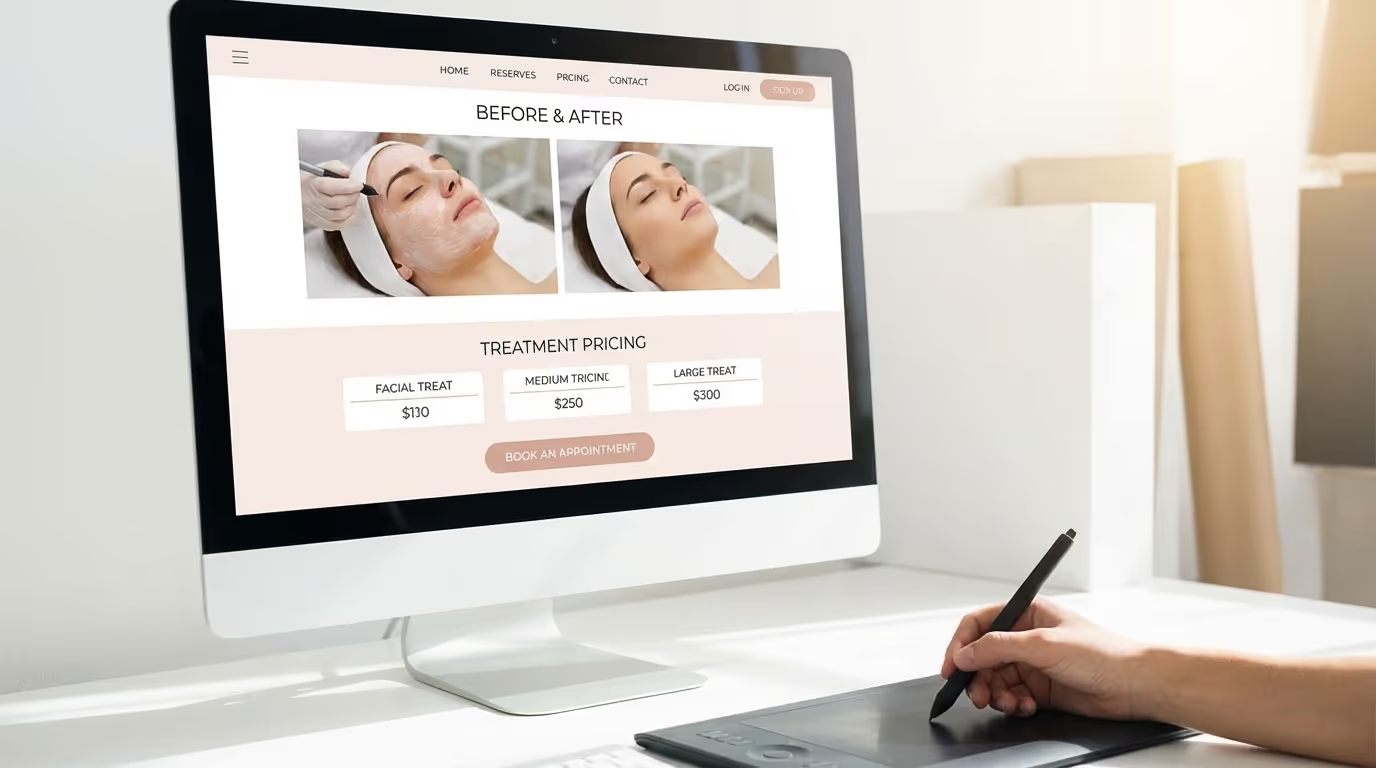
This is the most persuasive section on the page. Real results from real patients, specific to this treatment. In our experience across hundreds of med spa websites, before-and-after photos are the single element most correlated with higher conversion rates. Pages with 4+ before-and-after photos convert at nearly double the rate of pages without them.
Implementation Steps:
- Photograph every patient result using a consistent protocol: same lighting, angle, distance, background
- Select 4–8 of your strongest before-and-after pairs for this specific treatment
- Label each pair: treatment name, specific areas treated, timeframe post-treatment, and patient demographic context if relevant
- Implement a slider or toggle comparison format for an interactive experience
- Include a "View Full Gallery" link for patients who want to see more
- Add the required disclaimer: "Results may vary. Individual results are not guaranteed."
- Ensure HIPAA compliance: written photo consent from every patient, signed before publication
Design Specifications:
| Element | Desktop | Mobile |
|---|---|---|
| Layout | Side-by-side before/after | Swipe toggle or vertical stack |
| Image size | Minimum 600px wide per image | Full-width, minimum 400px |
| Labels | Treatment, timeframe, areas treated | Same (ensure readable at mobile sizes) |
| Navigation | Arrow buttons or thumbnail strip | Swipe gestures |
| Disclaimer | Below gallery | Below gallery |
If you do not have before-and-after photos yet: Use manufacturer-provided images (with attribution) as a temporary measure. But prioritize building your own gallery immediately — your own results are 3x more persuasive than manufacturer stock images. See our med spa photography guide for setup instructions.
Common Mistakes:
- No before-and-after photos at all — the #1 conversion killer on service pages
- Inconsistent photo conditions (different lighting, angles, backgrounds) that make results look manufactured
- Using only the most dramatic transformations — include a range of results so patients with moderate concerns can see themselves represented
Section 4: Treatment Benefits
Expand on why this treatment is worth the investment. Frame benefits from the patient's perspective — what they gain, feel, or avoid — not clinical outcomes.
Bad: "Botulinum toxin type A temporarily inhibits acetylcholine release at the neuromuscular junction, reducing dynamic rhytids."
Good: "Wake up with a smoother forehead. Look refreshed in every photo. Stop hearing 'you look tired' when you feel great. Botox gives you the confidence of looking as good as you feel — with zero downtime and results that last 3–4 months."
Structure: 3–5 benefits, each with a short headline and 1–2 sentence explanation.
Implementation Steps:
- Interview 5–10 patients about why they chose this treatment and what they value most about the results
- Translate clinical benefits into emotional benefits: "reduced wrinkle depth" becomes "look refreshed and confident"
- Address the top desire for this specific treatment: Botox = looking refreshed, CoolSculpting = fitting into clothes, fillers = looking youthful
- Write benefit headlines as outcomes: "Natural Results That Last 3–4 Months" not "Botulinum Toxin Efficacy"
- Include at least one benefit that addresses a common fear: "Natural-looking results — never frozen or overdone"
Common Mistakes:
- Writing benefits in clinical language that patients do not connect with emotionally
- Listing features instead of benefits: "Uses 0.3mm needle" is a feature; "Virtually painless treatment" is a benefit
- Not differentiating benefits by treatment — every service page has the same generic "safe and effective" claims
Section 5: The Treatment Process
Reduce anxiety by explaining exactly what happens, step by step. Patients fear the unknown more than they fear the treatment itself. Making the process transparent dramatically increases their comfort with booking.
Format (Timeline or Numbered Steps):
Step 1: Consultation (15–20 minutes) "Your provider assesses your facial anatomy, discusses your goals, and creates a personalized treatment plan. This is your chance to ask any questions. No pressure, no commitment."
Step 2: Preparation (5 minutes) "We cleanse the treatment area and can apply a topical numbing cream if desired, though most patients do not need it for Botox."
Step 3: Treatment (15–30 minutes) "Your provider uses a fine needle to inject precise doses into targeted muscles. Most patients describe the sensation as a small pinch — nothing more."
Step 4: Aftercare "You can return to normal activities immediately. We provide written aftercare instructions and schedule your follow-up if needed. Results appear within 3–7 days."
Implementation Steps:
- Document your actual clinical workflow for this treatment, from patient arrival to departure
- Simplify into 3–5 clear steps that a non-medical person can understand
- Include time estimates for each step (patients want to know how long the visit takes)
- Address pain/discomfort expectations honestly — underplaying builds distrust
- End with a statement about aftercare and follow-up — this shows you care beyond the transaction
Common Mistakes:
- Skipping this section entirely — patients with unanswered questions about the process do not book
- Being vague: "treatment is performed" tells patients nothing about what actually happens
- Overpromising comfort: "completely painless" is rarely true and damages trust when the patient feels any sensation at all
Section 6: Pricing or Pricing Guidance
Pricing is the number one question patients have and the number one thing med spas refuse to put on their website. This is a mistake — and the data proves it.
Service pages with any pricing information convert 20–30% better than those with no pricing mentioned. Patients who cannot find pricing assume one of two things: you are too expensive, or you are hiding something. Both assumptions drive them to a competitor who is transparent.
Pricing Transparency Options (From Most to Least Transparent):
| Level | Example | Best For |
|---|---|---|
| Exact pricing | "$12/unit — Most patients: 20–40 units — Typical: $240–$480" | Commoditized treatments (Botox, fillers) |
| Starting-at pricing | "Botox treatments starting at $240" | Treatments with variable pricing |
| Price range | "Typical investment: $250–$600 depending on areas and units" | Most med spa treatments |
| Pricing context | "Priced per unit. Your provider recommends exact units at consultation." | Complex or highly customized treatments |
| No pricing | — | Never recommended |
Implementation Steps:
- Decide your transparency level for each treatment based on your pricing strategy
- Include pricing information in a clearly formatted section — not buried in body text
- If you use "starting at" or ranges, explain what determines the final price
- Mention financing options if available (Afterpay, CareCredit, Cherry)
- Add a CTA after pricing: "Get Your Personalized Quote — Book a Consultation"
Common Mistakes:
- No pricing information whatsoever — the biggest conversion killer after missing before-and-afters
- "Call for pricing" — this is a barrier, not a conversion mechanism. Most patients will not call.
- Hiding pricing behind a form submission — this generates leads but damages trust and attracts price-shoppers who are less likely to book
Section 7: Ideal Candidate Section
Help patients self-identify. This section tells them "this treatment is for you if..." and also sets appropriate expectations. It is both a conversion tool and a trust-builder.
Format:
Botox may be right for you if:
- You have moderate to severe forehead lines, crow's feet, or frown lines
- You want a non-surgical solution with no downtime
- You are looking for a preventive treatment before lines become deep
- You want to look refreshed without looking "done"
Botox may not be right for you if:
- You are pregnant or breastfeeding
- You have a neuromuscular disorder
- You are allergic to botulinum toxin products
- You expect permanent results from a single treatment
Implementation Steps:
- List the top 5–7 characteristics of your ideal patient for this treatment
- List 3–5 contraindications or situations where this treatment is not appropriate
- Frame the "right for you" list in terms of desires and goals, not clinical criteria
- Frame the "not right for you" list in terms of safety and expectations
- End with: "Not sure if [treatment] is right for you? Book a consultation and your provider will create a personalized recommendation."
Why This Works: It builds trust by showing you are not trying to sell the treatment to everyone. It also reduces inappropriate consultations, saving your providers' time and improving your consultation-to-booking ratio. Practices that include candidate criteria report 15–25% higher consultation conversion rates because the patients who do book are better qualified.
Common Mistakes:
- Skipping this section — every patient wonders "is this for me?" Help them answer it.
- Only listing the "right for you" criteria — the "not right for you" list builds trust and shows ethical practice
- Using medical jargon in the criteria — "moderate to severe dynamic rhytids" means nothing to patients
Section 8: Provider Credentials
For treatment-specific pages, highlighting the providers who perform this treatment adds significant credibility. In medical aesthetics, patients are choosing an injector, not just a treatment. Provider expertise is the primary differentiator.
Implementation Steps:
- Feature the provider(s) who actually perform this specific treatment
- Include: name, professional headshot, most impressive credential, years of experience with this treatment
- Write a 2–3 sentence statement about their approach: "Dr. Smith has performed over 10,000 Botox treatments and is known for natural results that enhance your features without changing your face."
- Include specific training relevant to this treatment (e.g., Allergan-trained, fellowship-trained facial specialist)
- Link to the provider's full bio page for patients who want more detail
Common Mistakes:
- No provider information on the service page — patients want to know who is treating them before they book
- Generic provider section that is the same across all treatment pages — customize for the specific treatment
- Listing credentials without any personality or philosophy — patients connect with humans, not CVs
Section 9: Patient Testimonials
Include 2–4 testimonials specific to this treatment. Generic "great experience!" reviews are fine for your homepage, but on a Botox service page, you want reviews that specifically mention Botox, the provider, and the results.
Implementation Steps:
- Filter your Google reviews for mentions of this specific treatment
- Select 2–4 reviews that mention: the treatment, the provider name, specific results, and emotional impact
- Format as block quotes with the patient's first name, star rating, and the treatment they had
- If you have a video testimonial for this treatment, embed it prominently — video testimonials convert at 2x the rate of text
- Link to your full reviews page or Google Business Profile
Common Mistakes:
- Using the same generic reviews across all service pages — patients notice
- No testimonials at all — social proof is not optional for elective procedures
- Fabricated or heavily edited testimonials — patients can tell, and the FTC has rules about this
Section 10: FAQ Section
A treatment-specific FAQ section removes booking objections and targets long-tail keywords that patients actually search for. It serves double duty: conversion optimization and SEO.
Include 6–10 Treatment-Specific Questions:
- How much does [treatment] cost?
- Does [treatment] hurt?
- How long does [treatment] last?
- What is the recovery/downtime?
- How many sessions do I need?
- When will I see results?
- Are there any side effects?
- Can I combine [treatment] with other treatments?
- How often should I get [treatment]?
- What is the difference between [this treatment] and [alternative]?
Implementation Steps:
- List the top 10 questions your providers hear during consultations for this treatment
- Write clear, honest answers (2–4 sentences each)
- Use the exact phrasing patients use, not clinical language
- Implement FAQ schema markup — this can generate FAQ rich results in Google, dramatically increasing your search visibility
- Include internal links where relevant: "Can I combine Botox with other treatments? Yes — many patients combine Botox with dermal fillers for comprehensive facial rejuvenation."
- End the FAQ with: "Have a question we didn't answer? Contact us or book a consultation."
Common Mistakes:
- No FAQ section — missed SEO opportunity and missed chance to overcome objections
- Generic answers: "Results vary" as a complete answer is useless. Provide specifics.
- No schema markup — without it, your FAQ only helps on-page visitors, missing the Google rich snippet opportunity
Section 11: Related Treatments
Patients interested in one treatment are often interested in complementary treatments. A "You May Also Be Interested In" section cross-sells, keeps visitors on your site, and supports your internal linking strategy.
Implementation Steps:
- Identify 2–4 treatments commonly combined with or related to this one
- Display each with: a thumbnail image, treatment name, 1-sentence benefit statement, and link to that service page
- Frame as complementary, not alternative: "Enhance your Botox results with these complementary treatments"
Example Groupings:
| Primary Treatment | Related Treatments | Rationale |
|---|---|---|
| Botox | Dermal fillers, chemical peels, microneedling | Comprehensive facial rejuvenation |
| CoolSculpting | Emsculpt, semaglutide weight loss, skin tightening | Body contouring ecosystem |
| Laser hair removal | Skin rejuvenation, HydraFacial, chemical peels | Skin care enhancement |
| Microneedling | PRP, chemical peels, HydraFacial | Progressive skin improvement |
Common Mistakes:
- Linking to too many alternatives (5+ options creates decision paralysis)
- No links at all — every service page is a dead end, and patients leave your site
- Suggesting alternatives instead of complements: "Instead of Botox, try Dysport" undermines your Botox page
Section 12: Final CTA Section
The bottom of your service page is a critical conversion point. Visitors who have scrolled this far are highly engaged — they have read about the treatment, seen results, checked credentials, and reviewed FAQs. They are your warmest audience. Now make it dead simple to take the next step.
Implementation Steps:
- Write a compelling headline: "Ready to See What Botox Can Do for You?"
- Add one sentence of supporting text: "Book your consultation today and get a personalized treatment plan from our expert providers."
- Include a large, high-contrast CTA button: "Book Your Botox Consultation"
- Add a secondary contact option: phone number or text chat for patients who prefer not to book online
- Consider adding a final trust signal: "4.9 stars | 200+ Google Reviews | Board-Certified Providers"
Common Mistakes:
- No final CTA — visitors scroll to the bottom and find nothing but the footer
- Generic CTA: "Contact Us" instead of treatment-specific "Book Your Botox Consultation"
- No secondary contact option — some patients prefer calling, especially for higher-investment treatments
SEO Optimization for Service Pages
Your service pages are your most important SEO assets. They target your highest-value keywords and drive the most commercially valuable traffic. Here is the complete SEO checklist for service pages:
On-Page SEO Requirements
| Element | Optimization | Example |
|---|---|---|
| Title tag | [Treatment] in [City] — [Spa Name] — under 60 characters | "Botox in Scottsdale — Aesthetix Medical Spa" |
| Meta description | Primary keyword, benefit, CTA — under 155 characters | "Expert Botox in Scottsdale. Natural results from board-certified injectors. 4.9 stars. Book your consultation today." |
| H1 tag | Include primary keyword naturally, once | "Botox in Scottsdale: Expert Injectors, Natural Results" |
| H2 tags | Use secondary keywords and related terms | "How Much Does Botox Cost in Scottsdale?" |
| URL structure | /services/botox or /botox (short, keyword-rich) | aesthetixmedspa.com/services/botox |
| Image alt tags | Descriptive, include keyword where natural | "Botox before and after results Scottsdale patient" |
| Internal links | Link to related treatment pages, blog posts, booking page | See internal linking framework below |
| Schema markup | MedicalProcedure or Service schema + FAQ schema + LocalBusiness | See schema markup guide |
| Word count | 1,500–2,500 words minimum (comprehensive but focused) | Cover all 12 sections |
| Page speed | Under 3 seconds mobile load time | See optimization guide |
Content Depth Benchmarks
Google rewards comprehensive service pages. The med spas ranking on page 1 for treatment keywords typically have service pages with 1,500–2,500+ words covering the treatment from every angle. Here is what we see in the top 3 results for competitive treatment keywords:
| Ranking Position | Average Word Count | Sections Included | Schema Markup |
|---|---|---|---|
| Position 1 | 2,200+ words | 8–12 sections | Yes (Service + FAQ) |
| Position 2 | 1,800+ words | 6–10 sections | Usually |
| Position 3 | 1,500+ words | 5–8 sections | Sometimes |
| Position 10 | 600–800 words | 2–4 sections | Rarely |
This does not mean padding with filler content. It means thoroughly answering every question a patient might have about the treatment. If they leave your page feeling fully informed, they are more likely to book — and Google is more likely to rank you.
Local SEO Signals
Include your city name naturally throughout the page:
- In the H1: "Botox in Scottsdale"
- In the body copy: "Our Scottsdale clinic..."
- In schema markup: areaServed
- In image alt tags: "Botox before and after results Scottsdale patient"
- In the FAQ: "How much does Botox cost in Scottsdale?"
Do not keyword-stuff. 3–5 natural mentions of your city is sufficient. For more on local SEO strategy, see our local SEO guide and Google Business Profile optimization guide.
Internal Linking Framework for Service Pages
Every service page should include internal links to:
| Link Destination | Purpose | Example |
|---|---|---|
| Related service pages | Cross-sell complementary treatments | "Pair Botox with dermal fillers for full facial rejuvenation" |
| Related blog posts | Build topical authority and depth | "Learn more about how long Botox lasts" |
| Booking/consultation page | Drive conversions | CTA links |
| Before-and-after gallery | Showcase results | "View our full Botox gallery" |
| Provider bio page | Build provider trust | "Dr. Smith's full credentials" |
| Pricing or financing page | Address cost concerns | "Learn about financing options" |
Target 8–12 internal links per service page, distributed naturally throughout the content.
Service Page Design Mistakes That Kill Conversions
Mistake 1: Too Little Content
A service page with one paragraph and a stock photo tells Google and patients that you are not serious about this treatment. It will not rank, and the few visitors who find it will not convert. Invest in comprehensive content following the 12-section template.
The fix: Follow the template above. Minimum 1,500 words covering all essential sections.
Mistake 2: No Before-and-After Photos
If you do not show results, patients assume you do not have results worth showing. This is the single most damaging omission on med spa service pages.
The fix: Start photographing every patient result from day one. Build your gallery with 4–8 examples per treatment within your first 90 days. Use our photography guide to establish a consistent protocol.
Mistake 3: No Pricing Information
Patients who cannot find pricing information leave. Every time. The "call for pricing" approach might have worked in 2010 — it does not work in 2026.
The fix: Include at least a price range, "starting at" figure, or contextual pricing explanation. See Section 6 above.
Mistake 4: Burying the CTA
If visitors have to scroll past 3,000 words to find a booking link, you are losing conversions from visitors who are ready to act but cannot find the next step.
The fix: Place CTAs at three points on every service page — the hero (Section 1), mid-page (after benefits or process), and the final CTA section (Section 12). Three CTAs, same destination.
Mistake 5: Copy-Paste Content Across Pages
If your Botox page, filler page, and laser page all use the same template text with just the treatment name swapped, Google knows. Patients know. Duplicate content with word-swapping hurts rankings and trust.
The fix: Write unique, specific content for each treatment. Every section should contain information that only applies to that specific treatment.
Mistake 6: No Mobile Optimization
Over 70% of med spa website traffic is mobile. If your service pages are not fully responsive with tap-friendly buttons, legible text, and fast load times on mobile, you are losing the majority of your potential patients.
The fix: Design service pages mobile-first. Test every element on a real mobile device. Ensure CTA buttons are minimum 48px height and full-width on mobile. See our mobile design guide.
Mistake 7: Missing Schema Markup
Without schema markup, Google cannot fully understand what your page is about, and you miss opportunities for rich search results.
The fix: Implement MedicalProcedure or Service schema, FAQ schema, and LocalBusiness schema on every service page. See our schema markup guide.
Service Page Performance Benchmarks
Track these metrics for each service page monthly:
| Metric | Target | Action if Below Target |
|---|---|---|
| Organic traffic | Growing month-over-month | Review keyword targeting, add content depth, build backlinks |
| Bounce rate | Under 50% | Improve hero section, check page speed, verify intent match |
| Time on page | Over 3 minutes | Add visuals (before-and-afters, video), improve copy engagement |
| CTA click rate | Over 5% | Test CTA placement, copy, design, and specificity |
| Conversion rate | 3–8% | Review the full page flow from hero to final CTA |
| Google ranking for primary keyword | Page 1 | Build backlinks, add content depth, earn more reviews |
| FAQ rich snippet appearances | Increasing | Verify schema markup implementation |
| Mobile vs. desktop conversion gap | Within 50% | Improve mobile layout, CTA sizing, form experience |
How to Diagnose Low Performance
| Symptom | Probable Cause | Fix |
|---|---|---|
| High impressions, low clicks (in GSC) | Poor title tag or meta description | Rewrite with benefit-focused, keyword-rich copy |
| High traffic, high bounce rate | Content does not match search intent | Verify intent; improve hero section |
| Good engagement, low conversions | Weak CTAs or missing pricing | Improve CTA specificity; add pricing information |
| Low traffic overall | Not ranking for target keywords | Improve content depth; build backlinks; verify technical SEO |
| Ranking on page 2 for months | Content is good but authority is weak | Invest in link building; add internal links |
Building Service Pages at Scale
If you offer 15–25 treatments, building comprehensive service pages for all of them is a significant investment. Here is how to prioritize and scale:
Prioritization Framework
- Build first: Service pages for your top 3–5 revenue-generating treatments (typically Botox, fillers, and your highest-demand treatments)
- Build second: Service pages for treatments with strong keyword opportunity (high volume, low competition)
- Build third: Service pages for newer or niche treatments (semaglutide, thread lifts, emerging technologies)
- Build last: Service pages for lower-demand treatments (but still build them — every treatment deserves a dedicated page)
Content Production Timeline
| Phase | Timeline | Deliverable |
|---|---|---|
| Phase 1: Top 5 treatments | Weeks 1–3 | 5 comprehensive service pages (2,000+ words each) |
| Phase 2: Next 5 treatments | Weeks 4–6 | 5 comprehensive service pages |
| Phase 3: Remaining treatments | Weeks 7–10 | All remaining service pages |
| Phase 4: Optimization | Ongoing | Add before-and-afters, testimonials, and schema as assets become available |
Template Customization by Treatment Type
While all service pages should follow the 12-section template, some sections carry more weight depending on the treatment type:
| Treatment Type | Emphasize | De-emphasize |
|---|---|---|
| Injectables (Botox, fillers) | Provider credentials, before-and-afters, pricing, treatment count | Process (patients are familiar) |
| Body contouring (CoolSculpting, Emsculpt) | Before-and-afters, realistic expectations, session count, candidate criteria | Provider (device-driven treatment) |
| Laser treatments | Technology, safety, candidate criteria (skin types), number of sessions | Pricing (highly variable) |
| Weight loss (semaglutide) | Program structure, ongoing support, realistic timeline, insurance/cost | Before-and-afters (compliance-sensitive) |
| Skin treatments (facials, peels) | Benefits, maintenance schedule, product recommendations | Pricing (lower investment, less friction) |
The Bottom Line
Your med spa service pages are where bookings happen. They are the pages that rank for treatment keywords, the pages that Google Ads traffic lands on, and the pages where patients decide whether you are the right provider.
The 12-section template is not a suggestion. It is a conversion framework based on what actually works across hundreds of med spa websites. Treatment hero, overview, before-and-afters, benefits, process, pricing, candidate criteria, provider credentials, testimonials, FAQ, related treatments, and a final CTA. Every section has a purpose. Every section moves the visitor toward booking.
Build these pages properly and they become the most valuable assets on your website — generating organic traffic, converting paid traffic, and booking patients around the clock. Pair them with a comprehensive SEO strategy, a content cluster for each treatment, and a strong review generation system, and you have a patient acquisition engine that compounds over time.
Want us to review your med spa service pages and show you exactly where you are losing potential bookings? Get Your Free Marketing Audit and we will audit your treatment pages against this conversion framework with specific design and content recommendations.