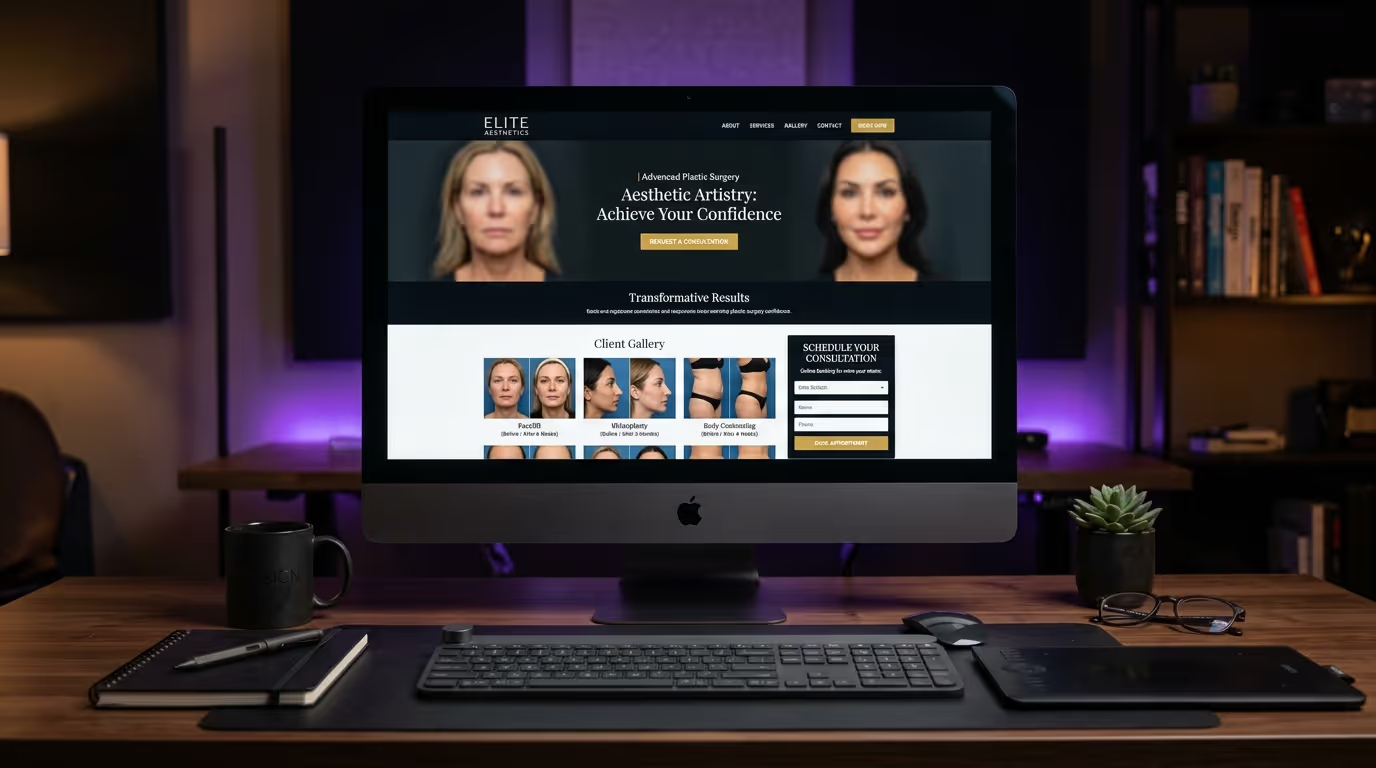

Plastic surgery advertising is a minefield. One wrong word in your ad copy and Google rejects it. One before/after photo on Meta and your account gets flagged. One unsubstantiated claim and you are looking at an FTC complaint.
And yet, paid advertising remains the fastest path to a full surgical calendar. The practices filling their OR schedules in 2026 are not avoiding ads — they are running them smarter, with compliance built into the strategy from day one instead of bolted on as an afterthought.
This guide covers advertising for plastic surgeons — how to promote your practice effectively while navigating the regulatory and platform-specific restrictions that make this vertical uniquely challenging. No vague advice. Specific strategies, ad copy frameworks, compliance guardrails, implementation steps, and performance benchmarks you can implement immediately.
Why Plastic Surgery Advertising Is Harder Than Other Healthcare Advertising
Before we get into strategy, you need to understand why plastic surgery advertising operates under tighter constraints than almost any other specialty.
Platform Restrictions
| Platform | What Is Allowed | What Gets Flagged or Rejected | Consequence of Violation |
|---|---|---|---|
| Google Ads | Promoting consultations, credentials, patient reviews, educational content | Outcome claims, B/A in ad extensions, health condition targeting | Ad disapproval; repeated violations = account suspension |
| Meta (FB/IG) | Consultation promotion, educational video, team showcases, testimonials about experience | B/A photos, body-related copy, "ideal body" imagery, appearance-change claims | Ad rejection, account restriction, permanent account ban |
| TikTok Ads | Educational content, provider videos, practice showcases | Cosmetic surgery promotion in many categories, B/A content | Ad rejection, account suspension |
| YouTube | Pre-roll videos, procedure education, surgeon introductions, testimonials | Less restrictive than Meta, but still no guaranteed outcome claims | Ad disapproval |
Regulatory Environment
| Regulation | Key Requirements | Penalty for Violation |
|---|---|---|
| FTC | All claims truthful, non-deceptive, substantiated. No guaranteed results. | Fines, consent orders, mandatory corrective advertising |
| State medical boards | Specific rules vary by state: required disclaimers, testimonial restrictions, superiority claim limitations | License review, sanctions, suspension |
| HIPAA | Written HIPAA authorization for marketing use of any patient image or testimonial | $100-$1.5M per violation category |
| Platform terms | Each platform's healthcare advertising policies | Account suspension or permanent ban |
The Consequence of Getting It Wrong
- Google Ads account suspension (weeks to resolve, kills lead flow entirely)
- Meta ad account permanent ban (often requires new business entity to restart)
- FTC enforcement action (fines, consent orders, mandatory corrective advertising)
- State medical board complaints (license review, sanctions)
- Malpractice exposure from advertising claims that create unrealistic expectations
This is not meant to scare you away from advertising. It is meant to make the case that compliance is not a constraint on your strategy — it IS the strategy. The practices that build compliance into their advertising DNA are the ones that run ads consistently, at scale, without interruption.
Google Ads for Plastic Surgery: The Compliance-First Approach
Google Ads is the highest-intent advertising channel for plastic surgery. When someone searches "rhinoplasty surgeon near me" or "breast augmentation [city]," they are actively looking for a surgeon. For the complete Google Ads framework specific to plastic surgery, read our plastic surgery PPC guide.
Campaign Structure
Organize campaigns by procedure category and intent level:
Tier 1 — High-intent procedure campaigns (50-60% of budget):
| Campaign | Example Keywords | Landing Page | Monthly Budget Allocation |
|---|---|---|---|
| Rhinoplasty | "rhinoplasty [city]," "nose job surgeon near me," "best rhinoplasty surgeon [city]" | Dedicated rhinoplasty page | 15-20% |
| Breast augmentation | "breast augmentation [city]," "breast implants near me," "breast augmentation cost" | Dedicated breast aug page | 15-20% |
| Facelift | "facelift surgeon [city]," "facelift cost [city]," "deep plane facelift [city]" | Dedicated facelift page | 10-15% |
| Body contouring | "tummy tuck [city]," "liposuction [city]," "mommy makeover [city]" | Dedicated body page | 10-15% |
Tier 2 — Research-phase campaigns (20-25% of budget):
- "[procedure] cost" — "tummy tuck cost"
- "[procedure] before and after" — "mommy makeover before and after"
- "[procedure] recovery" — "liposuction recovery time"
Tier 3 — Brand and competitor campaigns (15-20% of budget):
- Practice name and surgeon name (branded search)
- Competitor practice names (aggressive but legal)
- "plastic surgeon [city]" (broad local)
Implementation Steps
- Set up Google Ads account with conversion tracking (form submissions + phone calls)
- Install call tracking with dynamic number insertion
- Build dedicated landing pages for each procedure campaign
- Create comprehensive negative keyword lists:
- Universal: jobs, careers, salary, school, free, cheap, DIY, gone wrong, botched, malpractice, insurance
- Procedure-specific: dog rhinoplasty, breast cancer, breast pump, liposuction at home
- Start with Exact and Phrase match keywords
- Write compliant ad copy using the frameworks below
- Enable all ad extensions (call, location, sitelinks, callouts, structured snippets)
- Set geographic targeting (15-50 mile radius depending on procedure type)
- Review search terms weekly for the first 90 days
- Switch to Smart Bidding (Target CPA) after accumulating 30+ conversions
Compliant Ad Copy Frameworks
The key to compliant plastic surgery ad copy is focusing on the provider and the process rather than promising outcomes.
Framework 1: Credential-Led
| Element | Copy |
|---|---|
| Headline 1 | Board-Certified Plastic Surgeon |
| Headline 2 | [Procedure] in [City] |
| Headline 3 | [X] Years of Experience |
| Description | Schedule your consultation with Dr. [Name], board-certified plastic surgeon specializing in [procedure]. Personalized treatment plans. Financing available. |
Framework 2: Process-Led
| Element | Copy |
|---|---|
| Headline 1 | [Procedure] Consultations in [City] |
| Headline 2 | Personalized Treatment Plans |
| Headline 3 | See If You Are a Candidate |
| Description | Considering [procedure]? Meet with our board-certified surgeon to discuss your goals, options, and expected recovery. No obligation consultation. |
Framework 3: Social Proof-Led
| Element | Copy |
|---|---|
| Headline 1 | [Star Rating] Stars — [X]+ Reviews |
| Headline 2 | [Procedure] Specialist in [City] |
| Headline 3 | View Our Patient Results |
| Description | Join [X]+ patients who chose Dr. [Name] for [procedure] in [City]. Board-certified, fellowship-trained. View results and book your consultation. |
Words and phrases compliance reference:
| AVOID (triggers rejection or non-compliance) | SAFE (approved language) |
|---|---|
| "Guaranteed results" | "Personalized results" |
| "Best results" or "perfect results" | "Natural-looking results" |
| "Risk-free" or "no scarring" | "See if you are a candidate" |
| "Transform your body" | "Discuss your goals" |
| Specific outcome claims ("Look 10 years younger") | "View our patient results" |
| Unsubstantiated price claims ("Lowest prices") | "Financing available" |
| "Before and after" in headlines | "View patient results" |
Landing Page Strategy
Compliant, high-converting landing page structure:
| Section | Content | Compliance Note |
|---|---|---|
| Above the fold | Headline matching ad, credentials, short form, trust signals | No outcome promises in headline |
| Surgeon section | Bio, credentials, experience, fellowship training | Claims must be verifiable |
| Procedure overview | What it involves, candidacy, recovery timeline | Educational, not promissory |
| Before/after gallery | 3-6 best cases with HIPAA consent on file | Include "Results may vary" disclaimer |
| Testimonials | 2-3 video or written testimonials | Written consent required; focus on experience, not outcomes |
| Cost/financing | Ranges, financing options, payment plans | Use "starting at" or "from" language |
| FAQ section | Common questions and answers | Factual, conservative, no guarantees |
| CTA | Consultation booking form + phone number | "Schedule your consultation" (not "get your new body") |
Landing page compliance requirements:
- Include "Individual results may vary" disclaimer
- Before/after photos must be actual patients (not stock)
- Testimonials must have documented written consent
- Include practice physical address and phone number
- Privacy policy link
- HIPAA notice if collecting health information
For related landing page strategies, see our med spa landing page guide.
Performance Benchmarks
| Metric | Target After 90 Days | Red Flag |
|---|---|---|
| Search CTR | 5-8% | Below 3% |
| Conversion rate (landing page) | 8-15% | Below 5% |
| Cost per lead | $100-$300 | Above $400 |
| Cost per consultation | $200-$500 | Above $700 |
| Cost per booked procedure | $500-$2,000 | Above $3,000 |
| ROAS | 5:1-15:1 | Below 3:1 |
| Quality Score (average) | 7+ | Below 5 |
Meta Ads for Plastic Surgery: Navigating the Restrictions
Meta (Facebook and Instagram) is more challenging for plastic surgery advertising, but it is where patients spend their time. The platform works best for awareness and consideration — not direct-response like Google.
What Meta Allows vs. What It Blocks
| Content Type | Allowed? | Notes |
|---|---|---|
| Consultation promotion | Yes | Focus on the process, not the result |
| Educational videos | Yes | Provider explaining procedures |
| Patient testimonials | Yes (with caveats) | Focus on experience, include disclaimers |
| Facility and team showcases | Yes | Professional imagery encouraged |
| Before/after photos | Frequently blocked | Especially body procedures — use website gallery links instead |
| Body-related ad copy | Frequently blocked | "Get the body you want" = flagged |
| Body-image language | Blocked | "Tired of how you look?" = flagged |
| Health-interest targeting | Blocked | Cannot target by health conditions |
Campaign Types That Work
Campaign Type 1: Educational Video Campaigns
| Element | Specification |
|---|---|
| Format | 60-90 second surgeon-to-camera video |
| Content | "3 things to know before [procedure]," "Recovery timeline for [procedure]," "Am I a candidate?" |
| Objective | Brand awareness or video views |
| Targeting | Broad local (25-55, 15-mile radius) |
| Budget | $500-$1,500/month |
| Expected CPM | $15-$35 |
| Expected CPV | $0.03-$0.10 |
Campaign Type 2: Testimonial Campaigns
Patient testimonial videos focusing on the experience (not physical outcomes). "The team made me feel comfortable" works. "My body looks amazing now" gets flagged.
Campaign Type 3: Retargeting Campaigns
| Audience | Message | Expected CPL |
|---|---|---|
| Website visitors (30-day) | "Still researching [procedure]? Book your no-obligation consultation" | $25-$60 |
| Video viewers (50%+ watched) | Patient testimonial + consultation offer | $30-$70 |
| Page engagers (90-day) | Limited-time consultation offer or financing promotion | $20-$50 |
Campaign Type 4: Lead Form Campaigns
Use Meta's native lead forms for lower friction. Include qualifying questions (procedure interest, timeline, budget range) to improve lead quality.
Implementation Steps for Meta Ads
- Set up Meta Business Manager and create a clean ad account
- Install Meta Pixel on your website with standard events (Lead, Contact, ScheduleAppointment)
- Build 3-5 educational videos (iPhone quality is fine — authenticity wins)
- Write ad copy using compliant language (focus on consultation, credentials, experience)
- Create retargeting audiences from website visitors and video viewers
- Launch educational campaigns first (build audience before lead gen)
- Add retargeting after 2-4 weeks (when audiences reach 1,000+ people)
- A/B test creative monthly — rotate new content every 2-4 weeks
- Monitor ad account for disapprovals daily during first 30 days
Meta Budget and Expectations
| Monthly Budget | Campaign Split | Expected Monthly Leads | Cost Per Lead |
|---|---|---|---|
| $2,000 | 50% awareness, 50% retarget | 20-40 | $50-$100 |
| $3,000 | 40% awareness, 30% lead gen, 30% retarget | 35-60 | $50-$85 |
| $5,000 | 30% awareness, 40% lead gen, 30% retarget | 60-100 | $50-$85 |
Meta is not a replacement for Google Ads in plastic surgery — it is a complement. Google captures demand (people searching). Meta creates demand (showing your practice to interested audiences). Both channels together outperform either alone by 30-50%. For related Meta advertising strategies, see our med spa Facebook ads guide and med spa ad copy guide.
YouTube Advertising for Plastic Surgery
YouTube is the second-largest search engine and significantly less restrictive than Meta for cosmetic surgery content.
What Works on YouTube
| Ad Format | Length | Content | Targeting | Budget |
|---|---|---|---|---|
| Skippable in-stream | 30-60 seconds | Surgeon intro, procedure overview, testimonial | Search targeting, custom intent, placement | $1,000-$3,000/mo |
| In-feed (discovery) | Thumbnail + headline | Procedure education, results showcase | Procedure-related search terms | $500-$1,500/mo |
| YouTube Shorts | Under 60 seconds | Quick tips, myth-busting, results snippets | Topic targeting | $500-$1,000/mo |
Implementation Steps
- Create 3-5 YouTube ad videos: surgeon introduction, procedure explainer, patient testimonial
- Set up YouTube ad campaigns through Google Ads
- Configure targeting: search targeting (procedure terms on YouTube), custom intent (users who searched on Google), placement targeting (specific plastic surgery channels), geographic (radius around practice)
- Add end screen CTAs to all videos
- Include consultation booking link in every video description
- Track view rate, click-through rate, and consultation bookings attributed to YouTube
YouTube Ads serve as an awareness and consideration channel. They work best combined with Google Search Ads and retargeting — warming up audiences that later convert through search or direct website visits.
Display and Retargeting Advertising
Display ads serve a specific, valuable purpose: keeping your practice top-of-mind for researching patients.
When Display Ads Make Sense
| Use Case | Audience | Expected Performance |
|---|---|---|
| Website visitor retargeting (30-60 day window) | People who visited procedure pages but did not convert | CTR: 0.3-0.8%, conversion rate: 2-5% |
| Video viewer retargeting | People who watched 50%+ of your YouTube content | CTR: 0.2-0.5%, conversion rate: 1-3% |
| Geographic targeting (geofencing) | Potential patients near competitor locations | CTR: 0.1-0.3%, conversion rate: 0.5-1% |
Compliant Display Creative
| Element | Requirement |
|---|---|
| Imagery | Professional practice/team photos or results (with consent) — no body-focused close-ups |
| Copy | Focus on consultation CTA, credentials, and trust signals |
| Disclaimer | Include "Results may vary" |
| CTA | "Schedule your consultation" or "View patient results" |
| Sizing | Create ads in all standard IAB sizes (300x250, 728x90, 160x600, 320x50 mobile) |
Budget: 15-20% of total digital ad spend dedicated to retargeting. Lower CPCs ($1-5) with higher conversion rates because you are reaching warm audiences.
For retargeting strategies applicable to plastic surgery, see our med spa retargeting guide.
Building a Compliance System for Plastic Surgery Advertising
Compliance should not be a last-minute review. It should be built into your advertising workflow from the first brief to the final report.
Pre-Launch Compliance Checklist
| Checkpoint | Verification |
|---|---|
| Ad copy does not guarantee specific outcomes | Review all headlines and descriptions |
| No claims of superiority without substantiation | "Best" requires verifiable data |
| B/A photos have documented HIPAA authorization for marketing use | Written consent on file per patient |
| Testimonials have written consent and do not make unsubstantiated claims | Consent forms reviewed |
| Pricing claims are accurate with appropriate qualifiers | "Starting at" or "from" language used |
| State medical board advertising requirements met | Disclaimers, license numbers where required |
| Landing page includes "Results may vary" disclaimer | Visible on page |
| Landing page has privacy policy and terms | Linked in footer |
| CTA focuses on consultation, not outcome | No "get your dream body" language |
| All creative tested against platform policies | Pre-review against Google/Meta guidelines |
Ongoing Compliance Monitoring
| Activity | Frequency | Owner |
|---|---|---|
| Review all ads for platform policy changes | Monthly | Agency/marketing team |
| Audit landing pages for accuracy | Quarterly | Agency + compliance |
| Track and resolve ad disapprovals | Within 24 hours | Agency |
| Maintain consent file for patient images/testimonials | Per use | Practice compliance officer |
| Review FTC enforcement actions in cosmetic surgery | Quarterly | Practice + legal |
| Review state medical board advertising rules | Annually | Practice + legal |
| Test ad creatives against platform policies pre-launch | Every new creative | Agency |
When an Ad Gets Disapproved
| Step | Action | Timeline |
|---|---|---|
| 1 | Read the specific policy violation cited | Immediately |
| 2 | Do NOT resubmit the same ad (triggers account review) | N/A |
| 3 | Revise the ad to address the specific violation | Within 24 hours |
| 4 | If disapproval seems incorrect, submit appeal with clear explanation | Within 48 hours |
| 5 | Document the incident and resolution | Same day |
| 6 | Update your compliance checklist to prevent recurrence | Within 1 week |
Common Compliance Mistakes
| Mistake | Risk Level | Fix |
|---|---|---|
| Using B/A photos in Meta ads without testing first | High — account ban risk | Use B/A on landing pages only, not in ad creative |
| "Best surgeon" claims without substantiation | Medium — FTC risk | Replace with specific credentials and numbers |
| General photo release vs. HIPAA marketing authorization | High — HIPAA violation | Use HIPAA-specific marketing authorization form |
| Copying competitor ad language without compliance review | Medium — inheriting their compliance violations | Always write original, compliance-reviewed copy |
| Not monitoring for policy changes | High — sudden ad rejections | Monthly policy review schedule |
Tracking Advertising ROI for Plastic Surgery
Plastic surgery has long sales cycles — 30 to 90 days from first click to booked surgery. Your tracking must account for this.
The Full-Funnel Metrics
| Metric | How to Track | Target | Revenue Context |
|---|---|---|---|
| Cost per click | Ad platform reporting | $8-$25 (Google), $1-$5 (Meta) | N/A |
| Cost per lead | Ad spend / total leads | $100-$300 | Pre-qualification metric |
| Lead-to-consultation rate | CRM tracking | 40-60% | Team performance indicator |
| Consultation-to-surgery rate | CRM tracking | 20-40% | Clinical conversion indicator |
| Cost per patient acquired | Manual calculation | $500-$2,000 | The metric that matters most |
| Return on ad spend | Revenue / ad spend | 5:1-15:1 | Profitability indicator |
| Patient lifetime value | Revenue tracking over 24 months | $10,000-$50,000+ | Long-term ROI context |
Revenue Attribution Implementation
- Tag every lead with source (Google Ads, Meta, YouTube, organic, referral)
- Track every lead through CRM pipeline: lead → consultation booked → consultation attended → surgery booked → surgery completed → revenue recorded
- Feed outcome data back into ad platforms (offline conversion tracking)
- Calculate cost per patient acquired by channel, campaign, and procedure
- Include follow-up revenue (patients who return for additional procedures add 20-40% to lifetime value)
- Review attribution data monthly — adjust budget allocation toward highest-ROAS channels
The Revenue-First Optimization Mindset
The biggest mistake in plastic surgery advertising is optimizing for leads instead of revenue. A campaign generating $50 leads that convert at 5% is worse than a campaign generating $200 leads that convert at 30%.
| Campaign A | Campaign B |
|---|---|
| Cost per lead: $50 | Cost per lead: $200 |
| Leads per month: 100 | Leads per month: 25 |
| Consultation rate: 30% | Consultation rate: 60% |
| Surgery rate: 20% | Surgery rate: 40% |
| Surgeries per month: 6 | Surgeries per month: 6 |
| Cost per surgery: $833 | Cost per surgery: $833 |
| Ad spend: $5,000 | Ad spend: $5,000 |
Same outcome, same cost — but Campaign B requires 75% less lead management. Fewer, better leads are almost always preferable to more, worse leads. Optimize for cost per booked procedure, not cost per lead.
Budgeting for Plastic Surgery Advertising
Budget Recommendations by Practice Size
| Practice Size | Monthly Ad Budget | Management Fee | Total Marketing | Channel Split |
|---|---|---|---|---|
| Solo surgeon, 1 location | $3,000-$5,000 | $2,000-$3,000 | $5,000-$8,000 | 70% Google, 20% Meta, 10% YouTube |
| 2-3 surgeons, 1-2 locations | $5,000-$10,000 | $2,500-$4,000 | $7,500-$14,000 | 60% Google, 25% Meta, 15% YouTube |
| Multi-surgeon group, 3+ locations | $10,000-$25,000 | $3,500-$6,000 | $13,500-$31,000 | 55% Google, 25% Meta, 10% YouTube, 10% Display |
How to Scale Advertising
| Phase | Timeline | Focus | Budget |
|---|---|---|---|
| Foundation | Months 1-3 | Google Search Ads only — build conversion data | 100% Google |
| Expansion | Months 3-6 | Add Meta retargeting and YouTube | 70% Google, 20% Meta, 10% YouTube |
| Optimization | Months 6-12 | Optimize based on ROAS, add procedure campaigns | Shift budget to highest-performing campaigns |
| Scale | Year 2+ | Scale winning channels, test new platforms | Increase budget on 5:1+ ROAS channels |
Scale what works. If your rhinoplasty campaign generates a 7:1 ROAS, increase its budget before launching new campaigns. Most practices spread too thin too early. For marketing budget frameworks, see our med spa marketing budget guide and marketing ROI guide.
Advanced Advertising Strategies for Competitive Markets
In saturated markets like Los Angeles, Miami, New York, Dallas, and Scottsdale, standard advertising approaches may not be enough. Here are advanced strategies that separate top-performing practices from the pack.
Strategy 1: Procedure-Specific Video Sales Letters (VSLs)
Create 3-5 minute video presentations for each major procedure that combine education, credentials, patient testimonials, and a consultation CTA. Use these as:
- YouTube pre-roll ads targeting procedure searches
- Landing page hero content for paid traffic
- Meta ad creative for retargeting audiences
Implementation steps:
- Script a 3-5 minute presentation covering: what the procedure involves, ideal candidates, the surgeon's approach, patient testimonials, and next steps
- Film professionally — but authenticity matters more than polish
- A/B test different opening hooks: question-based ("Considering rhinoplasty?"), statistic-based ("300+ rhinoplasties performed"), or patient-story-based
- Include a strong CTA at the 60-second mark AND at the end — many viewers convert early
- Track video completion rates and consultation bookings attributed to each VSL
Expected outcomes:
| Metric | Benchmark |
|---|---|
| Video completion rate | 25-40% |
| VSL-to-consultation conversion rate | 5-12% |
| Cost per consultation from VSL campaigns | $150-$400 |
| ROAS on VSL campaigns | 4:1-10:1 |
Strategy 2: Geofencing Competitor Locations
Use location-based targeting to show ads to people physically present at or near competitor practices.
Implementation steps:
- Identify 5-10 competitor practice locations in your market
- Set up geofenced display campaigns targeting a 500-1,000 foot radius around each location
- Create messaging that differentiates: your credentials, your reviews, your approach
- Never mention competitors by name — focus on your strengths
- Track footfall attribution if available through your ad platform
Common mistakes:
| Mistake | Risk | Fix |
|---|---|---|
| Mentioning competitors by name | Legal risk, platform violations | Focus on your own differentiators |
| Too-small geofence | Insufficient reach | 500-1,000 foot radius minimum |
| Generic messaging | No differentiation | Highlight specific credentials, review count, and specializations |
Strategy 3: Sequential Storytelling Campaigns
Build a multi-phase ad sequence that mirrors the patient decision journey over 30-60 days.
| Phase | Days | Ad Content | Objective |
|---|---|---|---|
| Awareness | Day 1-7 | Surgeon introduction video, practice overview | Brand awareness, video views |
| Education | Day 8-14 | Procedure-specific educational content | Engagement, website visits |
| Social Proof | Day 15-21 | Patient testimonials, review highlights | Trust building |
| Consideration | Day 22-28 | Before/after results (website link), financing information | Website visits, consideration |
| Conversion | Day 29-45 | Direct consultation offer with urgency | Lead generation, bookings |
| Re-engagement | Day 46-60 | "Still researching?" with fresh content | Recover stalled leads |
Implementation steps:
- Create 6 ad sets — one for each phase
- Use audience sequencing: Phase 2 targets people who engaged with Phase 1, Phase 3 targets Phase 2 engagers, and so on
- Increase CTA directness as the sequence progresses
- Allocate 15% of total ad budget to this sequential campaign
- Track how many patients complete the full sequence before converting
Advertising Across the Patient Journey: Complete Funnel Map
Understanding where each advertising channel fits in the patient journey prevents common budget misallocation.
| Journey Stage | Patient Behavior | Best Channels | Ad Objective | Budget Allocation |
|---|---|---|---|---|
| Unaware | Has not considered procedure yet | Meta awareness, YouTube, TikTok | Brand/practice awareness | 10-15% |
| Problem-aware | Knows they want to change something | Meta education, YouTube content | Procedure education | 10-15% |
| Solution-aware | Researching specific procedures | Google Search, YouTube, SEO content | Procedure-specific education | 15-20% |
| Provider-aware | Comparing surgeons | Google Search (branded + procedure), retargeting | Consultation promotion | 30-40% |
| Decision | Ready to book | Google branded, retargeting, email | Consultation booking | 15-20% |
Common budget allocation mistakes:
| Mistake | Result | Fix |
|---|---|---|
| 100% on bottom-funnel (Google Search only) | Missing 90% of patients who are still researching | Allocate 25-35% to awareness and education channels |
| 100% on top-funnel (Meta awareness only) | High impressions, zero consultations | Allocate 50-60% to consideration and conversion channels |
| No retargeting | Losing 95% of website visitors who are not ready to book yet | Allocate 15-20% to retargeting across all platforms |
| Ignoring email nurture | Losing long-cycle leads to competitors who nurture them | Build automated drip campaigns for leads from every ad channel |
State-by-State Advertising Compliance Considerations
Plastic surgery advertising rules vary significantly by state. Here are the most restrictive states and their key requirements.
| State | Key Advertising Restrictions | Required Disclaimers | Enforcement Level |
|---|---|---|---|
| California | No guaranteed results, testimonials must be truthful and not misleading | "Results may vary" on all patient imagery | High |
| New York | Strict rules on testimonials, no superiority claims without substantiation | License number required in some formats | Very high |
| Florida | Must include "the patient and any other person responsible for payment has the right to refuse to pay" | Payment rights disclaimer in some contexts | Moderate |
| Texas | No misleading claims, proper use of board certification status | Board certification must be accurately represented | High |
| Illinois | Specific rules on use of "board-certified" and specialty claims | Accurate specialty representation required | Moderate |
Implementation steps for multi-state compliance:
- Identify every state your advertising reaches (digital ads cross state lines)
- Research the specific medical advertising regulations for each state
- Apply the most restrictive standard across all advertising — this ensures compliance everywhere
- Consult with a healthcare advertising attorney for any ad campaign targeting multiple states
- Document your compliance process — this protects you in the event of a complaint
Advertising Technology Stack for Plastic Surgery
| Tool | Purpose | Monthly Cost | Priority |
|---|---|---|---|
| Google Ads | Search, display, YouTube campaigns | Ad spend variable | Critical |
| Meta Business Manager | Facebook/Instagram campaigns | Ad spend variable | High |
| CallRail or CallTrackingMetrics | Call tracking and recording | $45-$145 | Critical |
| CRM (GHL, HubSpot) | Lead management, pipeline tracking | $97-$500 | Critical |
| Google Analytics 4 | Website conversion tracking | Free | Critical |
| Google Tag Manager | Event tracking, pixel management | Free | Critical |
| Hotjar or Microsoft Clarity | Landing page heatmaps and behavior | Free-$39 | Medium |
| Unbounce or Instapage | Landing page builder and A/B testing | $99-$199 | Medium |
| SEMrush or SpyFu | Competitor ad monitoring | $129-$249 | Medium |
Implementation steps for setting up your ad tech stack:
- Set up Google Ads conversion tracking with call extensions and offline conversion import
- Install call tracking with dynamic number insertion on all landing pages and your main website
- Configure your CRM pipeline: Lead, Contacted, Consultation Scheduled, Consultation Attended, Surgery Booked, Surgery Completed
- Set up offline conversion import so Google Ads knows which clicks resulted in consultations and surgeries
- Install heatmapping on your top 3-5 landing pages to identify conversion friction points
- Monitor competitor ads monthly using SEMrush or SpyFu — understand their messaging and offers
The Bottom Line
Plastic surgery advertising works. It fills surgical calendars, drives consultations, and generates measurable ROI. But only when compliance is built into the foundation — not treated as an afterthought.
The practices that win at advertising in 2026 are the ones that:
- Build campaigns around consultations and credentials, not outcome promises
- Create content that educates and builds trust
- Track from click to patient, not just click to lead
- Stay ahead of platform policy changes
- Treat compliance as a competitive advantage, not a burden
- Build full-funnel campaigns that address every stage of the patient journey
- Invest in retargeting and nurture systems to convert the 95% of visitors who do not book immediately
The practices that cut corners get their accounts suspended, their ads rejected, and their budgets wasted. That is not a marketing problem — it is a business risk.
For additional plastic surgery marketing resources, read our plastic surgery marketing ideas, plastic surgery PPC guide, plastic surgery website design guide, marketing for plastic surgeons overview, cosmetic surgery marketing guide, and cosmetic surgery advertising guide.
Not sure if your plastic surgery ads are compliant — or effective? Get Your Free Marketing Audit — we will audit your current campaigns, identify compliance risks, review your landing pages, evaluate your ad copy for compliance and conversion optimization, and show you where you are leaving money on the table. We work exclusively with aesthetic practices and understand the compliance landscape inside and out. Free, no obligation.