
The way patients find and choose a plastic surgeon has fundamentally changed. Five years ago, a surgeon with a good reputation and a few referral relationships could maintain a full schedule without much marketing effort. Those days are over.
In 2026, prospective patients research 3-5 surgeons before booking a consultation. They check Google reviews, watch YouTube videos, scroll through Instagram, read RealSelf profiles, compare before-and-after galleries, and visit multiple websites — all before they ever pick up the phone. The surgeon who shows up consistently across those channels with the right message wins the patient. The one who relies on reputation alone watches their calendar thin out.
This is not a theory piece about the future of marketing for plastic surgeons. This is a practical breakdown of what is working right now for plastic surgery practices that are growing — the channels, the strategies, the budgets, and the metrics that separate thriving practices from struggling ones. Whether you are a single-surgeon practice wondering where to invest your first marketing for plastic surgeons dollar or a multi-surgeon group optimizing a six-figure monthly budget, this plastic surgeon marketing guide gives you the playbook.
The Marketing for Plastic Surgeons Landscape in 2026
What Has Changed
Patient behavior is more digital than ever. 82% of plastic surgery patients start their research online. The consultation is no longer the beginning of the relationship — it is the midpoint. By the time a patient sits in your chair, they have already spent hours evaluating you digitally. The practices that understand this invest in their digital presence as seriously as they invest in their surgical suites.
Competition has intensified. The number of plastic surgery practices running Google Ads has increased 40% since 2023. Social media advertising costs have risen 25-30%. The American Society of Plastic Surgeons reports over 24,000 active members, and the number of non-surgeon-owned med spas offering non-surgical alternatives continues to grow. Standing out requires more than just being present — it requires being strategic.
Video dominates. YouTube, Instagram Reels, TikTok, and short-form video content are now the primary way patients evaluate surgeons. According to platform data, aesthetic procedure videos generate 2-3x more engagement than static posts. Practices without video content are invisible to a growing segment of the market, particularly the 25-44 age group that drives the majority of elective cosmetic procedures.
AI is reshaping search. Google's AI Overviews are changing how patients find information. Featured snippets, knowledge panels, and AI-generated summaries mean that ranking number one in organic search no longer guarantees the click. Your content needs to be authoritative enough to be cited by AI, and your direct channels (email, social, video) need to reduce your dependence on search alone.
Review fatigue is real. Patients are more skeptical of reviews than ever. They look for patterns, read negative reviews carefully, and value video testimonials over text. A 4.9-star rating with 50 reviews is less convincing than a 4.7 with 400 reviews and multiple video testimonials. Managing your online reputation is no longer optional — it is a core marketing function.
What Has Not Changed
Trust is everything. Patients are choosing who cuts into their body. No amount of clever marketing replaces credibility, credentials, and proof of results. This means every marketing channel you use must reinforce trust, not undermine it with hype or unsubstantiated claims.
High-consideration decisions take time. The average decision cycle for surgical procedures is still 3-12 months. Your marketing must nurture patients across that entire timeline, not just capture them at the moment of intent. A single touchpoint strategy — running Google Ads and hoping for the best — will never be enough for surgical marketing.
Referrals still matter. Word of mouth remains the highest-converting lead source. Marketing amplifies referrals — it does not replace them. The best practices treat every satisfied patient as a marketing asset through structured referral programs and review collection systems.
Plastic Surgeon Marketing vs. Med Spa Marketing
If you also offer non-surgical treatments, understanding the distinction matters. Med spa marketing strategies focus on lower-cost, lower-commitment procedures with shorter decision cycles. Plastic surgery marketing must account for higher price points ($5,000-$30,000+ per procedure), longer decision timelines, greater patient anxiety, and stricter compliance requirements. The channels overlap, but the messaging, funnel length, and conversion tactics differ significantly.
| Factor | Plastic Surgery Marketing | Med Spa Marketing |
|---|---|---|
| Average procedure value | $5,000 – $30,000+ | $200 – $2,000 |
| Decision timeline | 3 – 12 months | 1 – 4 weeks |
| Primary conversion event | In-person consultation | Online booking or consultation |
| Key trust signal | Surgeon credentials + gallery | Reviews + before/after photos |
| Primary ad channel | Google Ads (search intent) | Google Ads + Meta Ads |
| Content depth needed | Extensive (long-form, video) | Moderate (blog, social) |
| Compliance complexity | High (FTC, state medical board) | Moderate to high |
Marketing for Plastic Surgeons: The Channels That Drive Results
Not all marketing for plastic surgeons channels are equal. Here is where your plastic surgery marketing strategy budget and effort should go, ranked by impact and ROI for surgical practices specifically.
Tier 1: Highest Impact Channels
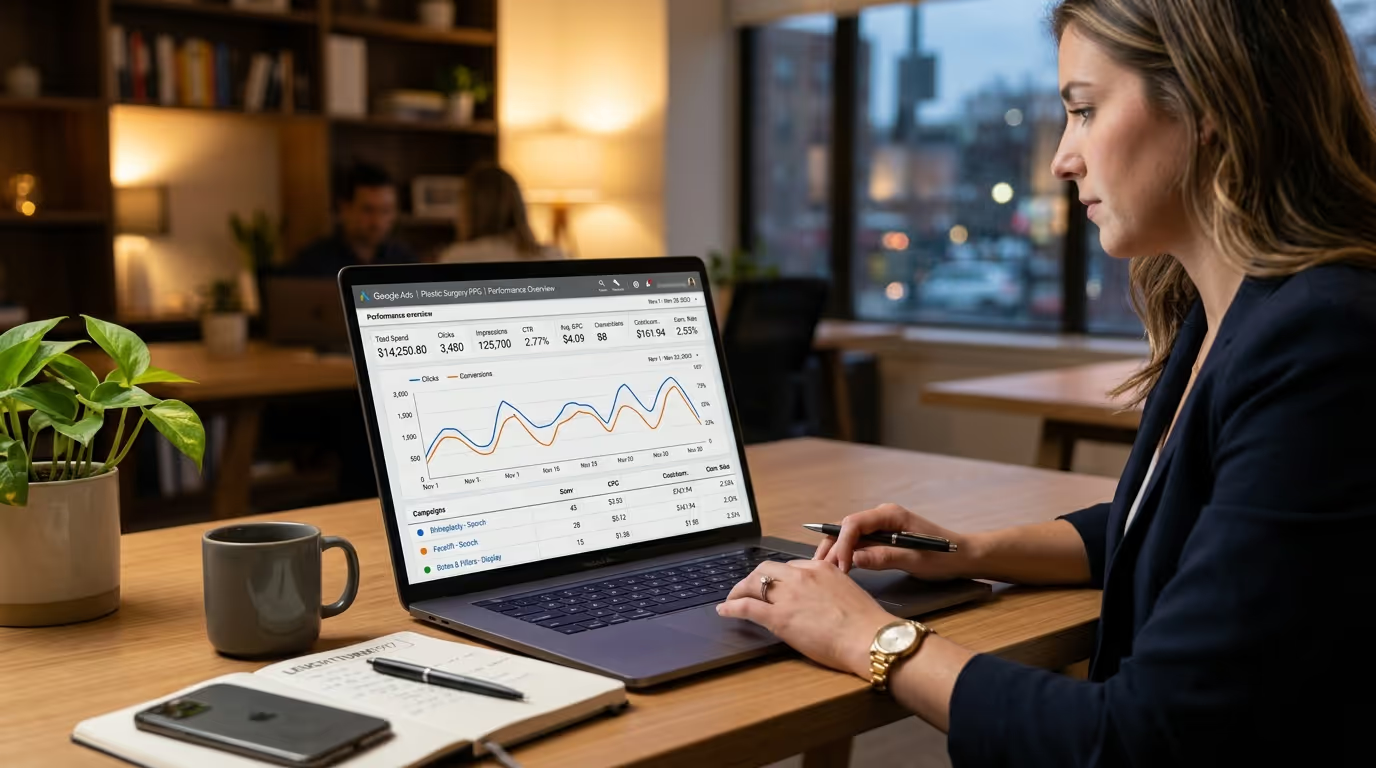
Google Ads (PPC)
The single fastest way to get in front of patients who are actively searching for your procedures. When someone types "rhinoplasty surgeon in [city]," they are not browsing — they are choosing. Google Ads puts you at the top of that search.
What makes it work in 2026:
- Build procedure-specific campaigns with dedicated landing pages. A patient searching for "breast augmentation" should land on a page about breast augmentation — not your homepage. Create separate campaigns for each high-revenue procedure, each with its own landing page optimized for that specific search intent.
- Implement aggressive negative keyword management. Without negative keywords, 20-40% of your budget goes to irrelevant clicks. Add negatives for "cheap," "free," "DIY," "jobs," "salary," "school," "how to become," and any non-commercial intent terms. Review search term reports weekly for the first 90 days, then biweekly.
- Set up call tracking on every campaign. In plastic surgery, 40-60% of conversions come via phone. Without call tracking, you are blind to more than half your results. Use a platform like CallRail, CallTrackingMetrics, or your CRM's built-in tracking.
- Deploy remarketing to recapture the 95% who do not convert on first visit. Most patients visit your site multiple times before taking action. Remarketing keeps you visible throughout their 3-12 month research process. This is particularly critical for high-value surgical procedures where the consideration period is longest.
- Use Smart Bidding with enough conversion data. Google's automated bidding requires at least 30 conversions per month per campaign to optimize effectively. If you are below that threshold, use manual CPC bidding until you build sufficient data.
Plastic surgery Google Ads benchmarks:
| Metric | Benchmark Range | Top Performer |
|---|---|---|
| Cost per click (CPC) | $8 – $25 | Under $12 |
| Click-through rate (CTR) | 3% – 6% | Above 7% |
| Landing page conversion rate | 5% – 12% | Above 15% |
| Cost per lead (CPL) | $80 – $250 | Under $100 |
| Cost per consultation | $200 – $600 | Under $250 |
| ROAS | 5:1 – 15:1 | Above 10:1 |
Budget range: $5,000-$15,000/month for a single-location practice. Scale with ROAS. Practices spending under $5,000/month on Google Ads rarely generate enough data or impressions to compete in surgical keywords.
Common mistakes with plastic surgery PPC:
- Running a single campaign for all procedures instead of procedure-specific campaigns
- Sending all traffic to the homepage instead of dedicated landing pages
- Not tracking phone calls as conversions (massively undercounts actual results)
- Pausing campaigns during "slow" months instead of adjusting budgets and messaging seasonally
- Ignoring ad extensions — sitelinks, callouts, structured snippets, and location extensions all increase click-through rates by 15-30%
Website + Conversion Optimization
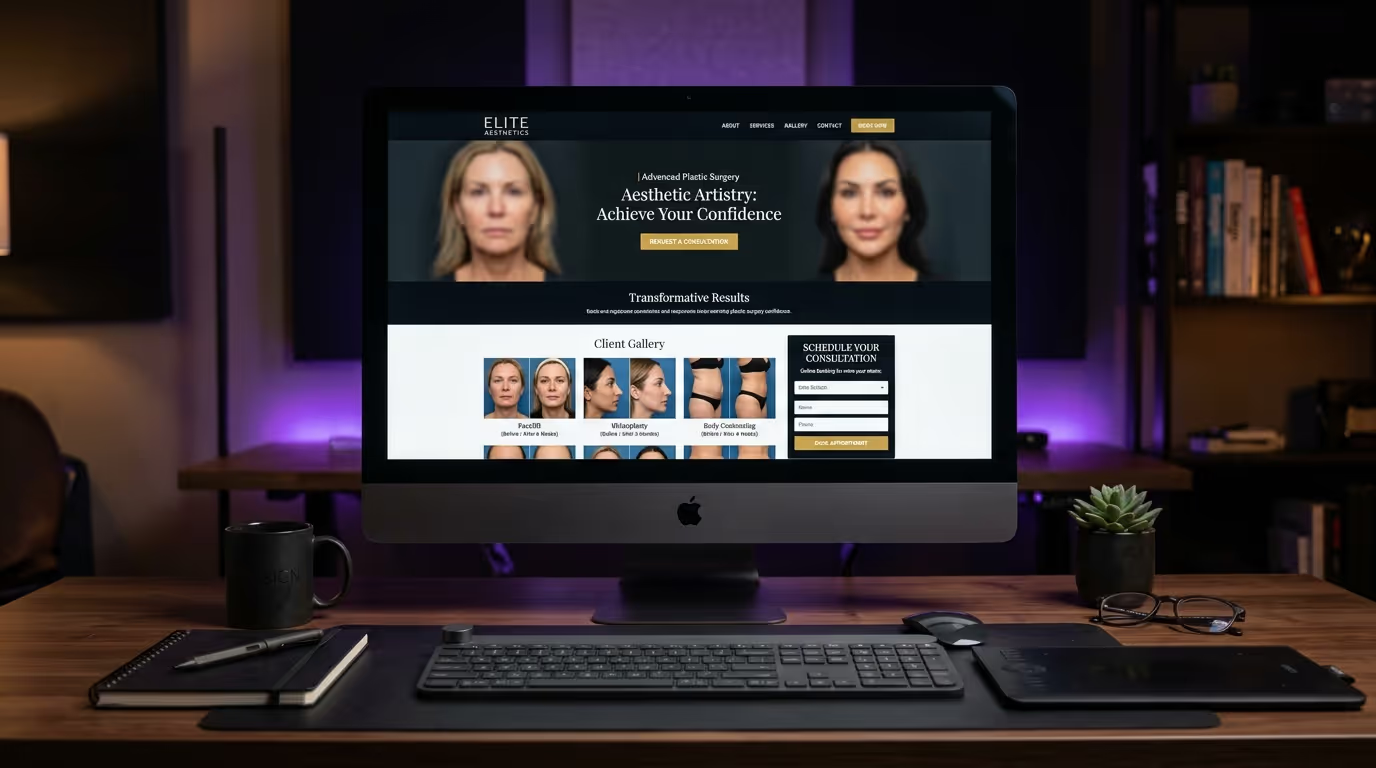
Every channel sends traffic to your website. If your website does not convert, nothing else matters. You are paying to fill a leaking bucket. A high-converting website is the foundation everything else is built on.
A high-converting plastic surgery website requires:
- Procedure-specific pages with before/after galleries, cost information, and embedded consultation forms. Each procedure page should be 1,500-3,000 words, cover the procedure thoroughly, include 8-12 before/after photos, and have at least three calls to action (top, middle, bottom).
- Mobile optimization. 65-75% of traffic is mobile. If your site is not mobile-first in design and functionality, you are failing the majority of your visitors. Test every page on multiple phone sizes.
- Page load time under 3 seconds. For every additional second of load time, conversion rates drop by 7%. Use Google PageSpeed Insights to identify and fix speed issues. Follow the optimization strategies in our website optimization guide.
- Multiple CTAs per page. Top of page (sticky header with "Book Consultation"), mid-page (inline CTA after before/after gallery), and bottom of page (full-width CTA section). Do not make patients hunt for how to contact you.
- Live chat or chatbot during business hours. Patients browsing at 9 PM have questions. A chatbot that can answer basic questions and capture contact information converts visitors who would otherwise leave. AI-powered chatbots in 2026 handle 60-70% of common patient questions without human intervention.
- Click-to-call functionality on every page. On mobile, every phone number should be tappable. Include a floating call button that stays visible as the patient scrolls.
- Virtual consultation option prominently displayed. Virtual consultations have become standard post-pandemic. Offering them reduces the barrier to first contact by 30-40% for out-of-town patients and patients still in early research.
Target conversion rates:
| Traffic Source | Target Conversion Rate |
|---|---|
| Organic search (blog/informational) | 2% – 4% |
| Organic search (procedure pages) | 5% – 8% |
| Google Ads (dedicated landing page) | 8% – 15% |
| Remarketing traffic | 3% – 6% |
| Social media referral | 1% – 3% |
| Direct/referral traffic | 5% – 10% |
Implementation steps for website CRO:
- Install heatmap tracking (Hotjar, Microsoft Clarity) on your top 10 pages to see where patients click, scroll, and drop off
- Audit every procedure page for CTA placement, page speed, and mobile responsiveness
- A/B test headline and CTA copy on your highest-traffic landing pages
- Add social proof (review counts, ratings, trust badges) above the fold on every landing page
- Implement exit-intent popups on procedure pages offering a free consultation or downloadable guide
- Review and optimize form fields — every unnecessary field reduces conversions by 5-10%
Google Business Profile + Local SEO
The Google Maps 3-pack appears above organic results for local searches. If you are not in it, you are invisible to a massive segment of high-intent patients. Local SEO is the most cost-effective long-term investment for any practice that serves a geographic market.
Critical implementation steps:
- Complete every field in your Google Business Profile. Business name, address, phone, hours, website, service categories, attributes, business description, and products/services. A 100% complete profile ranks significantly higher than an incomplete one.
- Generate 5-10 new reviews per month. Automate review requests via SMS post-consultation using your CRM. Time the request for when the patient is most satisfied — typically 7-14 days post-procedure when results are visible. Follow the strategies in our Google reviews guide.
- Post weekly Google Updates. Share before/after highlights (with consent), educational content, or practice news. Weekly posts signal to Google that your business is active, and they appear in your listing for searchers.
- Ensure NAP consistency across 50+ directories. Your Name, Address, and Phone number must be identical across Google, Yelp, Healthgrades, RealSelf, ZocDoc, Vitals, and 40+ other directories. Use a tool like BrightLocal, Yext, or Moz Local to manage this.
- Create location-specific website content. Build pages targeting "[procedure] in [city/neighborhood]" for every major procedure and every geographic area you serve. If you serve patients from three cities, you need three sets of location-specific content.
Local SEO benchmarks for plastic surgery:
| Metric | Target |
|---|---|
| Google Business Profile views/month | 5,000+ |
| GBP actions (calls, directions, website clicks)/month | 500+ |
| Review count | 200+ with 4.5+ rating |
| New reviews/month | 5-10 |
| Map pack ranking for primary procedures | Top 3 |
Before/After Gallery
Your gallery is your most powerful conversion tool. It answers the only question that matters: "Can this surgeon give me the result I want?"
Requirements for a high-converting gallery:
- Organize by procedure and patient profile. Patients want to see results on someone who looks like them. Allow filtering by procedure, body area, age range, and gender where applicable.
- Maintain consistent photography. Same lighting setup, same angles, same background, same distance from camera. Inconsistent photography undermines trust and makes results harder to evaluate. Invest in a dedicated photo area with a controlled lighting setup.
- Include case details for every patient. Goals discussed, technique used, recovery timeline experienced, and time elapsed between photos. Context makes results more credible and educational.
- Place a CTA on every gallery page. "See yourself as our next success story — book your consultation" or similar. The gallery is where emotional decision-making peaks. Do not miss the conversion opportunity.
- Optimize for mobile. Swipeable photo pairs, pinch-to-zoom capability, and fast-loading optimized images. A gallery that is frustrating to browse on a phone loses 65%+ of its audience.
- Update monthly with new cases. A gallery with photos from 2022 signals a practice that is not actively performing procedures or not proud of recent work. Fresh cases demonstrate ongoing expertise.
Common gallery mistakes:
- Using photos with different lighting, angles, or backgrounds (looks unprofessional)
- Including only "home run" results instead of a representative range (patients suspect cherry-picking)
- Missing consent documentation for published photos (compliance risk)
- Hiding the gallery behind navigation instead of featuring it prominently (it should be accessible from every procedure page)
- Not including the gallery on mobile navigation (phone users are your majority)
Tier 2: High Impact Channels
YouTube
The second largest search engine, and the platform where prospective patients spend hours researching procedures and evaluating surgeons. YouTube is the highest-trust video platform for medical content because long-form video allows you to demonstrate expertise in ways that short clips cannot.
Content types that perform for plastic surgeons:
- Procedure explainer videos (3-8 minutes). Walk through what the procedure involves, who it is for, what the recovery looks like, and what results to expect. These rank in both YouTube and Google search results.
- Patient journey documentaries (with consent). Follow a patient from consultation through recovery. These are the most powerful trust-building content a surgeon can create.
- Recovery timeline videos. Day-by-day or week-by-week recovery documentation. These address the number one anxiety patients have — "What will recovery actually be like?"
- Q&A sessions answering common patient questions. Film yourself answering the 10 most common questions you get during consultations. Each question can be a standalone video targeting that specific search query.
- Surgeon vlog and day-in-the-life content. Humanizes the surgeon. Patients choose surgeons they feel they know and trust. Personality content builds parasocial connection that translates to consultations.
YouTube implementation steps:
- Start with one video per week — consistency matters more than production quality
- Invest in a quality microphone (audio quality matters more than video quality) — $100-200 for a Rode or Shure USB mic
- Film in your office with good lighting — a ring light or two softbox lights ($50-150 total)
- Optimize titles for search ("Rhinoplasty Recovery: What to Expect Week by Week")
- Include timestamps, descriptions, and links to your consultation booking page
- Repurpose long-form YouTube content into 30-60 second clips for Instagram Reels and TikTok
YouTube benchmarks for plastic surgeons:
| Metric | 6-Month Target | 12-Month Target |
|---|---|---|
| Subscribers | 500 – 1,000 | 2,000 – 5,000 |
| Monthly views | 5,000 – 15,000 | 20,000 – 50,000 |
| Average view duration | 3+ minutes | 4+ minutes |
| Videos published | 24 – 30 | 50+ |
| Consultation mentions ("found you on YouTube") | 2 – 5/month | 5 – 15/month |
Growth timeline: Expect meaningful traffic after 6-12 months of consistent posting. YouTube is a compounding channel — early videos continue generating views and consultations for years.
Instagram (Surgeon Personal Brand)
Patients choose surgeons, not practices. The surgeon's personal Instagram account — showcasing results, education, personality, and behind-the-scenes content — is more powerful than any practice account. This is where the personal brand of the surgeon becomes a patient acquisition engine.
What works on Instagram for surgeons:
- Post 4-5 times per week. Mix of Reels (60% of content), carousels (25%), and single images (15%). The algorithm heavily favors Reels in 2026 — practices that only post static before/after images see declining reach.
- Create educational Reels (30-60 seconds). Explain techniques, bust myths, and show what to expect. Educational content generates 2-3x more saves and shares than promotional content.
- Post before/after carousels in swipe format. Still the bread and butter of aesthetic Instagram. Include the procedure name, units/details, and a brief description of the patient's goals in the caption.
- Share behind-the-scenes content. Prep, marking, post-op check-ins (with consent). This demystifies the process and reduces patient anxiety.
- Include personal content. Travel, family, interests, hobbies. Patients want to feel like they know their surgeon as a human. Accounts that mix 80% professional with 20% personal outperform 100% clinical accounts.
- Use Stories daily for engagement. Polls, Q&A stickers, and "this or that" comparisons drive engagement metrics that boost your overall account visibility.
Instagram content calendar template for surgeons:
| Day | Content Type | Example |
|---|---|---|
| Monday | Educational Reel | "3 things I wish patients knew about rhinoplasty" |
| Tuesday | Before/after carousel | Facelift result — 6 weeks post-op |
| Wednesday | Behind the scenes | "Prepping for a tummy tuck — here's my process" |
| Thursday | Patient testimonial or Q&A | Video testimonial from a recent patient |
| Friday | Personal or practice culture | Team photo, office tour, or surgeon's weekend plans |
For a complete social media approach, see our guides on med spa Instagram marketing and creating a social media calendar.
Email + SMS Nurture
Most practices capture leads and then fail to follow up effectively. A patient who requests a consultation and does not hear back within 5 minutes has already moved on to the next surgeon. Your email marketing system and SMS strategy are what convert interest into consultations.
The nurture system for plastic surgery leads:
- Automated SMS within 5 minutes of form submission. "Hi [First Name], thanks for reaching out about [procedure] at [Practice Name]. Our patient coordinator will be calling you within the hour. In the meantime, here's our [procedure] gallery: [link]."
- Automated email sequence: 7-10 emails over 30 days. Plastic surgery requires a longer nurture sequence than med spa treatments because the decision cycle is longer.
- Email 1 (Day 0): Welcome + what to expect in consultation
- Email 2 (Day 2): Surgeon credentials + philosophy
- Email 3 (Day 5): Before/after gallery for their procedure of interest
- Email 4 (Day 8): Patient testimonial video
- Email 5 (Day 12): Financing options explained
- Email 6 (Day 16): Recovery timeline and preparation guide
- Email 7 (Day 21): FAQ addressing common concerns
- Email 8 (Day 25): "Still considering? Here's what our patients say"
- Email 9 (Day 28): Consultation reminder or rebooking prompt
- Email 10 (Day 30): Final touch — personal note from the surgeon
- Procedure-specific drips. Rhinoplasty leads get rhinoplasty content. Breast augmentation leads get breast augmentation content. Generic "our practice is great" emails do not convert surgical patients.
- Re-engagement campaigns for cold leads. Build 3-6 month reactivation sequences for leads that went cold. Surgical decisions are delayed frequently, and the lead that goes silent in March may be ready in September.
- Post-consultation follow-up for patients who did not book. This is the highest-leverage automation in your system. 40-60% of consultation patients who do not book on the spot can be recovered with a structured follow-up sequence.
Plastic surgery email/SMS benchmarks:
| Metric | Target |
|---|---|
| Speed to lead (first contact) | Under 5 minutes |
| Email open rate (nurture sequence) | 35% – 50% |
| SMS response rate | 40% – 60% |
| Lead-to-consultation booking rate | 35% – 55% |
| Nurture sequence conversion (to consult) | 15% – 25% |
Practices with automated nurture sequences convert 40-60% more leads into consultations than those relying on manual follow-up.
RealSelf
RealSelf is where plastic surgery patients go to research. 10 million+ monthly visitors specifically researching cosmetic procedures. A complete, active RealSelf profile is non-negotiable. Paid placement is strategic for competitive markets and high-revenue procedures.
Implementation steps:
- Complete your profile with credentials, bio, and an extensive before/after gallery (minimum 20 cases)
- Answer community questions weekly — aim for 5-10 answers per week targeting your core procedures
- Actively request reviews from satisfied patients on the platform
- Evaluate paid placement ($500-$2,000/month) for your highest-revenue procedures in competitive markets
- Track consultations sourced from RealSelf separately in your CRM
RealSelf benchmarks:
| Metric | Good | Excellent |
|---|---|---|
| Profile views/month | 500+ | 2,000+ |
| Questions answered/month | 10+ | 30+ |
| Reviews | 25+ | 100+ |
| "Worth It" rating | 85%+ | 92%+ |
Tier 3: Supporting Channels
SEO Content and Blog
Long-term compounding channel. Blog content targeting patient questions drives organic traffic that grows month over month. Building a content strategy is the most cost-effective long-term investment a plastic surgery practice can make.
Publish 2-4 posts per month targeting these content types:
- "[Procedure] Cost in [City]" — high intent, converts well. Patients searching cost queries are close to booking.
- "[Procedure] Recovery: What to Expect" — educational, builds trust. These pages often rank in Google's AI Overviews.
- "[Procedure A] vs [Procedure B]" — comparison content ranks well and captures patients evaluating options.
- "Am I a Good Candidate for [Procedure]?" — captures early-stage researchers and builds your email list.
Implementation steps for plastic surgery SEO:
- Conduct keyword research for every procedure you offer — target 50-100 keywords across informational and commercial intent
- Build pillar pages (3,000-5,000 words) for your top 5 revenue-generating procedures
- Create supporting cluster content (1,500-2,500 words each) targeting long-tail keywords around each pillar
- Implement schema markup — FAQ schema, MedicalWebPage schema, and Article schema on all blog content
- Build internal links between all related content, procedure pages, and your consultation booking page
- Optimize your Google My Business profile with weekly posts linked to your new content
SEO benchmarks:
| Timeframe | Organic Traffic Target | Keyword Rankings |
|---|---|---|
| Month 1-3 | Baseline established | 10+ keywords indexed |
| Month 3-6 | 500-1,500 monthly visits | 20+ keywords in top 50 |
| Month 6-12 | 2,000-5,000 monthly visits | 10+ keywords in top 20 |
| Month 12+ | 5,000-15,000 monthly visits | 20+ keywords in top 10 |
Timeline: 6-12 months to see significant organic traffic from blog content. But once it compounds, it becomes your lowest-cost patient acquisition channel.
Meta Ads (Facebook + Instagram)
Lower intent than Google Ads (patients are not searching, they are scrolling), but effective for specific objectives. Understanding how Facebook ads work for aesthetics helps you use them strategically rather than wasting budget.
Effective uses for plastic surgeons:
- Brand awareness in your local market. Keep your practice top-of-mind with patients who are not yet ready to search.
- Promoting events, specials, and new services. Open houses, VIP consultations, and seasonal promotions perform well on Meta.
- Retargeting website visitors. Show ads to people who viewed your procedure pages but did not convert. This is the highest-ROI use of Meta for surgical practices.
- Building custom audiences for lookalike targeting. Upload your patient email list to create a lookalike audience of similar demographics and interests.
Meta Ads benchmarks for plastic surgery:
| Metric | Benchmark |
|---|---|
| CPM (cost per 1,000 impressions) | $15 – $40 |
| CPC (cost per click) | $1.50 – $5.00 |
| CTR (click-through rate) | 0.8% – 2.0% |
| CPL (cost per lead) | $30 – $80 |
| Landing page conversion rate | 5% – 12% |
Budget range: $2,000-$5,000/month. Best used as a supplement to Google Ads, not a replacement. Write compelling ad copy that speaks to patient desires and concerns rather than listing credentials.
Patient Referral Program
Formalize referrals. Do not leave them to chance. Referral patients convert at 3-5x the rate of cold leads and have higher average procedure values. See our complete guide to building a referral program.
Implementation steps:
- Create a structured program with clear incentives: $250-$500 credit for successful referrals
- Generate unique referral links or codes for easy tracking through your CRM system
- Promote the program in post-op communications, on your website, and during follow-up appointments
- Track referral attribution in your CRM to measure the program's ROI
- Send handwritten thank-you notes to referring patients (the personal touch generates more referrals than the financial incentive alone)
Referral program benchmarks:
| Metric | Target |
|---|---|
| % of patients who refer | 15% – 25% |
| Referral conversion rate | 50% – 70% |
| Average referral patient value | 20% – 30% higher than non-referred |
| Referral program ROI | 10:1 – 20:1 |
PR and Media
Third-party validation from media coverage is worth more than any ad. Position the surgeon as a local expert through HARO responses (now Connectively), contributed articles in lifestyle publications, and local news segments.
Implementation steps:
- Create a media kit with the surgeon's credentials, headshot, bio, and areas of expertise
- Subscribe to journalist query services (Connectively, Qwoted, SourceBottle) and respond to 3-5 relevant queries per week
- Pitch local TV stations for seasonal segments ("Summer Body Prep: What Patients Are Asking For")
- Write contributed articles for local lifestyle magazines and regional health publications
- Document all media appearances and feature them on your website and social media
Budget Allocation: Where to Put Your Money
For a Practice Spending $10,000/Month on Marketing
| Channel | Monthly Budget | % of Total | Expected Monthly Leads |
|---|---|---|---|
| Google Ads | $5,000 | 50% | 25 – 50 |
| Website maintenance + CRO | $1,000 | 10% | N/A (improves all channels) |
| SEO + content | $1,500 | 15% | 5 – 15 (growing) |
| Social media management | $1,000 | 10% | 3 – 8 |
| Meta Ads | $1,000 | 10% | 10 – 25 |
| Review management + tools | $500 | 5% | N/A (supports GBP) |
For a Practice Spending $25,000/Month on Marketing
| Channel | Monthly Budget | % of Total | Expected Monthly Leads |
|---|---|---|---|
| Google Ads | $10,000 | 40% | 50 – 100 |
| Meta Ads | $3,000 | 12% | 25 – 60 |
| SEO + content | $3,000 | 12% | 15 – 40 (growing) |
| Video production | $2,500 | 10% | Long-term brand building |
| Website CRO + landing pages | $2,000 | 8% | N/A (improves all channels) |
| Social media management | $2,000 | 8% | 5 – 15 |
| RealSelf | $1,500 | 6% | 5 – 15 |
| Review management + tools | $1,000 | 4% | N/A (supports GBP) |
For a Practice Spending $50,000+/Month on Marketing
At this level, you are running a sophisticated multi-channel operation. Consider reviewing your marketing budget allocation against these benchmarks:
| Channel | Monthly Budget | % of Total | Expected Monthly Leads |
|---|---|---|---|
| Google Ads | $18,000 | 36% | 100 – 200 |
| Meta Ads | $7,000 | 14% | 50 – 120 |
| SEO + content | $5,000 | 10% | 30 – 80 (compounding) |
| Video production + YouTube | $5,000 | 10% | Long-term brand equity |
| Website CRO + development | $3,000 | 6% | N/A (improves all channels) |
| Social media management | $3,000 | 6% | 10 – 25 |
| RealSelf / directories | $3,000 | 6% | 10 – 25 |
| PR + media | $2,500 | 5% | Brand authority |
| Email/SMS marketing | $2,000 | 4% | Re-engagement + nurture |
| Tools + analytics | $1,500 | 3% | N/A (supports measurement) |
The key principle: Google Ads should always be the largest line item for practices focused on patient acquisition. It is the most direct path from "patient searching" to "patient booking." As your organic presence grows through SEO and content, you can gradually shift budget from paid to organic channels — but never eliminate paid entirely.
Building Your Patient Acquisition Funnel
A funnel is not a buzzword. It is the specific sequence a patient moves through from first touch to booked procedure. Every plastic surgery practice has a funnel — most just have a broken one. Understanding the full patient funnel is the difference between spending money on marketing and investing money in growth.
The Five Stages
Stage 1: Awareness
Patient realizes they want to change something about their appearance. They start researching. This stage can last weeks or months for surgical procedures.
Your role: Be present with educational content — YouTube videos, blog posts, social media, and SEO content that answers early-stage questions. "What is a rhinoplasty?" "How much does a facelift cost?" "Am I too old for a tummy tuck?"
Implementation steps:
- Map the top 20 questions patients ask during consultations for each procedure
- Create content (blog, video, or both) answering each question
- Optimize for featured snippets and Google's AI Overviews
- Distribute content across YouTube, blog, and social channels
Stage 2: Consideration
Patient is comparing surgeons. They are reading reviews, browsing before/after galleries, checking credentials, and evaluating websites.
Your role: Show up in Google search (ads and organic), have a compelling website, showcase your gallery, and stack social proof. This is where your Google Business Profile and review count become decisive.
Implementation steps:
- Ensure your website loads in under 3 seconds and looks premium on mobile
- Build a before/after gallery with 50+ cases organized by procedure
- Collect and showcase video testimonials prominently
- Create comparison content: "What makes our approach different"
Stage 3: Decision
Patient is ready to book a consultation. They are choosing between 2-3 surgeons.
Your role: Make booking frictionless — online scheduling, virtual consultation option, fast response time. Your landing pages, CTAs, and follow-up speed determine who wins this stage.
Implementation steps:
- Offer online consultation booking with no account required
- Implement virtual consultation option for out-of-area patients
- Set up speed-to-lead automation (SMS within 60 seconds, call within 5 minutes)
- Create a pre-consultation email with what to expect and how to prepare
Stage 4: Consultation
Patient meets with you. This is a sales conversation, whether you call it that or not. Your consultation process is where marketing investment converts to revenue.
Your role: The marketing team's job is to fill the consultation slot with a qualified, educated patient. The surgeon and patient coordinator's job is to convert the consultation into a booked procedure.
Consultation conversion benchmarks:
| Metric | Below Average | Average | Top Performer |
|---|---|---|---|
| Consultation-to-booking rate | Under 30% | 30% – 45% | 50% – 70% |
| Same-day booking rate | Under 20% | 20% – 40% | 40% – 60% |
| Average days from consult to booking | 14+ days | 7 – 14 days | 1 – 3 days |
If consultation-to-booking rate is below 40%, it is a sales problem, not a marketing problem. Invest in patient coordinator training, consultation scripts, and financing presentation.
Stage 5: Retention + Referral
Patient has their procedure. Now they are your best marketing asset.
Your role: Automated review requests, referral program enrollment, nurture sequences for additional treatments, and re-engagement campaigns. A surgical patient's lifetime value extends far beyond the first procedure — maintenance injectables, skin treatments, and additional surgical procedures can 3-5x the initial procedure value.
Implementation steps:
- Send automated review request 14 days post-procedure
- Enroll in referral program with $250-500 incentive
- Begin cross-selling non-surgical maintenance treatments via email at 60-90 days post-procedure
- Schedule annual re-engagement email highlighting new procedures and touch-up options
- Create a loyalty or membership program for ongoing treatment patients
Funnel Metrics to Track
| Stage | Metric | Benchmark | Tracking Tool |
|---|---|---|---|
| Awareness | Website traffic | Growing 10-15% MoM | Google Analytics |
| Awareness | YouTube views/month | 5,000+ after 6 months | YouTube Studio |
| Consideration | Time on procedure pages | 2+ minutes | Google Analytics |
| Consideration | Gallery page views | Top 5 most viewed pages | Google Analytics |
| Decision | Consultation requests | 5-10% of website visitors | CRM |
| Decision | Speed to lead | Under 5 minutes | CRM automation |
| Consultation | Show rate | 75-85% | Scheduling system |
| Consultation | Booking rate | 40-60% | CRM + POS |
| Retention | Review rate | 30-40% of patients | CRM automation |
| Referral | Referral rate | 15-25% of patients | CRM tracking |
Measuring What Matters: KPIs for Plastic Surgery Marketing
Vanity metrics — followers, impressions, likes — do not pay for your OR suite. Here are the metrics that actually indicate whether your marketing is working. Track these weekly in a centralized dashboard.
The Metrics That Matter
Cost Per Lead (CPL) Total marketing spend / total leads generated.
| Lead Source | Target CPL |
|---|---|
| Google Ads | $80 – $200 |
| Meta Ads | $30 – $80 |
| SEO/Organic | $10 – $30 (once established) |
| Referral | $0 – $50 (incentive cost) |
| RealSelf | $100 – $300 |
Cost Per Consultation Total marketing spend / consultations booked. Target: $150-$500.
Cost Per Acquisition (CPA) Total marketing spend / procedures booked from marketing-sourced patients. Target: $800-$2,000. For high-value procedures (rhinoplasty, facelift, mommy makeover), a CPA of $2,000-$3,000 is acceptable when the procedure revenue is $10,000-$25,000.
Return on Ad Spend (ROAS) Revenue from marketing-sourced procedures / total marketing spend. Target: 5:1 to 15:1.
Patient Acquisition Cost as % of Revenue Total marketing spend / total revenue from new patients. Target: 8-15%. Practices above 15% are either in a heavy growth investment phase or have conversion problems.
Marketing-Sourced Revenue Total revenue attributable to marketing efforts. This should grow month over month.
Lead-to-Consultation Rate Percentage of leads that become booked consultations. Target: 30-50%.
Consultation-to-Procedure Rate Percentage of consultations that become booked procedures. Target: 40-60%.
Building a Dashboard
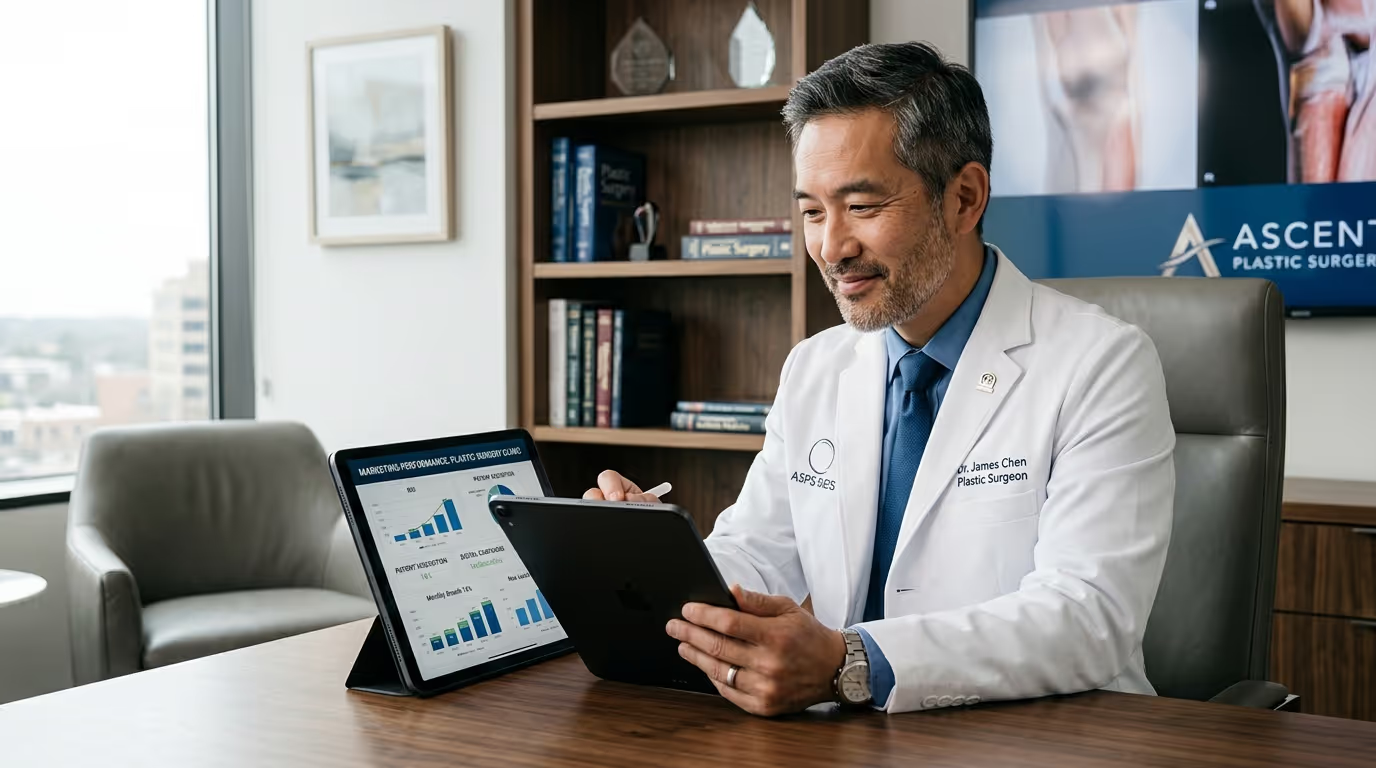
You need a single dashboard where you can see all of these metrics in one place, updated weekly. Tools like Google Looker Studio, HubSpot, or a custom CRM dashboard can pull data from Google Ads, Google Analytics, call tracking, and your practice management system.
Dashboard implementation steps:
- Connect Google Analytics 4, Google Ads, and Google Search Console to Looker Studio
- Integrate call tracking data (CallRail or similar)
- Connect your CRM pipeline data for lead-to-patient attribution
- Build automated weekly email reports for the practice owner and marketing team
- Review the dashboard weekly with the entire marketing team
- Conduct monthly deep-dive analysis comparing results to benchmarks
If your marketing agency cannot show you this dashboard, they are hiding something.
Mistakes That Kill Marketing ROI
Mistake 1: No Follow-Up System
You spend $15,000/month driving leads, and your front desk takes 4 hours to call them back. By that time, they have already booked with the surgeon who texted them back in 3 minutes.
Speed to lead is the single most important factor in converting plastic surgery inquiries. Automate initial responses via SMS and email. Call back within 5 minutes during business hours. This alone can double your consultation booking rate.
Implementation steps:
- Set up automated SMS through your CRM triggered by form submission
- Assign a dedicated patient coordinator whose only job is managing leads
- Implement a call-back queue that prioritizes new leads over returning patient calls
- Create an after-hours auto-response that captures information and promises a callback
- Track and report response time weekly — hold the team accountable
Mistake 2: No Conversion Tracking
If you do not know which channels and campaigns are driving consultations and procedures, you are guessing with your budget. Track everything: form submissions, phone calls, chat conversations, booked appointments. Attribute revenue back to the source.
Implementation steps:
- Install Google Tag Manager on your website
- Set up conversion tracking for all form submissions, click-to-call, and chat initiations
- Implement call tracking with dynamic number insertion
- Configure CRM pipeline stages to track lead source through to procedure completion
- Build UTM parameters into every marketing link (email campaigns, social posts, directory listings)
Mistake 3: Inconsistent Execution
Posting on Instagram 5 times one week and then going silent for a month. Running Google Ads for 3 months and pausing because "it is not working." Writing one blog post and calling it an SEO strategy.
Marketing compounds over time. Inconsistency resets your progress to zero. Commit to a channel for 6 months minimum before evaluating its effectiveness. Use a marketing calendar to maintain consistency.
The compounding effect of consistency:
| Month | Inconsistent Practice | Consistent Practice |
|---|---|---|
| 1-3 | 20 leads/month | 20 leads/month |
| 4-6 | 15 leads/month (momentum lost) | 35 leads/month |
| 7-9 | 25 leads/month (restarted) | 55 leads/month |
| 10-12 | 20 leads/month (paused again) | 80 leads/month |
| Total year-end leads | 240 | 570 |
Same budget. Same channels. The only difference is consistency.
Mistake 4: Trying to Do Everything at Once
A single-surgeon practice does not need to be on TikTok, YouTube, Instagram, Facebook, LinkedIn, RealSelf, AND running Google Ads, Meta Ads, and a blog simultaneously. Start with 2-3 high-impact channels. Master them. Then add layers.
Priority order for most plastic surgery practices:
- Google Ads + landing pages
- Website CRO + Google Business Profile
- Review management
- Instagram + video content
- SEO + blog
- YouTube
- Everything else
Do not move to step 4 until steps 1-3 are working and systematized. Each new channel requires time, budget, and attention that dilutes from existing channels if those channels are not yet optimized.
Mistake 5: Hiring a Generalist Agency
An agency that also does dentists, chiropractors, restaurants, and e-commerce does not understand your business. They do not know the compliance requirements. They do not know which procedures have the highest margins. They do not know what converts a plastic surgery patient.
Questions to ask any marketing agency before hiring:
- How many plastic surgery or medical aesthetics clients do you currently serve?
- What is your average client's consultation-to-procedure conversion rate?
- Can you show me a live reporting dashboard from a current client?
- What is your average client retention length?
- Who specifically will be working on my account?
- How do you handle advertising compliance?
Work with specialists. Or build an in-house team. But do not give your budget to a generalist and expect specialist results. Read our honest review of the best med spa marketing companies for what to look for.
Mistake 6: Ignoring the Consultation Experience
Marketing gets patients through the door. What happens in the consultation room determines whether they book. If your consultation-to-booking rate is below 40%, the problem is not your marketing. It is your sales process.
Invest in:
- Patient coordinator training (role-play monthly, review recorded consultations)
- Consultation follow-up sequences for patients who did not book on the spot
- Financing options presented proactively, not reactively — 60%+ of surgical patients use financing when it is offered early
- A consultation experience that feels premium, not rushed
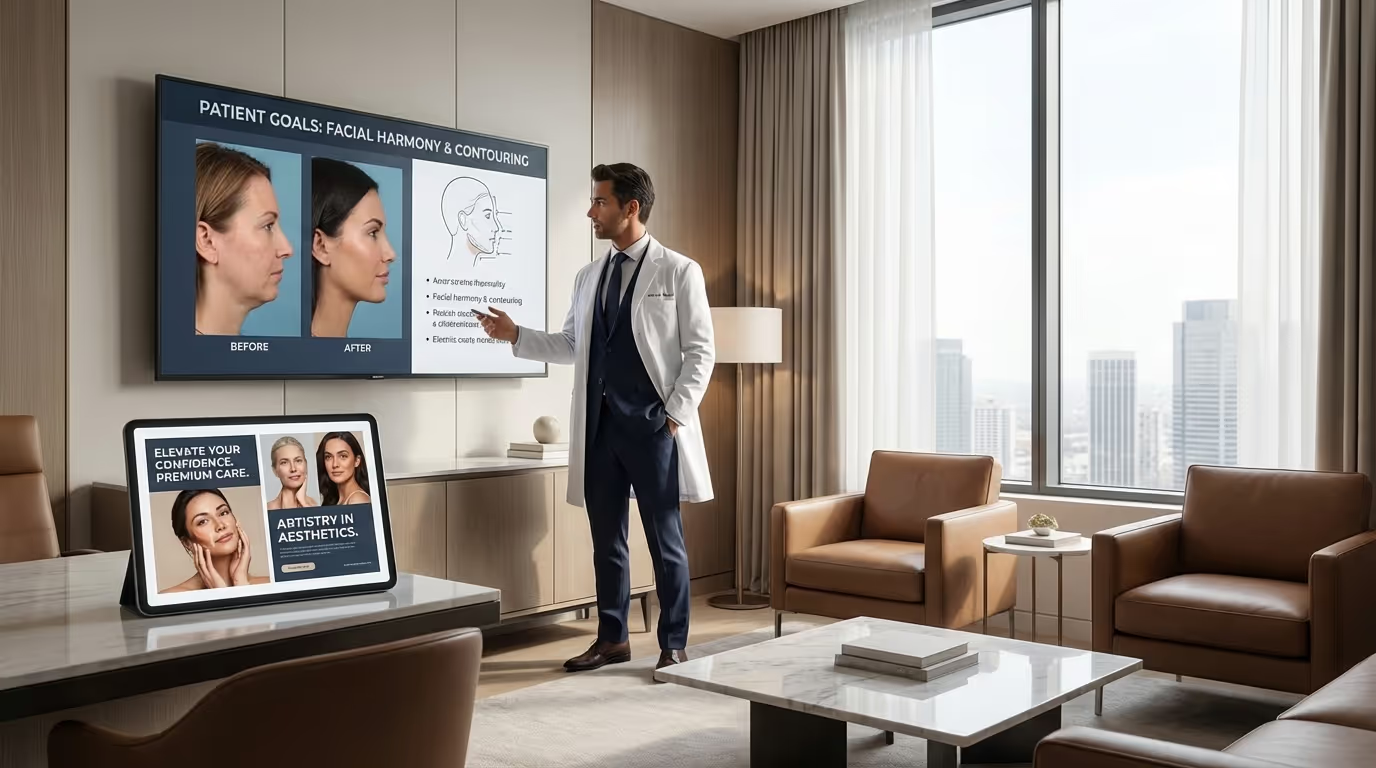
- A dedicated, well-designed consultation room that communicates trust and premium quality
Mistake 7: Not Tracking Patient Lifetime Value
Most practices measure marketing success by first-procedure revenue. But a rhinoplasty patient who becomes a Botox-every-three-months patient, refers two friends, and returns for a blepharoplasty in five years has a lifetime value of $50,000-$100,000+ — not just the $8,000 rhinoplasty.
Implementation steps:
- Track patient lifetime value in your CRM by connecting all treatments, referrals, and retail purchases to the original lead source
- Calculate the average lifetime value per lead source (Google Ads patients vs. referral patients vs. organic patients)
- Use lifetime value data to adjust your acceptable cost per acquisition — a $2,000 CPA is cheap if the average patient generates $25,000 in lifetime revenue
What to Expect: Realistic Timelines
Month 1-3: Foundation
- Google Ads launched and optimized (results visible in 30-60 days)
- Website CRO improvements implemented
- Review automation activated
- Social media cadence established
- Conversion tracking fully operational
- Email/SMS nurture sequences built
Expected results: 20-40 new consultation leads per month from Google Ads. Baseline website conversion rate established. Review generation running at 5+ per month.
Month 3-6: Growth
- Google Ads ROAS stabilized at 5:1+
- SEO content producing early organic traffic
- Social media following growing, engagement increasing
- Email/SMS nurture converting backlog leads
- First batch of video content live
- Marketing ROI becomes clearly trackable
Expected results: 40-80 consultation leads per month across all channels. Organic traffic growing 10-15% monthly. Clear attribution data for every channel. First patients coming from YouTube and blog content.
Month 6-12: Scale
- Google Ads scaled to maximum efficient spend
- SEO content compounding (organic traffic doubling every 3-4 months)
- YouTube and video content driving brand awareness
- Referral program generating 15-25% of new patient volume
- Full funnel operating: awareness to consultation to procedure to referral
Expected results: 80-150+ consultation leads per month. Marketing-sourced revenue exceeding 60% of total new patient revenue. Patient acquisition cost declining as organic channels mature.
Month 12+: Compounding
- Organic search becomes a primary lead source (lowest cost per acquisition)
- Brand recognition in your market reduces cost per click and increases conversion rates
- Patient referral network is self-sustaining
- Marketing becomes a profit center, not a cost center
- You are now playing offense while competitors scramble for the same expensive clicks
The Decision: Build In-House or Hire an Agency
Hire an Agency When:
- You do not have in-house marketing expertise
- You want to move fast and cannot afford 3-6 months of hiring and training
- Your budget is $5,000-$25,000/month (below the threshold for a full in-house team)
- You want access to specialists across multiple channels without multiple salaries
What to look for in a plastic surgery marketing agency:
- Vertical specialization in plastic surgery or medical aesthetics
- Transparent reporting with a live dashboard
- Clear attribution of leads and revenue to marketing spend
- Contractual terms that allow exit if performance targets are not met
- References from current plastic surgery clients
- Understanding of advertising compliance and medical marketing regulations
Build In-House When:
- Your budget exceeds $25,000/month (can support 2-3 full-time marketing roles)
- You want complete control over creative, messaging, and execution
- You have found a marketing director with plastic surgery experience
- You can supplement with freelancers or agencies for specialized work (video, SEO)
In-house team structure for a $25,000+/month marketing budget:
| Role | Salary Range | Responsibilities |
|---|---|---|
| Marketing Director | $70,000 – $100,000 | Strategy, budget, analytics, agency management |
| Content/Social Media Manager | $45,000 – $65,000 | Social media, blog content, photography, video |
| Patient Coordinator | $40,000 – $55,000 | Lead follow-up, consultation booking, nurture |
The Hybrid Model
Many successful practices use a combination: an in-house marketing coordinator who manages day-to-day content and patient communications, with an agency handling paid media, SEO, and strategic planning. This gives you both control and expertise.
Hybrid model allocation:
| Component | Who Handles It | Why |
|---|---|---|
| Google Ads management | Agency | Requires specialized expertise and daily optimization |
| SEO + content strategy | Agency | Requires technical knowledge and competitive analysis |
| Social media content | In-house | Requires authenticity and daily access to the practice |
| Lead follow-up + nurture | In-house | Speed and personal touch are critical |
| Analytics + reporting | Agency (with in-house review) | Data interpretation drives budget decisions |
| Video production | Split (in-house filming, agency editing) | Authenticity + professional polish |
Your Marketing Checklist: 75 Action Items
Before you close this guide, here is a comprehensive checklist organized by priority. Work through it top to bottom.
Foundation (Complete These First):
- [ ] Set up call tracking on every marketing channel
- [ ] Install Google Analytics 4 and Google Tag Manager
- [ ] Claim and fully complete Google Business Profile
- [ ] Audit website for mobile responsiveness and speed
- [ ] Set up CRM with pipeline stages matching your funnel
- [ ] Create conversion tracking for all form submissions, calls, and chats
- [ ] Build automated SMS response for new lead inquiries (5-minute rule)
- [ ] Design dedicated landing pages for top 3 procedures
Google Ads (Month 1):
- [ ] Launch procedure-specific search campaigns for top 3 procedures
- [ ] Build negative keyword lists (200+ negative keywords at launch)
- [ ] Set up call extensions, sitelinks, and callout extensions
- [ ] Configure remarketing audiences and campaigns
- [ ] Establish weekly optimization review cadence
Website (Month 1-2):
- [ ] Optimize procedure pages with CTAs, galleries, and cost information
- [ ] Implement live chat or chatbot
- [ ] Add virtual consultation booking option
- [ ] Install heatmap tracking on top 10 pages
- [ ] A/B test main landing page headline and CTA
Reviews and Reputation (Ongoing):
- [ ] Automate post-consultation review requests via SMS
- [ ] Respond to all Google reviews within 24 hours
- [ ] Build review collection into your post-procedure workflow
- [ ] Monitor and respond to reviews on RealSelf, Yelp, and Healthgrades
Content and SEO (Month 2-6):
- [ ] Complete keyword research for all procedures
- [ ] Build content calendar with 8-12 posts for first 3 months
- [ ] Publish first pillar page for highest-revenue procedure
- [ ] Launch weekly blog publishing cadence
- [ ] Submit sitemap to Google Search Console
Social Media (Month 2-3):
- [ ] Set up Instagram content calendar (4-5 posts/week)
- [ ] Launch first YouTube video
- [ ] Begin daily Instagram Stories
- [ ] Schedule first month of content in advance
Your Marketing Is Either Growing Your Practice or Shrinking It
There is no neutral. In a market where your competitors are investing in Google Ads, building YouTube channels, and running sophisticated nurture sequences, standing still means falling behind. Every month you delay a serious marketing investment is a month your competitors get further ahead.
The practices that will dominate in 2026 and beyond are not the ones with the biggest budgets. They are the ones with the smartest systems — the right channels, the right messaging, the right follow-up, and the right tracking to know exactly what is working.
Start with the foundation: Google Ads, a high-converting website, Google Business Profile, and a 5-minute lead response system. Build from there with SEO content, video, and social media. Track everything. Optimize continuously. And give every channel 6 months before you judge it.
The math is on your side. A single rhinoplasty or breast augmentation pays for an entire month of marketing spend. The only question is whether you are capturing those patients — or losing them to the surgeon down the street who is.
Book a Strategy Call — we work exclusively with plastic surgeons and med spas. We will audit your current marketing, map your patient acquisition funnel, and show you exactly where the gaps are costing you consultations. One call. No pressure. Just clarity on what needs to happen next.