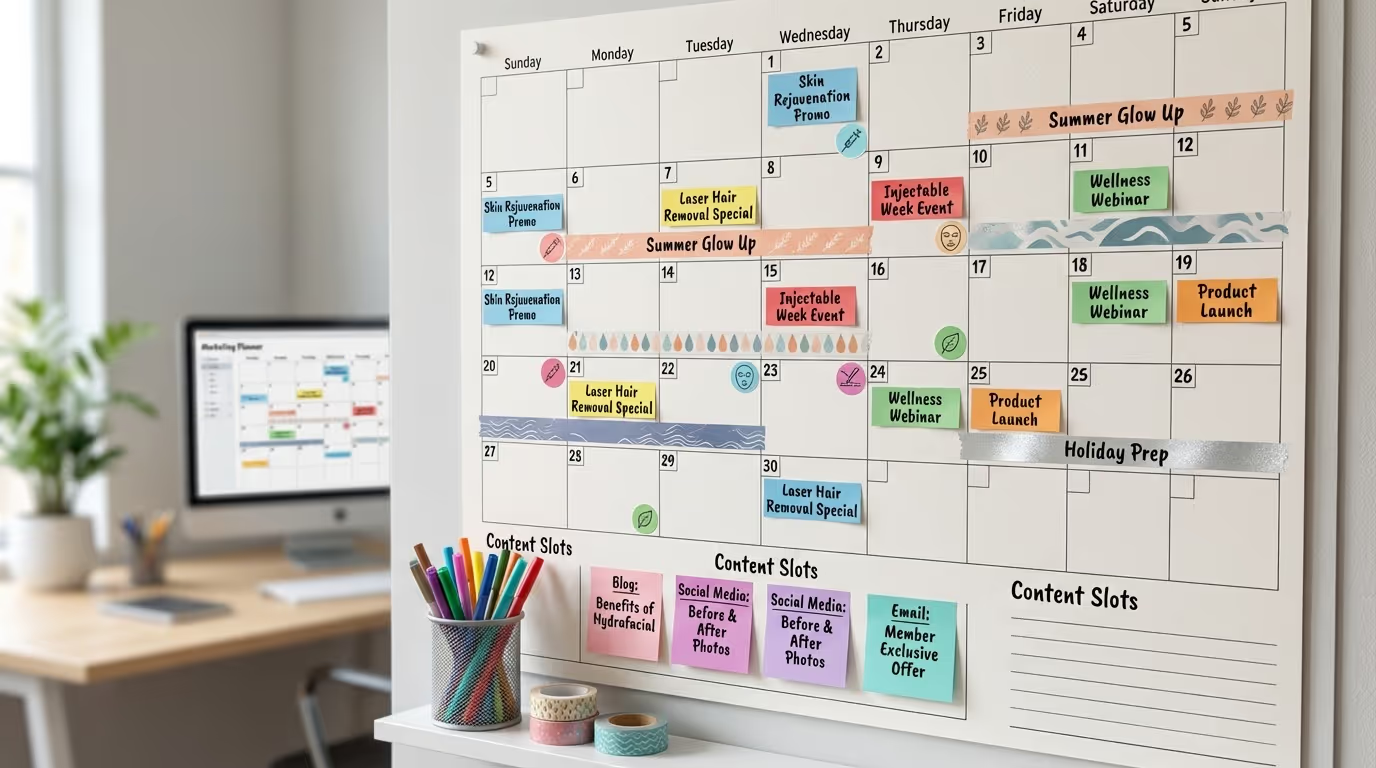


Most med spas do not have a marketing plan. They have a collection of tactics -- a Google Ads campaign here, some Instagram posts there, maybe a Groupon deal they regret -- but no actual plan tying it all together.
That is why 70% of med spas plateau within their first three years. Not because their injectors lack skill or their equipment is outdated. Because they never built the strategic foundation that turns marketing spend into predictable revenue.
This guide gives you the exact framework we use to build med spa marketing plans that drive measurable growth. Seven steps, concrete numbers, a fillable template, and the benchmarks you need to know if your plan is working or burning money. No theory. No fluff. Just the playbook.
Why Most Med Spa Marketing Fails
Before we build the plan, let us be honest about why most medspa marketing underperforms.
The Four Killers of Marketing ROI
| Problem | Symptom | Impact |
|---|---|---|
| No clear goals | "Get more patients" with no numbers attached | Cannot measure success or diagnose failure |
| Channel chaos | Every channel runs independently | Inconsistent messaging, duplicated effort |
| Budget guessing | Monthly spend "feels right" instead of calculated | Over or under-investing in every channel |
| Zero tracking | Cannot attribute patients to marketing channels | Making decisions blind |
No clear goals. "Get more patients" is not a goal. It is a wish. Without revenue targets reverse-engineered into lead volume, cost-per-acquisition, and conversion benchmarks, you cannot measure success or diagnose failure.
Channel chaos. You are running Facebook ads, posting on TikTok, emailing your list, and paying for SEO -- but none of it connects. Each channel operates in isolation with no unified strategy or shared messaging.
Budget guessing. You picked a monthly number that "felt right" instead of calculating what it actually costs to acquire a patient and what lifetime value justifies that spend.
Zero tracking. You cannot improve what you do not measure. If you cannot tell me your cost per lead by channel right now, your marketing plan has a hole in it.
A real med spa marketing plan solves all four problems. Here is how to build one.
Step 1: Audit Your Current Marketing
You cannot plot a route without knowing your starting point. Before you spend another dollar, run a full audit of your existing marketing performance.
What to Audit
Implementation Steps:
- Website performance. Pull your Google Analytics data for the last 90 days. Document total sessions, bounce rate, average session duration, and -- most importantly -- conversion rate. If your med spa website converts below 3% of visitors into leads, there is a problem worth fixing before you drive more traffic. For a deeper dive, see our guide on med spa website design best practices.
- Paid advertising. For every active campaign (Google Ads, Meta Ads, etc.), document monthly spend, impressions, clicks, leads generated, and cost per lead. Calculate your return on ad spend (ROAS). If you are spending money on Google Ads without knowing your ROAS, stop reading and go check.
- Organic presence. How many keywords do you rank for? What is your Google Business Profile rating and review count? How does your local SEO stack up against the top three competitors in your market?
- Social media. Document follower counts, average engagement rate, and -- here is what matters -- how many leads each platform actually generates per month. Vanity metrics are irrelevant.
- Email and SMS. Open rates, click rates, and revenue attributed to your email marketing and SMS marketing efforts.
- Referral and retention. What percentage of revenue comes from repeat patients? Do you have an active referral program?
The Audit Scorecard
| Channel | Status Options | Key Metric to Evaluate |
|---|---|---|
| Website | Performing / Underperforming / Not Active | Conversion rate (target: 3-5%+) |
| Google Ads | Performing / Underperforming / Not Active | ROAS (target: 3-5x+) |
| Meta Ads | Performing / Underperforming / Not Active | CPL (target: $8-$35) |
| SEO/Organic | Performing / Underperforming / Not Active | Keyword rankings + traffic trend |
| Social Media | Performing / Underperforming / Not Active | Leads generated (not followers) |
| Email/SMS | Performing / Underperforming / Not Active | Revenue attributed |
| Referrals | Performing / Underperforming / Not Active | % of new patients from referrals |
| Retention | Performing / Underperforming / Not Active | Repeat visit rate |
Summarize your audit in this scorecard. For each channel, assign a status. This becomes the foundation for every decision that follows.
Step 2: Define Your Ideal Patient Avatar
Generic marketing attracts generic leads. The med spas that grow fastest are ruthlessly specific about who they serve.
Your ideal patient avatar (IPA) is not "women 25-55 who want to look younger." That describes half the population. Your IPA defines the specific person your practice is best positioned to serve profitably.
Build Your Avatar
Implementation Steps:
- Demographics. Narrow your age range to a 10-year band. Define gender split, household income range ($75K+, $100K+, etc.), and zip codes within your service area. Pull this data from your CRM -- your existing patient base tells you exactly who your ideal patient looks like.
- Psychographics. What motivates them? Is it confidence before a major life event? Maintenance of a professional image? Anti-aging anxiety? The language you use in your marketing depends entirely on this.
- Treatment preferences. Which services does your ideal patient start with? What is the typical treatment journey -- do they come in for Botox and graduate to laser resurfacing? Understanding the patient journey lets you design marketing funnels that match real behavior. See our med spa funnel guide for journey mapping.
- Objections. What stops them from booking? Price sensitivity? Fear of looking "overdone"? Not knowing which treatment they need? Your content strategy should systematically dismantle every objection.
- Discovery behavior. Where do they search? Google? Instagram? Do they ask friends? Read reviews? Your channel selection in Step 4 depends on knowing exactly where your ideal patient spends attention.
Avatar Template
| Attribute | Primary Avatar | Secondary Avatar |
|---|---|---|
| Name | "Executive Emma" | "Bridal Sarah" |
| Age range | 38-48 | 26-34 |
| Income | $150K+ household | $100K+ household |
| Motivation | Professional confidence, anti-aging maintenance | Event preparation, first-time exploration |
| Entry treatment | Botox or HydraFacial | Botox or lip filler |
| Treatment journey | Botox → filler → laser → body contouring | Lip filler → Botox → skincare regimen |
| Top objection | "How do I look natural?" | "How much will this cost?" |
| Discovery channel | Google search + friend referral | Instagram + friend referral |
| Annual value | $4,000-$8,000 | $2,000-$4,000 |
Most practices should define two to three avatars maximum. More than that and your messaging gets diluted.
Step 3: Set Revenue Goals and Work Backwards to Marketing KPIs
This is where your med spa marketing plan becomes a math problem -- and that is a good thing. Math is fixable. Guessing is not.
The Reverse-Engineering Framework
Implementation Steps:
- Start with your annual revenue goal
- Break it into monthly targets accounting for seasonal variation
- Calculate new patients needed per month
- Calculate leads needed based on conversion rate
- Determine required marketing budget based on target CPL
Example Calculation:
| Step | Metric | Value |
|---|---|---|
| Annual revenue goal | Revenue target | $1,800,000 |
| Growth needed | Incremental annual revenue | $600,000 |
| Monthly incremental target | Growth / 12 | $50,000 |
| Average patient LTV | Lifetime value | $2,500 |
| New patients needed monthly | $50K / $2,500 | 20 |
| Lead-to-patient conversion | Industry benchmark | 25% |
| Leads needed monthly | 20 / 0.25 | 80 |
| Target blended CPL | Channel average | $55 |
| Required monthly budget | 80 x $55 | $4,400 |
Now you have a plan grounded in numbers. Every month you can check: Are we hitting 80 leads? Is our conversion rate holding at 25%? Is our CPL within range?
The KPIs That Matter
Track these weekly at minimum:
| KPI | What It Measures | Target Range | Review Frequency |
|---|---|---|---|
| Cost per lead (CPL) | Lead acquisition efficiency | $25-$75 | Weekly |
| Cost per acquisition (CPA) | Patient acquisition cost | $80-$200 | Weekly |
| Lead-to-appointment rate | Front desk conversion | 30-50% | Weekly |
| Show rate | Appointment attendance | 80-90% | Weekly |
| Average transaction value | Revenue per visit | $350-$800 | Monthly |
| Patient lifetime value (LTV) | Retention effectiveness | $2,500-$5,400 | Quarterly |
| Return on ad spend (ROAS) | Campaign profitability | 3-8x | Weekly |
| Rebook rate | Patient return behavior | 60%+ | Monthly |
| Referral rate | Word-of-mouth generation | 15%+ of new patients | Monthly |
If you are not tracking these, your med spa marketing plan is incomplete. For more on the metrics that drive growth, read our breakdown of med spa KPIs and marketing ROI.
Step 4: Choose Your Channels Based on Practice Maturity
Not every med spa should be on every channel. Your stage of growth determines where your marketing dollars work hardest.
Channel Strategy by Practice Stage
New Practice (0-2 Years, Under $500K Revenue)
| Channel | Priority | Monthly Allocation | Why |
|---|---|---|---|
| Google Ads | Must-have | 40-45% | Captures existing demand immediately |
| GBP optimization + reviews | Must-have | Included in SEO | Foundation of local visibility |
| Basic SEO + website | Must-have | 20-25% | Long-term investment starts now |
| Focus here | 15-20% | One social platform, executed well | |
| Email/SMS | Start building | 5-10% | Build database from day one |
Why this order: You need patients now. Paid search captures existing demand. Everything else is a long game you cannot afford to play exclusively at this stage. See our new med spa marketing guide for a complete startup playbook.
Established Practice (2-5 Years, $500K-$1.5M Revenue)
| Channel | Priority | Monthly Allocation | Why |
|---|---|---|---|
| Google Ads (expanded) | Core | 25-30% | Expanded keyword coverage + retargeting |
| SEO + content | Core | 20-25% | Compounding organic returns |
| Meta Ads | Add | 15-20% | Awareness + promotion campaigns |
| Email/SMS | Core | 10-15% | Leverage existing patient database |
| Referral program | Formalize | Included in operations | Lowest cost acquisition channel |
| Social media | Expand | 10-15% | Multi-platform presence |
Why this order: You have a patient base to leverage and enough data to optimize. This is when SEO starts delivering compounding returns.
Scaling Practice (5+ Years, $1.5M+ Revenue)
| Channel | Priority | Monthly Allocation | Why |
|---|---|---|---|
| All of the above | Optimized | Per above | Established channels optimized |
| Video marketing (YouTube, TikTok) | Add | 5-10% | Brand building and authority |
| Advanced retargeting + lookalikes | Optimize | Included in ads | Maximize ad efficiency |
| PR + media | Add | 5-10% | Category leadership |
| Community events + partnerships | Add | 5% | Local authority |
Why this order: You are optimizing for market dominance. The goal shifts from patient acquisition to brand authority and category leadership.
Step 5: Allocate Your Med Spa Marketing Budget
Here is where most owners freeze. They do not know what to spend, so they either underspend (and get no results) or overspend on the wrong things.
Budget by Revenue Tier
The industry standard for growth-focused med spas is 10 to 15% of gross revenue allocated to marketing.
New Practice ($3,000-$5,000/Month Total Marketing)
| Channel | Allocation | Monthly Spend | Expected Monthly Leads |
|---|---|---|---|
| Google Ads | 45% | $1,350-$2,250 | 20-40 |
| Website + SEO | 25% | $750-$1,250 | 5-15 (growing) |
| Social media | 15% | $450-$750 | 3-8 |
| Email/SMS platform | 5% | $150-$250 | 5-15 (from database) |
| Creative + content | 10% | $300-$500 | Supports all channels |
| Total | 100% | $3,000-$5,000 | 33-78 |
Established Practice ($5,000-$10,000/Month)
| Channel | Allocation | Monthly Spend | Expected Monthly Leads |
|---|---|---|---|
| Google Ads | 30% | $1,500-$3,000 | 30-60 |
| Meta Ads | 20% | $1,000-$2,000 | 30-80 |
| SEO + content | 25% | $1,250-$2,500 | 20-60 (growing) |
| Social media | 10% | $500-$1,000 | 5-15 |
| Email/SMS | 5% | $250-$500 | 20-50 (from database) |
| Creative + content | 10% | $500-$1,000 | Supports all channels |
| Total | 100% | $5,000-$10,000 | 105-265 |
Scaling Practice ($10,000-$20,000/Month)
| Channel | Allocation | Monthly Spend | Expected Monthly Leads |
|---|---|---|---|
| Google Ads | 25% | $2,500-$5,000 | 50-100 |
| Meta Ads | 20% | $2,000-$4,000 | 60-160 |
| SEO + content | 20% | $2,000-$4,000 | 50-150 (growing) |
| Video + brand | 10% | $1,000-$2,000 | Brand building |
| Social media | 10% | $1,000-$2,000 | 10-30 |
| Email/SMS | 5% | $500-$1,000 | 40-100 (from database) |
| PR + partnerships | 5% | $500-$1,000 | Brand building |
| Creative + content | 5% | $500-$1,000 | Supports all channels |
| Total | 100% | $10,000-$20,000 | 210-540+ |
These are starting frameworks, not gospel. Your specific market, competition level, and growth goals will shift the allocations. For a deeper breakdown on budget planning, see our med spa marketing budget guide. For paid media investment specifically, see our guide on med spa Google Ads costs.
Step 6: Build Your 90-Day Launch Calendar
A plan without a timeline is just a document that collects dust. Your first 90 days should follow a specific sequence that builds on itself.
Month 1: Foundation
Implementation Steps:
- Complete website audit and implement conversion optimization fixes
- Set up or optimize Google Business Profile
- Launch Google Ads search campaigns for top 3-5 revenue-generating treatments
- Implement call tracking and form tracking across all channels
- Set up CRM or patient management system for lead tracking
- Begin SEO keyword research and content calendar development
- Establish baseline metrics for all KPIs from Step 3
Month 1 Benchmarks:
| Metric | Target |
|---|---|
| Google Ads campaigns live | 3-5 campaigns |
| Tracking infrastructure | 100% of channels tracked |
| GBP optimization | 100% complete |
| Baseline KPI dashboard | Published and reviewed |
Month 2: Expansion
Implementation Steps:
- Launch secondary ad campaigns (retargeting, Meta Ads if budget allows)
- Publish first round of SEO-optimized blog content (4 posts minimum)
- Activate email/SMS marketing to existing patient database
- Launch or formalize referral program
- Implement review generation system targeting 5+ new reviews per month
- First monthly performance review -- adjust bids, budgets, and messaging
Month 2 Benchmarks:
| Metric | Target |
|---|---|
| Total leads generated | 40-80 |
| Lead response time | Under 5 minutes |
| Blog posts published | 4+ |
| New Google reviews | 5+ |
Month 3: Optimization
Implementation Steps:
- Analyze 60 days of data to identify top-performing campaigns and content
- Double down on what is working, cut what is not
- A/B test landing pages, ad copy, and email subject lines
- Begin planning seasonal promotions for the next quarter
- Build out content calendar for months 4-6
- Second monthly review with focus on CPA and ROAS trends
Month 3 Benchmarks:
| Metric | Target |
|---|---|
| Blended ROAS | 2-3x (building toward 3-5x) |
| Cost per lead | Decreasing trend |
| Lead-to-patient conversion | 25%+ |
| Organic traffic | Baseline established, upward trend |
The critical mistake is trying to launch everything at once. Sequence your efforts so each month builds on the last. Speed matters, but so does execution quality.
Step 7: Set Up Tracking and Reporting
Your med spa marketing plan is only as good as your ability to measure results and make adjustments. Set up these systems before you spend your first dollar.
Essential Tracking Infrastructure
Implementation Steps:
- Call tracking. Every phone call from every marketing channel should be tracked and recorded. Use CallRail or similar. You need to know which campaigns generate calls and whether your front desk converts them.
- Form and chat tracking. Every website form submission, chatbot interaction, and online booking should be attributed to a traffic source.
- CRM pipeline. Every lead should flow into a CRM where you can track their journey from first touch to booked appointment to completed treatment. This is how you calculate true cost per acquisition.
- Google Analytics 4. Configured with conversion events for form submissions, phone calls, and online bookings. Set up custom reports that show performance by channel.
- Ad platform conversion tracking. Google Ads and Meta Ads both need proper conversion tracking installed. Without it, the algorithms cannot optimize your campaigns and your marketing ROI data is useless.
Reporting Cadence
| Cadence | What to Review | Who | Time Required |
|---|---|---|---|
| Weekly | CPL, lead volume, ad spend by channel | Marketing team | 30 minutes |
| Monthly | Full KPI dashboard, CPA, ROAS, pipeline value | Leadership + marketing | 60 minutes |
| Quarterly | Strategic review, channel reallocation, goal adjustment | Full team | 2 hours |
Do not overcomplicate reporting. A single dashboard that your team reviews weekly will outperform a 40-page report that nobody reads.
Common Tracking Mistakes
| Mistake | Impact | Fix |
|---|---|---|
| No call tracking | Cannot attribute 40-60% of leads | Install CallRail with unique numbers per channel |
| No UTM parameters | Cannot track organic and social leads | Add UTM parameters to every link |
| No CRM source tagging | Cannot calculate true CPA | Tag every lead with source upon entry |
| Ignoring offline conversions | Undervaluing certain channels | Import appointment data back to ad platforms |
| Tracking too many metrics | Analysis paralysis | Focus on the 7-10 KPIs from Step 3 |
Med Spa Marketing Plan Template
Use this framework to build your own plan. Fill in each section with your specific numbers and details.
PRACTICE OVERVIEW
| Field | Your Answer |
|---|---|
| Practice name | _________________ |
| Location(s) | _________________ |
| Years in operation | _________________ |
| Current annual revenue | $_________________ |
| Top 5 treatments by revenue | _________________ |
| Number of active patients | _________________ |
| Current marketing spend | $_________________ /month |
TARGET PATIENT PROFILE
| Field | Primary Avatar | Secondary Avatar |
|---|---|---|
| Avatar name | _________________ | _________________ |
| Age range | _________________ | _________________ |
| Household income | $_________________ | $_________________ |
| Primary motivation | _________________ | _________________ |
| Key objections | _________________ | _________________ |
| Discovery channels | _________________ | _________________ |
| Entry treatment | _________________ | _________________ |
| Expected LTV | $_________________ | $_________________ |
REVENUE GOALS
| Metric | Current | 90-Day Target | 6-Month Target | 12-Month Target |
|---|---|---|---|---|
| Annual revenue target | $_______ | — | — | $_______ |
| Monthly incremental revenue | $_______ | $_______ | $_______ | $_______ |
| Average patient LTV | $_______ | $_______ | $_______ | $_______ |
| New patients needed/month | _______ | _______ | _______ | _______ |
| Leads needed/month | _______ | _______ | _______ | _______ |
| Target blended CPL | $_______ | $_______ | $_______ | $_______ |
| Monthly marketing budget | $_______ | $_______ | $_______ | $_______ |
CHANNEL STRATEGY
| Channel | Monthly Budget | Target CPL | Monthly Lead Goal | Owner | Priority |
|---|---|---|---|---|---|
| Google Ads | $_______ | $_______ | _______ | _______ | _______ |
| Meta Ads | $_______ | $_______ | _______ | _______ | _______ |
| SEO/Content | $_______ | N/A | _______ | _______ | _______ |
| Email/SMS | $_______ | N/A | _______ | _______ | _______ |
| Social Media | $_______ | N/A | _______ | _______ | _______ |
| Referral Program | $_______ | $_______ | _______ | _______ | _______ |
| Other | $_______ | $_______ | _______ | _______ | _______ |
90-DAY MILESTONES
| Milestone | Month 1 | Month 2 | Month 3 |
|---|---|---|---|
| Key actions | _____________ | _____________ | _____________ |
| Lead target | _______ | _______ | _______ |
| Revenue target | $_______ | $_______ | $_______ |
| Budget | $_______ | $_______ | $_______ |
KPI TARGETS
| KPI | Current | 90-Day Target | 6-Month Target |
|---|---|---|---|
| Monthly leads | _______ | _______ | _______ |
| Cost per lead | $_______ | $_______ | $_______ |
| Cost per acquisition | $_______ | $_______ | $_______ |
| Lead-to-patient rate | _______% | _______% | _______% |
| Monthly new patients | _______ | _______ | _______ |
| Average transaction value | $_______ | $_______ | $_______ |
| Monthly revenue | $_______ | $_______ | $_______ |
| ROAS (blended) | _______x | _______x | _______x |
| Rebook rate | _______% | _______% | _______% |
| Organic traffic | _______ | _______ | _______ |
Print this template. Fill it in with real numbers. Review it monthly. Adjust quarterly. That is the difference between med spas that grow and med spas that guess.
Common Marketing Plan Mistakes
Mistake 1: Planning Without Data
A marketing plan based on assumptions instead of actual performance data is fiction. Audit first (Step 1), then plan. If you do not have historical data, start tracking now and build your plan around 30-day results.
Mistake 2: Trying to Be Everywhere at Once
A new practice trying to run Google Ads, Meta Ads, SEO, TikTok, YouTube, influencer marketing, and email simultaneously will do all of them poorly. Pick 2-3 channels and execute them well before expanding. See our marketing checklist for prioritization.
Mistake 3: Not Accounting for Seasonality
A flat monthly plan ignores the seasonal demand patterns that define med spa economics. Your marketing calendar should fluctuate with demand — spending more when patients are searching and less during slow periods.
Mistake 4: Ignoring Retention in the Plan
Most marketing plans focus exclusively on acquisition. But your loyalty program, reactivation campaigns, and membership program should have dedicated sections in your plan with their own KPIs and budgets. Retention is where the highest ROI lives.
Mistake 5: Setting It and Forgetting It
A marketing plan is a living document. Monthly reviews are non-negotiable. The best plans get updated quarterly based on actual performance data.
Mistake 6: No Accountability
Every channel needs an owner. Every KPI needs someone responsible for hitting it. If nobody is accountable for results, nobody is optimizing for results.
Build Your Plan or Let Us Build It for You
You now have everything you need to create a med spa marketing plan that drives real, measurable growth. The framework, the budget benchmarks, the KPIs, the template -- it is all here.
But knowing and executing are two different things.
If you want a marketing plan built specifically for your practice -- with competitive analysis, custom budget modeling, and a 90-day roadmap tailored to your market -- we will build it for you. No charge for the initial strategy session.
Get Your Free Med Spa Marketing Audit -- We will analyze your current marketing, identify the biggest growth opportunities, and show you exactly where your next 20 patients are coming from.